
Freedom begins when there's nothing left to take
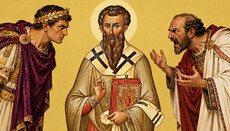
Fear of persecutors takes root in our attachment to possessions. We turn to St. Basil the Great to understand why the prefect's threats held no power over him.
Every day, we face a choice between living according to God's commandments and living a life of comfort and security. At night, tossing and turning in sleeplessness or trembling with fear during shelling, we mentally run through everything we could lose amid the war and the persecution of the Church.
The apartment into which we have poured our life savings.
The job it took us six months to find.
Our health, already hanging by a thread.
The respect of people we care about, or on whom our careers depend.
In the end, we find ourselves making compromises.
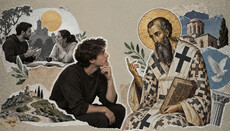
St. Basil the Great once faced a situation far more terrifying than our own. Emperor Valens supported the Arians, who taught that the Son of God was created and was not equal to the Father. Orthodox bishops were being sent into exile one after another.
Eventually, it was the turn of the Bishop of Caesarea in Cappadocia. The prefect, the emperor's right-hand man, summoned him and demanded that he side with the Arians.
St. Gregory the Theologian, Basil's friend, later recorded this historic exchange. Let us travel back in our imagination to Caesarea and ask St. Basil himself about what happened.
A cell with nothing worth confiscating
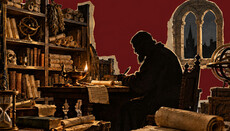
The bishop receives us in a small room. He wears a coarse hair shirt. A few books rest on a shelf, and a bench stands against the wall. There is nothing else. Thin and worn from ascetic labor, he raises his attentive eyes toward us and gestures for us to sit.
St. Gregory wrote that Basil entered the interrogation "as if summoned to a feast rather than a trial." The calm with which he welcomes us brings those words to mind.
"Your Grace, they say the prefect threatened you with terrible things. What exactly did he threaten to do?"
"He listed everything he thought would frighten me," the saint replies unhurriedly. "He would confiscate my property. Send me into exile. Torture me. Kill me. I told him to think of something else, if he could, because none of those things troubled me."
He gestures around the room.
"See for yourself. Before someone can take away your possessions, you must first have something worth taking. Unless, of course, he wanted to confiscate these rags and a few books. That is all the wealth I possess."
Exile from a home that is not yours
"But exile would mean losing your home, your flock, everything you have built here."
The saint does not answer immediately. He looks through the small window toward the city beyond.
"I do not know what exile means. I am attached to no particular place. Caesarea, where I now live, is not mine. And wherever they send me will become my home. Or rather, every place belongs to God."
"And torture?"
"What is there left to torture?" The bishop spreads his thin hands. "There is hardly any body left to torment. One blow would be both the first and the last."
There is humor in his words. But behind that humor lie years of rigorous ascetic discipline.
"And you weren't afraid of death either?"
"Death is a blessing to me. It will bring me to God all the sooner. It is for Him that I live and labor, and it is toward Him that I have long been hastening."
A man who had never met a bishop
According to St. Gregory, the prefect was astonished by Basil's steadfastness. He admitted that no one had ever spoken to him with such freedom and boldness.
"What did you say to him, Your Grace?"
The saint closes his eyes for a moment, smiling at the memory.
"I told him that apparently he had never met a bishop before."
The answer sounds audacious, and we cautiously ask:
"Wasn't that pride? After all, Christians are commanded to be humble."
The bishop grows serious and places his palm on the table, as though drawing a line.
"In everything else, we are modest and humbler than anyone. That is what the commandment requires. But when God is at stake and someone raises his voice against Him, we forget everything else and see only God before us."
But why could he not accept the teaching of the Arians? Basil explained it to the prefect in a single sentence:
"I am myself God's creature, and I am called to become god. How, then, could I worship a creature?"
The Arians regarded the Son of God as a created being, and for St. Basil, accepting that teaching would have meant worshiping the creature instead of the Creator. Yet man is called to theosis – deification, union with God by grace. Such a substitution was something he could never accept.
Firmness without stubbornness
For all his unwavering resolve, St. Basil was not someone who argued merely for the sake of arguing. St. Gregory describes how carefully his friend chose his words in theological disputes. Basil understood that when true piety had been shaken, one could become so consumed with defending a particular expression that excessive zeal might ruin everything.
He could yield on wording. On matters of faith, never.
The historian Theodoret of Cyrus recounts the same exchange somewhat differently. In his account, the prefect first offers Basil the emperor's friendship. The saint replies that he values such friendship only when it is accompanied by true piety; without it, he considers it ruinous.
When the prefect snaps, "You are mad," the bishop replies, "May I always have such madness!"
The prefect admits defeat
Eventually, the prefect dismissed Basil without further threats. He then went to the emperor and reported:
"We have been defeated, O Emperor, by the head of this Church. He is a man beyond the reach of threats, stronger than arguments, and unmoved by persuasion."
Valens forbade the use of force against the saint.
"And what happened next, Your Grace?"
"Then came the feast of Theophany," the saint replies. "The emperor entered the church. The service was underway, the singing resounded, and the church was filled with an immense crowd. The emperor brought offerings he had prepared with his own hands. But no one came forward to receive them. He staggered, and one of the altar attendants caught him by the arm to keep him from falling."
St. Gregory compares Valens after that day to iron softened by fire, yet still remaining iron. The emperor stopped threatening Basil and began to regard him with wonder. Nevertheless, he never entered into communion with the bishop, ashamed to reveal how much his attitude had changed.
The exile that never happened
"So they finally left you in peace?"
"Not immediately." The bishop smiles again. "An order for my exile was eventually prepared. A carriage was made ready for me during the night. My enemies rejoiced, while our people were disheartened."
"What did you do that night?"
"I told one of those accompanying me to take a notebook and follow me."
Within hours, he was supposed to be taken away to an unknown destination. Yet he was thinking about his work and making sure he had something to write on.
That same night, as St. Gregory recounts, the emperor's son fell gravely ill, and the exile never took place.
We rise to say goodbye. At last, we understand: what we fear losing most is often what we cling to most tightly.
St. Basil had long since entrusted his possessions, his home, his body, and his very life to God. And so the prefect could find nothing to take away from him.
The bishop accompanies us to the door and offers a final thought:
"Every place belongs to God, and it is toward Him that I have long been hastening. And whoever is walking toward God has nothing to lose along the way."