A tale of two oaths and a mother on a mountain
The story of a drought in Judea reveals the depths of God's justice and the price of a human promise.
Anyone who has walked the hills of Palestine in the height of summer knows how the earth bakes under the scorching sun, splitting into deep cracks, while the dry beds of rocky streams await the slightest hint of moisture. Life on these rugged slopes has always depended on rain from heaven. When the heavens closed, disaster followed.
This remarkable story begins with these words of Scripture: “There was a famine in the days of David three years, year after year” (2 Samuel 21:1).
The people endured three seasons without a harvest. They faced the first with hope, opening their old storehouses and scraping together the last grains of barley. The second brought anxiety: the fields lay barren, and the flocks grazed on scorched grass. By the third season, despair had set in, accompanied by a devastating hot, dry wind.
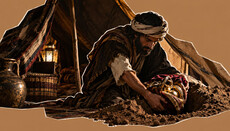
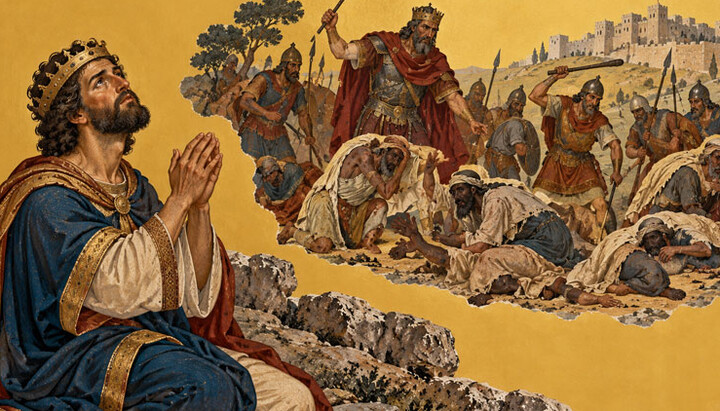
King David did not look for the cause of the disaster in the whims of the local climate. Instead, he turned to the time-tested path of prayer. Scripture tells us that the psalmist “inquired of the Lord” (2 Samuel 21:1).
The Lord's answer came as a surprise to the people of Jerusalem. The cause of their suffering lay in a long-forgotten crime committed years earlier.
The Lord answered: “It is because of Saul, and his bloodthirsty house, because he killed the Gibeonites” (2 Samuel 21:1). It turned out that the wounded land would not yield its harvest until an old injustice had been healed. The Creator remembered a covenant that King Saul had chosen to forget.
To understand the depth of this story, we must go back several centuries, to the days of Joshua.
Moldy bread at Gilgal
When ancient Israel entered the Promised Land, news of Jericho's fall terrified the local inhabitants.
One day, travelers appeared at the Israelite camp in Gilgal. Their donkeys staggered beneath worn sacks, their wineskins were torn and patched, their sandals were worn out, and their bread was dry and moldy.
The travelers displayed their stale crusts and explained that they had set out from a distant land as soon as they heard of God's glory. They claimed that their bread had been warm when they left home, but their provisions had spoiled along the way.
It was an elaborate deception.
The Gibeonites actually lived nearby, only a few hours' walk from Gilgal. Their fortified city stood on a hilltop, supplied with deep wells.
The Israelite leaders made a serious mistake. They examined the travelers' provisions, “but they did not ask counsel of the Lord” (Joshua 9:14). The outward evidence seemed convincing. The leaders made a treaty with the strangers and swore before God to spare their lives.
Just three days later, the truth emerged. The Israelites reached the Gibeonite settlements and discovered that the supposed travelers from a distant country were actually their close neighbors (Joshua 9:16). The camp erupted in protest. The people demanded that the deceivers be punished and their fertile lands seized.
But the elders refused to break their word. They told the people: “We have sworn to them by the Lord God of Israel; now therefore, we may not touch them, lest wrath come upon them because of the oath" (Joshua 9:19–20). They feared adding another grave sin – perjury – to the mistake they had already made.
Thus the strangers survived, but they became woodcutters and water carriers for the altar of God. Their obedience became a blessing: a pagan people were brought into service at the sanctuary.
The city beneath the standing sun
Gibeon entered history as more than a city of deceivers. It was associated with great events in sacred history. It was near this city that the famous miracle took place when Joshua cried out to God before his enemies: “Sun, stand still over Gibeon” (Joshua 10:12). And the sun truly stood still.
Centuries passed. The principal altar stood in this city, where solemn sacrifices were offered. Later, the young King Solomon came to Gibeon. It was here that the Lord appeared to him in a dream at night and granted him wisdom to govern the people (1 Kings 3:4–5).
The Gibeonites faithfully carried out their humble duties. They served at the sanctuary, chopped wood, drew water from the rock-hewn shaft, and trusted in the sacred covenant. They knew that God's name was a sure protection for anyone who had placed his trust in an oath sworn before Him.
A king's blind zeal
Yet during the reign of Israel's first king, Saul, the ancient covenant came under a harsh reassessment. Scripture tells us that Saul “sought to kill them in his zeal for the children of Israel and Judah” (2 Samuel 21:2).
The Gibeonites “were not of the children of Israel, but of the remnant of the Amorites” (2 Samuel 21:2). The king apparently believed that foreigners had no place in the holy land and that the oath sworn in Joshua's time had lost its force. This was zeal that placed human interests above the name of God.
Blessed Theodoret of Cyrus emphasized that the descendants of those who had sworn an oath were obliged to honor the agreements made by their ancestors and never violate oaths taken in the Lord's name.
King Saul launched a brutal persecution and shed the blood of defenseless people.
But God forgets no victims. Years passed, rulers changed, and drought came upon the land.
When King David summoned the surviving Gibeonites and asked, “How shall I make atonement?” (2 Samuel 21:3), the wronged people replied: “We will have no silver or gold from Saul” (2 Samuel 21:4). They were not seeking wealth. Instead, the Gibeonites asked that seven descendants of the former king be handed over to them to be hanged before the Lord in Gibeah of Saul.
David was forced to make a harsh decision.
A mother on a mountain
Among those handed over to the Gibeonites were two sons of Saul's concubine Rizpah – Armoni and Mephibosheth. Together with five grandsons of Saul, they were hanged “on the hill before the Lord” (2 Samuel 21:9). This happened “in the first days of harvest, in the beginning of barley harvest” (2 Samuel 21:9), when the dry April heat scorched the valleys of Palestine.
Here the biblical account presents us with an extraordinary image of a mother's love.
Rizpah took a piece of coarse cloth – sackcloth – and spread it out upon the rock. Day after day, month after month, she sat beneath the blazing sun. She would not allow the birds of the air to touch the bodies by day or the beasts of the field by night. Her vigil continued throughout the dry season, until at last “water dropped upon them out of heaven” (2 Samuel 21:10).
Rizpah's actions deserve our deepest respect. Rather than uttering bitter curses, the faithful mother protected her dead sons.
When King David heard what Rizpah had done, he was deeply moved.
David went to Jabesh-gilead to retrieve the bones of Saul and Jonathan, which the inhabitants had secretly carried away years earlier. The king gathered the remains of the fallen ruler and those of the young men who had been hanged. He brought them to the land of Benjamin and buried them “in the sepulchre of Kish his father” (2 Samuel 21:14).
Reconciliation after years of waiting
The account in the Book of Samuel concludes with a brief statement: “And after that God was entreated for the land” (2 Samuel 21:14).
It is important to recognize the sequence of events. Final reconciliation did not come immediately after the Gibeonites' severe demand had been fulfilled. God looked with mercy upon the parched land only after the demands of justice had been met, the dead had received an honorable burial, and compassion had been shown to the fallen royal house.
Reflecting on this event, Blessed Theodoret of Cyrus wrote that the Lord makes no distinction between peoples but righteously defends those who have been wronged, even when they are foreigners.
God's law teaches us not to violate agreements sealed by an oath. No betrayal of trust can be justified, and a promise made before God retains its force across the centuries.
This biblical story leaves us with much to contemplate.
In a world where promises are broken under the pressure of circumstances, Holy Scripture reminds us that our word must remain inviolable.
God's mercy returns to the scorched earth not when we try to conceal the sins of the past, but when we find the courage to honor an ancient covenant and show love where nothing seems to remain but barren ground.