
The valley of trouble and the gateway of hope
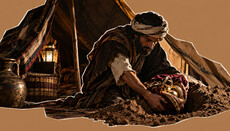
One soldier buried an expensive cloak and some gold beneath his tent. Because of this, all Israel lost a battle. Why did one man’s sin bring disaster upon an entire nation?
“They are hidden in the ground inside my tent, with the silver underneath” (Joshua 7:21). Achan speaks these words when there is nothing left to hide. The hole he dug beneath his tent to conceal his loot becomes the center of the entire story. Around it unfold a military defeat, a leader’s despair, an interrogation, and an execution. Yet it all begins with a glance.
Jericho had fallen. Its walls had collapsed, and Israel had entered the first city of the Promised Land. But before the assault, Joshua had declared a condition: “The city and all that is in it are to be devoted to the Lord” (Joshua 6:17). The silver and gold were to be “sacred to the Lord and placed in His treasury" (Joshua 6:19).
The Hebrew word herem, often translated as “devoted to destruction,” meant that something was irrevocably set apart for God. The spoils were not to be taken for personal gain. The first victory in the new land was to become an offering to the Lord. The Israelites were taking possession of the land not as a band of looters but as God's people.
Everyone understood this. Well, almost everyone.
Three steps to the pit
Achan, from the tribe of Judah, walked through the ruined city alongside the other soldiers. Something caught his eye. Later, he would describe exactly what it was: “A beautiful robe from Shinar, two hundred shekels of silver and a bar of gold weighing fifty shekels. I coveted them and took them” (Joshua 7:21).
The garment from Shinar was an expensive Babylonian cloak, a rare and beautiful possession. The silver weighed roughly two kilograms by modern standards, and the gold just over half a kilogram. For an ordinary soldier, this was a fortune.
Notice the sequence in his confession: he saw, he coveted, he took. Biblical commentators have observed that the first sin in Paradise followed precisely the same pattern. Eve saw that the fruit was pleasing to the eye and took it. Sin begins with a glance, takes root in the heart, and ends in action.
Achan then did what any thief would do: he hid his stolen goods. He dug a hole in the middle of his tent and covered it with belongings, rugs, and bedding. It seemed that no one would ever discover his crime.
A deadly rout
After Jericho, the Israelites advanced toward the small town of Ai. The scouts reported that its population was small and that two or three thousand soldiers would be enough to take it. About three thousand men were sent against the city.
And suddenly, disaster struck.
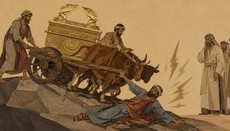
The men of Ai drove the Israelites back from the city gates, striking them down as they fled down the hillside. As many as thirty-six men were killed. For an army that had just watched the walls of Jericho collapse before it, the defeat was devastating. Scripture says that “the hearts of the people melted and became like water.”
Joshua lay facedown before the Ark until evening. He could not understand what had happened. And God answered him: “There are devoted things among you, Israel. You cannot stand against your enemies” (Joshua 7:13).
What is striking is that God speaks of the guilt of the entire nation: “The Israelites were unfaithful in regard to the devoted things” (Joshua 7:1).
Yet only one man, Achan, had committed the theft.
Why must everyone answer for one man’s sin?
This question has troubled biblical commentators throughout the centuries. Why did thirty-six men die because of one man's theft? Why does God say that Israel has sinned when only Achan was guilty?
Blessed Theodoret of Cyrus offers an explanation that sheds considerable light on the matter. Achan believed he could conceal his actions from both men and God. God therefore chose to expose him and instill fear in everyone, so that those who observed His commandments would denounce those who broke them. Otherwise, they themselves might share in the punishment.
A community in which everyone lives only for himself and ignores wrongdoing becomes vulnerable. A sin buried beneath one tent spreads through the entire camp like an infection.
Jewish tradition contains a similar idea. The sages of the Talmud observed that even when Israel sins, it is still called Israel, just as a myrtle remains a myrtle even among thorns. Collective sin does not erase a people's shared dignity. But neither does that dignity justify turning a blind eye to evil.
The culprit confesses
The next morning, the search for the person responsible for the disaster began. Lots were cast, first among the tribes, then among the clans and families, until finally the lot fell on Achan.
Joshua, the stern military commander, addressed him with unexpected gentleness: “My son, give glory to the Lord ... Tell me what you have done; do not hide it from me” (Joshua 7:19).
Achan confessed his theft. He told Joshua everything: what he had seen, what he had coveted, and where he had hidden it. Messengers hurried to his tent and found the buried treasure.
A heap of stones in the valley of trouble
The story ends tragically. Achan was taken into a valley and stoned to death. What happened to his family remains uncertain. Some commentators believed that his children knew about the hiding place and therefore shared their father's guilt. Others point out that the Law explicitly states that children must not be punished for their fathers' sins.
A “large pile of rocks” was raised over the place of execution, remaining there “to this day” (Joshua 7:26). The valley was named Achor, meaning “trouble,” as a warning of where a covetous glance can lead.
That might seem like the end of the story. Yet centuries later, the Bible unexpectedly returns to this same valley. The Prophet Hosea, speaking of how God would bring His unfaithful people back to Himself, makes a promise: “I will make the Valley of Achor a door of hope” (Hosea 2:15).
The valley of shame becomes the doorway to hope. The very place where the Israelites buried their trouble is promised by God as the beginning of a new path.
What lies in our tent?
Each of us has a tent of our own. And almost everyone has something buried beneath its floor. It need not be gold. It might be a grievance we have refused to forgive. A lie no one knows about. A habit we are ashamed to admit even in confession.
We tell ourselves that we alone will answer for these things. But Achan's story teaches us otherwise.
Hidden sin does not remain without consequences. It weakens families, parishes, and communities. And those who witness evil but remain silent bear no less responsibility.
Joshua gave Achan an opportunity: “Tell me what you have done; do not hide it from me.” God offers each of us that same opportunity.
Confession does not erase the consequences of sin, but it lessens our guilt. And even the valley of trouble can become a doorway to hope – if we finally bring what we have hidden into the light of God.