
Flight into Egypt: Survival guide in the times of Herod
God flees to the land of evil to save Himself. Why is silence louder than a scream today, and ignorance of the news an act of courage? We learn from the Holy Family the art of internal emigration.
The passage that tells us about the flight of the Holy Family into Egypt takes us from the historical to the existential plane and reveals the full drama of the God-world relationship. Here, it is not just about the movement of the Holy Family in space. It is about the place of God in a world that does not accept Him.
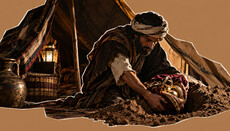
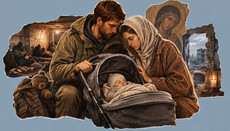
Thus, the Divine Logos becomes a lump of flesh clutched to the breast of a terrified Mother. Instead of incinerating Herod, He chooses the path of an exile, a refugee, a person without a passport and registration.
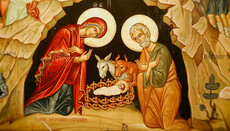
But note that Christ flees to a country that has always been a symbol of evil. The paradox is that for salvation, to heal our past, God needs to descend into our darkest memories, into our "inner Egypt", and make it His home.
Herod, in order to preserve his throne, is ready to turn the world into a cemetery. He is ready to kill everything and everyone to preserve his rotten present. His method is total extermination. But look at the finale! "Those who sought the child's life are dead," says the angel. Evil is self-destructive by nature; it devours itself; Herod dies in agony, while Life, even when persecuted, possesses the quality of eternity.
This is the verdict on any tyranny. Power based on blood, authority, and fear always carries within it the seed of its own decay.
The tyrant decays, while the Child, who has nothing but Life, inherits eternity.
People are more important than walls
And here arises an important question: what should Christians do when Herod begins to attack them? I have heard clergy urging their flock to go out and defend the shrine. And I have seen how it ends: maimed people with broken heads.
Of course, when there is an opportunity to defend in such a way that does not risk the life and health of parishioners, it is possible and necessary to defend. But I am sure that a good shepherd will care more about people than about walls. If a hierarch is ready to risk the lives of his parishioners for church property and expose his defenseless flock to the knuckles and batons of Satanists, he is not a good shepherd but a provocateur.
As a rule, such ministers manipulate people, accusing them of cowardice and opportunism. But the same was said of Christ when, instead of raising a rebellion immediately after entering Jerusalem (which hundreds of thousands of Jews awaited with knives under their cloaks), He chose to voluntarily surrender to a small group of mercenaries and die on the cross.
The same can be said of the Glinsk elders, who, after the communists closed the monastery, quietly and humbly went into the mountains instead of gathering people to defend the temples with shovels in hand. One can accuse of cowardice thousands of other ascetics and glorified saints who chose the path of exile and patience rather than struggle. All these arrogant accusations are the fruit of pride.
The main thing for a priest is to preserve the parish, and if people are united with their pastor, a place for prayer will always be found.
Christ says: "When they persecute you in one city, flee to another" (Matt. 10:23). He does not say: "Stand and fight." Herod wants us to become evil in the fight against evil. To become like the devil in the war for God. The meaning of a Christian's life is not to emerge victorious in an earthly battle, but to prevent the world from defeating us from within.
Knights of faith
The passage we are examining today also teaches us the courage to be a seed that must overwinter in frozen ground so as not to perish prematurely, before it has had a chance to grow. To go to Egypt is not cowardice; it is an act of will in defense of the Future. The philosopher Kierkegaard spoke of the "knight of faith", who outwardly may appear to be an ordinary person, yet inwardly bears the treasure of infinity.
The "invisible presence" of God in the world is the most powerful opposition to evil. Life is full of situations where "flight into Egypt" is the only way to save humanity.
Remember the philosophers and poets who wrote "for the drawer" during the years of repression. They did not go out into the squares (where they would have faced instant death without benefit to the cause), but they preserved the Word.
Their "Egypt" was kitchens, basements, and their own memory. They waited for the "herods" to die so that their texts might be resurrected and change the world decades later. This was their personal "ethic of preserving the sacred".
And there is one more important point that, unfortunately, we often forget. It seems to us that this world is ruled by evil forces, that they put sticks in the wheels of God’s plan and hinder Him from acting. And we somehow need to help God pull those sticks out. This is a mistaken opinion. The world is ruled by God, and no one else. He never makes mistakes. And all the circumstances of life are arranged to bring us closer to salvation.
Silence as a refuge
But another question that may be asked (it is even more important): what then should be done? Stand silently and watch Herod's outrages without offering any resistance? This question contains the whole tragedy of our modern church life.
It speaks of the fact that we have forgotten what the true path of salvation is – the path once walked by the holy fathers before us. What, then, is the path to the Kingdom of God, which "is within us"? Where are all these rules, canons, liturgical services, Communion, and prayer meant to lead us? This path, though it begins outwardly, must end inwardly. It is not in heaven, but within ourselves that we must find Christ.
Even the pagan Marcus Aurelius understood that a person has a space where no tyrant can penetrate.
When the external world becomes insane, when Herod rages, true courage is not in rushing onto swords, but in leading the Meaning to a safe place.
Philosopher Martin Heidegger spoke of "silence as the language of being". In theology, this is called hesychasm. Prayer is always born from silence. When we are silent, God begins to "speak" to us. But He does not speak with words, only through the very sensation of "being". Silence is a space of freedom. As long as we are listening to a podcast or scrolling through a feed, our thoughts do not belong to us. Only in silence do we become subjects.
Herod steals attention
When we close our eyes and go into inner prayer, we do the same as Joseph did: we take the most valuable and go where the worldly gaze cannot reach. Our soul in its current state must become Egypt – a place where we need to let Christ grow within our heart, cleansing it with the Jesus Prayer.
Today's Gospel reading teaches that the Light can flee, it can hide, it may seem defeated but it never goes out.
Holiness sprouts through the dry soil of history when a thin sprout breaks through violence and blood. It cannot be trampled because its roots are in the very Heart of Being.
The modern Herod is the dictatorship of attention. The news stream is legions of warriors whose task is to kill your ability to contemplate, to kill the "Infant Christ" in the bud. Herod kills infants through the eyes and ears. Angry news and shallow content are poison that prevents the seed of contemplation from sprouting.
Simone Weil wrote that "attention is the rarest and purest form of prayer". Today, preserving the shrine requires informational flight. Herod demands that you react to everything now and immediately. Read the news – get excited and angry. This energy of anger and indignation is the best means by which modern priests Gapons manipulate church people. Today, the ethics of preserving the sanctity of the soul is manifested, among other things, in having the courage to "be out of the loop". It is the right to say: "I will not feed this rage with my attention."
God in the ordinary
A quiet prayer warrior, mastering the art of pure prayer and living modestly in obscurity and solitude, is stronger in spiritual warfare than an army of enraged and self-righteous parishioners. Because our struggle is "not against flesh and blood, but against the spiritual forces of evil in the heavenly realms."
Being a modern Christian means understanding: the most important thing in you does not belong to this world. It is not within the walls of the temple, it cannot be taken with a crowbar. The world can take away your temple, your freedom, and your very life. But it cannot take away what is inside you, in your spiritual heart.
God speaks to Joseph through a dreamlike vision. This attunement of the soul means that the path to salvation opens only in a state of deep inner peace and trust, when the "daytime" mind falls asleep, yielding to the intuition of the Spirit. After the flight into Egypt comes thirty years of silence in dusty Nazareth. The most important event in the world occurs unnoticed.
God hides in the ordinary. During this time, unknown to anyone, He planes wood, carries water, and watches sunsets. This is the sacrament of "small deeds". The seclusion of Nazareth teaches us that holiness is not ecstasy but faithfulness to God in obscurity and in the gray everyday life of provincial quiet. The Gospel and patristic tradition teach that the most important processes happen in silence. The forest grows silently, yet it falls with a crash. Herod is the crash of the fall. The infant in Egypt is the silent growth of eternity.
Inner Egypt
And our task is to understand that within us there is something far more valuable than our social role, our success, or even earthly life itself. In his novel "The Citadel", Antoine de Saint-Exupéry wrote a remarkable line: "He in whom God lives is never alone in his obscurity."
We should learn to trust the intuition that says, "leave", when logic and propagandists demand, "fight".
True courage is not in stepping out with fists against evil people, but in, having dodged evil, allowing oneself to be "small" and humiliated so that God within us may become "great".
"To die to the world" does not mean going to a monastery. It means ceasing to depend on external judgments. Sometimes, to save the Human within oneself, one must gather one’s bundles and go into the night, into silence, into one’s inner Egypt. And wait. Wait until the Word becomes Flesh within you.