
Elders of Gaza: How sixth-century “coaches” healed the soul through silence
In an age of anti-seclusion and digital noise, the saints’ counsel on “defusing” the ego and practicing mental hygiene becomes a radical medicine for modern man.
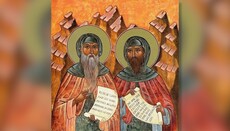
On February 19, the Orthodox Church commemorates St Barsanuphius the Great and St John the Prophet – two outstanding Christian ascetics and saints who lived in the sixth century. In modern language, they were a kind of top-tier “spiritual coaches,” whose counsel remains relevant because they dealt not with abstract dogmatics, but with the subtleties of human psychology.
The venerable fathers struggled in the monastery of Abba Serid, near the city of Gaza (Palestine). It was the flowering of Eastern monasticism. Barsanuphius the Great spent more than fifty years in complete seclusion. He did not leave his cell and did not meet anyone face to face. He communicated with the world solely through written notes. He was regarded as a man of exceptional wisdom and spiritual discernment.
Barsanuphius was so hidden in his reclusion that some contemporaries even doubted whether he existed at all.
St John the Prophet was Barsanuphius’ closest disciple and spent eighteen years in seclusion beside him. He was called “the prophet” because he possessed the gift of foresight (he even foretold the date of his own death). Despite his gifts, he always placed himself beneath Barsanuphius and often answered questions only after consulting his teacher. The chief spiritual treasure left to us as the legacy of these two great ascetics is the book Questions and Answers (about 850 responses in all).
The birth of the “self” in silence
Modern people live in a state of anti-seclusion. Public visibility matters to them – likes, follower counts, ratings, views. When the internet disappears for any length of time, teenagers go into withdrawal like addicts; people sink into depression – and these are deeply alarming signals. Yet spiritual experience says something else: the true self is born in silence, far from other people’s eyes.
People did not come to these elders with theoretical questions of dogma. They came when they were afraid, in pain, when life felt unbearable. That is why their answers will never lose their value.
They lived by a philosophy of radical honesty, speaking not from book-learning or a “great mind,” but from the Holy Spirit dwelling in their souls.
“If you fast until you are exhausted, but you are angry at your neighbor – your fasting is useless. Sobriety of mind is the highest value,” the elders taught. In their correspondence, questions about buying vegetables stand beside questions about the Holy Trinity. It is the metaphysics of the everyday: everything you do here and now has an eternal dimension.
Existential surrender
In a world where we try to control everything, the elders propose that we “hand ourselves over into God’s hands.” This is not passivity, but the highest form of courage – to entrust oneself to Being. Your thoughts (logismoi) are waves. If you fight every wave, you will drown. Stop rowing. Drop the oars. Trust the One who holds the sea.
But the deepest thing in their writings is what lies between the lines. It is silence.
Barsanuphius kept silence for years. His letters are the echo of that silence. In a world where we suffocate on informational noise, Barsanuphius and John offer radical mental hygiene: do not argue with your thoughts. Do not endlessly analyze your fall – you only bury yourself deeper in the mud. Simply lift your eyes higher.
These elders teach “the remembrance of death” not to frighten us, but to give us the taste of the present moment. If you know you may not exist tomorrow, you drink water differently, you look at your friend differently.
We have grown used to treating will as an instrument of strength. The Elders of Gaza see it as a source of paralysis. “Self-will is a wall of bronze between a man and God.” This is not a call to spinelessness. It is a call to existential surrender that, paradoxically, grants superpower. When you stop “forcing” reality to fit your expectations, reality passes through you without harming you. The most important things in life happen not when we “achieve,” but when we “let go.”
The ecology of the spirit: deeper than psychology
Modern therapy has a term: “defusion” – the skill of separating oneself from one’s thoughts. You are not your thought “I’m a failure.” You are the one who observes that thought.
Barsanuphius and John went much deeper.
They spoke not of separating from thoughts, but of separating from one’s own will – a radical defusion from the ego itself.
When you “cut off your will,” you are saying: “My desires are not me. My impulses are not truth.” For the elders, freedom is the ability to say “no” to the inner tyrant.
Psychologists teach us to look for “cognitive distortions”: catastrophizing, black-and-white thinking, mind-reading. Today everyone searches for “mindfulness.” But mindfulness without a moral vector is merely concentration on how you eat an apple. For these Spirit-bearing elders, mindfulness means the ability to understand: “Does this action I am doing now build my soul – or destroy it?”
Barsanuphius the Great and John the Prophet did not merely give advice. They built an “ecology of the spirit.” If psychologists mend “broken thoughts,” the Elders of Gaza mend a “broken will.” They prove that a man finds himself not when he “self-actualizes” (as humanistic psychology teaches), but when he denies himself for the sake of Another and of God. In that emptiness of self-offering the light is born – the light that enabled Barsanuphius to live for decades in a dark cell and feel happier than all the kings of the world.
Therapy by love and the lancing of abscesses
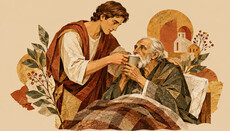
One brother writes to Barsanuphius that he is crushed by depression: he cannot pray, does not want to eat, his life seems a meaningless chain of gray days. Modern psychologists would begin speaking of burnout, dopamine deficiency, micro-goals, activating behavior.
Barsanuphius did something else. He said: “Brother, I see your darkness. From this moment I take your despondency upon myself. You simply walk and give thanks to God, and all the weight of your condition I will live through in your place in my cell.” A coach teaches you to rely on your own resources. Barsanuphius says: “Your resources are at zero – lean on mine.”
This is therapy by love, where the mentor becomes a living shield between a man and his depression. He grants a person a “breathing space” from himself. Such is a true elder.
Another monk complains to John the Prophet that his superior (the monastery’s abba) is unjust, груб, always picking at him. The monk boils with anger and wants to leave. Modern coaching would advise him to “set boundaries,” “voice grievances in a healthy way,” “protect his ‘self’ from external aggression.” John’s method is completely different. He does not analyze the superior’s behavior. He looks at the disciple’s reaction:
“This man is your free physician. He is lancing the abscess of your pride. If you run from him, you will carry your abscess with you. Thank him for showing you your true face.”
In coaching, people seek comfort. In asceticism – transformation. John teaches us to turn every conflict into a gym for the spirit. If you are “hurt,” it means there is something in you that can be hurt. Remove that “something,” and you will become invulnerable.
A thief named Anxiety
One more example: another monk suffers from typical obsessive rumination. He bombards the elders with questions: “What if I get sick and can’t work? What if the monastery is attacked? What if we run out of food?” What would a psychologist say? He might offer planning, scenario mapping, “A–B–C options” to reduce anxiety through the illusion of control.
The elders do otherwise. They literally forbid the disciple to think about the future.
“Your thoughts are thieves that steal the present moment from you. You are not sick yet, but you already suffer as if you were. You have not died of hunger, but you are already losing strength from fear. Leave the future to God. Your task is only this hour and this minute.”
The elders understand that anxiety is the mind’s attempt to play God – to calculate the infinite. They return the man to “here and now,” where he always has enough strength for one concrete step.
If modern coaching is about making our “self” more effective, stronger, more protected – about becoming a “better version of ourselves” – then Barsanuphius and John are about making the self transparent, about ceasing to hinder God’s action within us. Their answers are not moralizing. They are high technologies of the spirit. The elders understood that man suffers not from external circumstances, but from the way he interprets them. Their “prescriptions” still work a millennium and a half later because human pain, fear, and pride have not changed by a single degree.