From Edom’s ancient copper mines to the cross of Golgotha
An ancient Old Testament artifact went from a symbol of deliverance in the wilderness to an idol destroyed in Jerusalem.
The Israelites’ journey from Mount Hor took them along an inlet of the Red Sea, around the forbidding territory of Edom. The scorching heat, harsh sands, and exhaustion soon wore down the weary travelers. Loud complaints against God and Moses spread through the camp. The people grumbled about the hardships of crossing the wilderness and expressed disgust at the manna God had provided, calling it worthless food.
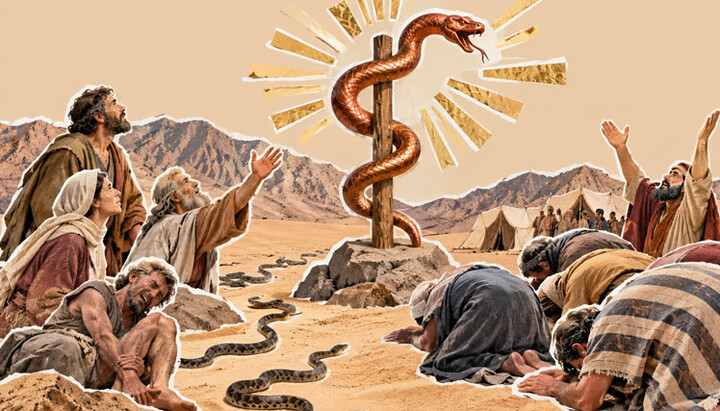
Their rebellion was met with the appearance of venomous serpents in the Israelite camp. The fiery snakes swarmed across the sandy hills, and many people died from their bites. The calamity brought the Israelites to their senses. They came to Moses in repentance, confessed their sin, and begged their leader to intercede for them before the Lord.
Moses prayed, and God gave him an unexpected command. He was to fashion a serpent out of bronze and mount it on a tall pole. Anyone bitten by a snake who looked upon the bronze figure would survive.
This account also brings to mind the ancient technology of copper mining. Historians associate Punon, mentioned in the Book of Numbers, with the site of Khirbet Faynan. Copper had been mined there since antiquity, and centuries later, Christian martyrs were sent to labor in its mines. In the nearby Timna Valley, archaeologists discovered a small copper serpent with a gilded head dating to the period of the Judges. The find offers a glimpse of what such objects looked like in the ancient Near East.
A strange commandment
The command to make a bronze image seems surprising, since Deuteronomy explicitly forbade the making of idols. Why, then, did the Lord command Moses to place this object before the people?
The answer lies in the nature of the Old Testament miracle. It was not the metal object itself that saved anyone, but an inward act of faith. The Book of Wisdom explains that those who turned toward the serpent were healed not by the object they saw, but by the Savior of all. The metal remained an inanimate object; it was God's word that bestowed life.
Jewish tradition, preserved in the Mishnah, raises the same question: Did the serpent have the power to kill or to give life?
As the tradition explains, healing came when the Israelites lifted their eyes toward heaven and turned their hearts to their Heavenly Father.
St. Ephrem the Syrian observed that serpents, which by their nature feed on dust, did not murmur against their sustenance, while people rebelled against heavenly bread. The holy father emphasized that Moses set the bronze pole before the doors of the tabernacle. A person who was bitten had to turn his face toward the holy place, thereby confessing his renunciation of the Creator.
When the memory of a miracle becomes an idol
Centuries passed. The bronze serpent was preserved as a precious reminder of God's extraordinary mercy. It recalled the deliverance from death in the unforgiving wilderness. Yet human nature has always been inclined to substitute the material signs of divine blessings for the One who bestows them.
Over time, attitudes toward the ancient object changed. New generations forgot the living faith of their ancestors and began attributing supernatural powers to the piece of bronze itself. They burned incense before it, surrounding it with clouds of fragrant smoke. The people even gave it a name – Nehushtan.
What had begun as reverence for a sacred object had become another form of pagan worship.
This descent into idolatry continued until the righteous King Hezekiah ascended the throne. The Book of Kings describes his sweeping religious reforms. He abolished pagan cults, smashed their images, and decisively destroyed the bronze serpent Moses had made.
Destroying an object fashioned by the hands of the great prophet required tremendous spiritual courage. But the king understood that the ancient relic had become a dangerous snare for spiritually vulnerable souls. Scripture unequivocally praises Hezekiah, emphasizing that he did what was right in the sight of the Lord and was distinguished by his great devotion to God.
A foreshadowing of the Cross
The ancient account reappears unexpectedly in the New Testament. In His conversation with Nicodemus, the Lord Jesus Christ recalls this long-forgotten image and reveals its profound prophetic meaning. The Savior declares: “And as Moses lifted up the serpent in the wilderness, even so must the Son of Man be lifted up.”
Reflecting on these words, St. John Chrysostom reveals a remarkable parallel between the Old Testament foreshadowing and its fulfillment in the New Testament. The saint wrote: “There the serpent bit, and the serpent healed; so here death destroyed, and death saved.”
Upon the ancient pole hung a piece of bronze fashioned in the likeness of a venomous creature. Upon the Cross was lifted the Most Pure Body of the Lord, who conquered the ancient serpent.
Christ was raised above the earth by His executioners so that He might sanctify the world and draw all the ends of the earth to Himself.
Blessed Theodoret of Cyrus observed that just as the bronze serpent had the outward appearance of a venomous creature but contained none of its deadly poison, so the Only-Begotten Son assumed genuine human flesh while remaining entirely free from the stain of sin.
The lesson of ancient Nehushtan
The story of an Old Testament object elevated to the status of a god reminds us that it is always easier to cling to a material possession, a beautiful ritual, or an ancient relic than to keep our minds fixed on the living presence of the invisible God.
Yet even the greatest relic loses all meaning when it obscures the living Creator. When an object becomes more important than God, it turns into another worthless Nehushtan.
In Milan, beneath the vaulted ceilings of the Basilica of Sant'Ambrogio, a bronze serpent stands atop an ancient marble column. For centuries, popular tradition attributed an Old Testament origin to the figure, associating it with Moses. Local residents believed it possessed special powers.
Recognizing the danger of this growing superstition, the Archbishop of Milan placed a cross on a neighboring column opposite the serpent, so that everyone entering the church would turn their gaze first and foremost toward the crucified Savior.
The Old Testament image found its ultimate fulfillment only in the events of Golgotha. In the same way, a gaze directed in faith toward the Cross of the Lord heals the soul of the deadly poison of sin and grants eternal life.