Where hope of salvation comes from
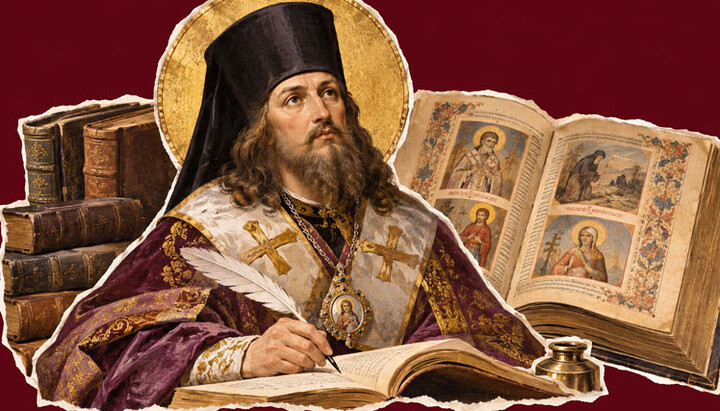
Conversation with St. Demetrius of Rostov about the Lives of the Saints, repentance and every sinner's hope.
Every time you set aside yet another volume of the Chetyi-Minei, you feel a cognitive dissonance: why read all this if modern people no longer live, and cannot live, as the ancient saints did? Between our bustle, our evening exhaustion, our nights of rockets and drones and the feats of the ancient ascetics there seems to lie an abyss. One gets the impression that holiness is an elite club of ancient giants of the spirit, into which the modern person is forever barred from entering.
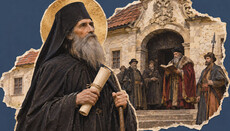
With this perplexity we come for an evening conversation to a man who gave twenty years of his life to compiling a complete collection of the lives of the saints. We sit down opposite the archpastor, wishing to pour out the bitterness that has built up in us.
– Vladyka, you gathered these life stories bit by bit. But tell us honestly: did you yourself believe that an ordinary person is capable of repeating the feat of the ancient martyrs?
Vladyka smiles gently and first says a little about himself:
– I was born in the town of Makarov near Kiev, into the family of the Cossack captain Savva Tuptalo and my mother Maria. I, a sinner, was born of Christian parents. I studied at the Kiev-Mohyla Collegium and was tonsured at the Kirillov Monastery. And on May 6, 1684, at the Pechersk Monastery, I was given the obedience of writing the lives of the saints. Archimandrite Varlaam proposed this task. I sat down at my desk and said to myself: "Grant, O God, that I may complete it." I did not seek glory. It was a monastic obedience.
– But your day was filled with cares that distracted you from attentive work! Constant travel, the governance of monasteries, sermons, the settling of disputes over household matters. What is it like to write about heavenly heights when the morning bell wakes you after a short sleep, and ahead of you lies yet another heap of everyday problems?
– I wrote at night! – the holy chronicler answers briefly. – Sometimes I lay down to sleep right in my clothes, without undressing. I even left the hegumenship of Baturin so that I might describe the lives of the saints in greater peace. I settled in the Krupitsky Skete.
I longed for solitude. But can you run away from yourself? Worldly cares caught up with me everywhere.
The books were printed in Kiev at no expense to me, the Lavra helped, but the work went hard. I leafed through the Makarievsky Menaia and Latin collections, comparing the texts. At times I doubted: it seemed to me that before me lay not so much history as a eulogy. My hand grew weary, my eyes grew weak. I, too, could never manage to do everything on time.
A heavenly guest before dawn
– Vladyka, – we continue, – did it not seem to you then that you were embellishing events? You read your descriptions of the tortures of the holy martyrs and think: a man of flesh and blood simply could not endure such things.
Saint Dimitry runs his hand over the worn sleeve of his cassock and continues the conversation in a serious tone:
– During the Philip's Fast, having finished one night describing the sufferings of the holy Martyr Orestes, I lay down to sleep right in my clothes, – the compiler of the lives recalls. – And I had a dream. The martyr Orestes himself appeared to me. His gaze was joyful.
He showed me his wounds and said: "I endured more torments for Christ than you have written." He showed me his rib burned through with iron, his shoulder cut open by a scythe, and kept repeating: "Do you see? I endured more for Christ."
I dared to say nothing against this, I only remained silent in confusion. And at that very moment the bell for Matins roused me.
– So it turns out that the lives do not exaggerate, but rather understate?
– Exactly so, – answers the saint. – Human language is powerless to convey the measure of love that the Lord gives to those who love Him. We write words, but behind the words there remains an invisible fire. The martyr himself came to me and made me understand that his feat is greater than the bookish confines into which I tried to fit it.
Hope for the Last Sinner
– But what are we to do? – we ask the main question for the sake of which we began this whole conversation. – We close your volumes and feel infinitely far from the ideal. It seems that if you have fallen, stumbled, given yourself over to despondency, then there is no longer a place for you among the righteous.
The compiler of the lives raises his eyes. In them one can see the mercy that strict zealots of piety so often forget.
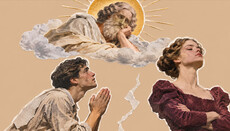
– "Can a sinful man be a saint at once, and have a place with the saints?" I myself asked myself this question.
And I will answer now as I once said to my Rostov flock: let each judge as he wishes, but I shall not be ashamed to place a repentant sinner in the ranks of the virgins and to write of him together with those who lived in virginity! Let sinners, too, rejoice, for a place among the saints is found for them also!
– Is it really so simple?
– Salvation is far only from sinners who do not repent, – the holy chronicler explains. – But from those who truly repent, salvation is very near. The sinful woman of the Gospel washed the Savior's feet with her tears – and became a saint. A life of a saint is not a manual for copying another's deeds. It is a testimony to God's mercy. God came to save not perfect people, but repentant sinners.
The Joy of a Completed Path
– You worked on the Chetyi-Minei for twenty years. When did you put the final period in them?
– On February 9, 1705, – Saint Dimitry answers precisely. – I wrote the last page for August, and in my diary I concluded: "Amen. Glory to God." In May of that same year, the printed lives for June and July were sent from Kyiv. I rejoiced so much! I wrote to friends: may God grant that my sinful self soon receive the last volume.
– You wrote thousands of pages about holiness, you headed the Rostov diocese, and yet you considered yourself successful?
– Friends wrote praises of me, and I replied in letters: "I am not of good character, but of evil character, full of base habits." I always asked: pray for me, an unworthy arch-sinner!
When my hour comes, nothing will be found among my possessions. In my will I wrote just that: I have acquired no property, except holy books. And they will find me in the morning on my knees before an icon, as though praying.
The conversation grows quiet. Outside the window a new day begins. We look once more at the ancient folio of the Chetyi-Minei and no longer feel our former detachment from the truth of this book.
The lives of the saints were not written to drive us into despondency. They were created by the hand of a man who himself grew weary, fell asleep from exhaustion without undressing, and sincerely considered himself the first of sinners. These pages are open doors into paradise. And Saint Dimitry of Rostov gently reminds each of us: as long as the heart has not stopped beating, a place among the saints is open to every repentant person.