
Erdogan performs namaz in Hagia Sophia on Constantinople's fall anniversary
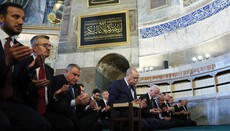
On May 29, 2026, Turkish President Recep Tayyip Erdoğan performed prayers and personally recited passages from the Quran at Hagia Sophia. The Turkish leader timed his visit to coincide with the anniversary of the Ottoman capture of Constantinople in 1453, SigmaLive reports.
Following the prayer service, Erdogan described the participation of worshippers in the celebrations as "magnificent" and drew a direct parallel with Sultan Mehmed II, who is said to have offered the first prayer in the conquered church immediately after the city's fall. Speaking to journalists, the Turkish president praised the "special beauty" of the occasion and personally distributed refreshments to members of the press.
This year's commemorations coincided with the third day of Eid al-Adha, giving the events an even larger scale. The centerpiece of the celebrations was the "Conquest March," which drew tens of thousands of participants onto the streets of Istanbul. Marchers proceeded from Beyazıt Square to Hagia Sophia accompanied by traditional Ottoman military bands known as mehter.
Istanbul Governor Davut Gül said that the city's residents had "united as one heart under the shadow of the glorious flag" on this day. The commemorative program also featured an air show by the SOLOTÜRK aerobatic team over Yenikapı Square and an official reception held under the slogan, "From the Fall of Constantinople to the Conquest of Hearts."
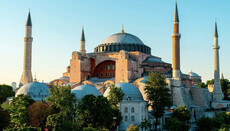
As previously reported by the UOJ, the call to prayer was recently proclaimed from Hagia Sophia for the first time since 1934. For many Orthodox Christians, the question of how Hagia Sophia is used remains closely tied to its historic role as the city's principal Christian cathedral. Following its successive transformations under different administrations, the monument continues to be the subject of public debate.