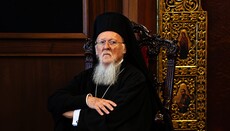

Phanar bishop: No Hagia Sophia, but a "living icon" – Patriarch Bartholomew
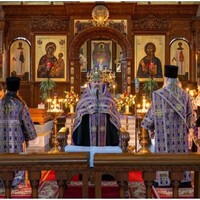
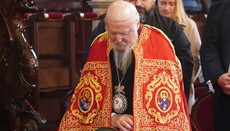
Archbishop Elpidophoros said that the loss of Hagia Sophia is compensated for the faithful by the figure of the head of the Phanar, whom he called a living icon.
Archbishop Elpidophoros (Lambriniadis), head of the Greek Orthodox Archdiocese of America under the Patriarchate of Constantinople, has issued an encyclical for Hagia Sophia Remembrance Day, observed by the Phanar on July 24. The text was published on the archdiocese’s official website.
The hierarch noted that this year marks six years since the church was, in his words, appropriated “for an alien purpose.” He acknowledged that the Trinity is no longer glorified within Hagia Sophia’s walls, but said its presence continues to shine through its “spiritual counterpart” – the Patriarchate of Constantinople.
Elpidophoros framed the central message of his encyclical as follows: “And though we are deprived of the structure of Hagia Sophia, we have, in the sacred person of His All-Holiness, Ecumenical Patriarch Bartholomew, a living icon of all She represents.”
The archbishop described the Phanar head’s ministry as “the longest in the history of the Church” and as “a shining reflection of the Great Church,” carried out “often at great sacrifice and even in the face of opposition from Christian brethren pursuing alien purposes.” The text does not specify which fellow Christians with alien aims the hierarch had in mind.
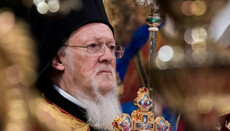
In the encyclical, the Phanar itself is called a “Sacred Lighthouse” and a “polished mirror” for all Christians, in which they can see to what extent their actions reflect the will of God.
Elpidophoros urged the faithful to observe Hagia Sophia Remembrance Day “not as those with no hope,” saying that their hope should be placed in the Mother Church of Constantinople and personally in the head of the Phanar, “whose humble greatness reflects the glory of the Great Church of Christ.”
As previously reported by the UOJ, the liturgical status of Hagia Sophia in Constantinople was changed in the summer of 2020. On July 10, Turkey’s Council of State annulled the 1934 decision that had converted the church into a museum, and on July 24 the first Muslim prayer service in 86 years was held there.
In the first years after the change, the Greek Orthodox Archdiocese of America referred to July 24 as a Day of Mourning, and its encyclicals called for efforts to secure at least the restoration of the building’s museum status. In recent editions, the wording has been changed to the more neutral Day of Remembrance, while the emphasis has shifted from demands directed at Ankara to praise of the Patriarchate itself.
Patriarch Bartholomew has headed the See of Constantinople since 1991.