UOC Chancellor explains why state persecutes Church
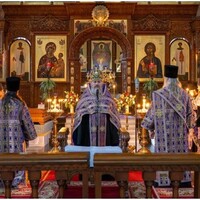
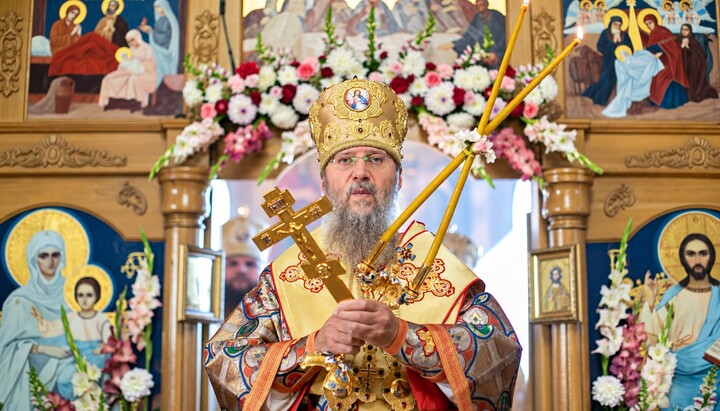
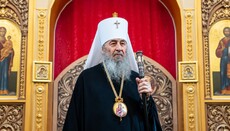
Metropolitan Anthony explained the reasons behind government pressure on the Church, drawing on the history of the Seventh Ecumenical Council.
Metropolitan Anthony of Boryspil and Brovary, Chancellor of the Ukrainian Orthodox Church, said that persecution of the Church arises when the state attempts to assume powers that do not belong to it and bring people's spiritual lives under its control.
Metropolitan Anthony emphasized that persecution begins when government leaders seek to exercise authority beyond the state's proper role, regardless of whether those in power are believers.
"Every persecution of the Church is a sign that the state seeks to put on God's vestments, to control not only people's outward behavior but also their religious beliefs and inner spiritual lives. Yet the state has few means of influencing the spiritual realm, so it resorts to force and repression. This marks the beginning of a period of confession of faith, exile, and persecution for Christians."
As a historical example, the hierarch recalled the events of the eighth century, when Byzantine emperors launched fierce campaigns of iconoclastic persecution. Seeking to give their actions an appearance of legitimacy, Emperor Constantine V convened a council in 754. However, that gathering went down in Church history as a false council.
"For every generation of Orthodox Christians, the 'council' of 754, like a number of other heretical assemblies, serves as a lesson that not everything calling itself a council today will be recognized as a true council in Church history," the hierarch noted.
In closing, Metropolitan Anthony urged the faithful to pray that the Lord would strengthen them "in standing firm for the Orthodox faith, for the canonical order, and for the unity of our Church."
As the UOJ previously reported, Metropolitan Anthony called on believers to remain faithful to the Church amid pressure on the Kyiv-Pechersk Lavra.