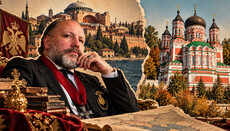

The deception that decided the fate of the Tomos
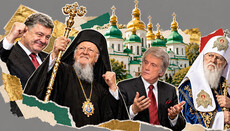
In 2008, the "Filaret problem" derailed Yushchenko's plan. In 2018, Poroshenko solved it in just one hour – with a police escort for the Greeks and verbal promises to Filaret.
A document from the Phanar concerning the creation of the OCU, published by UOJ-America, casts the events of both 2018 and 2008 in a new light. In both cases, there was a "Filaret problem." And in 2018, everything was decided in a single hour.
It is the morning of December 14, 2018, the day before the OCU's "Unification Council." A delegation from the Patriarchate of Constantinople is preparing to leave Kyiv over disagreements with Filaret Denysenko, who insists on becoming the head of the new church structure. Patriarch Bartholomew issues an ultimatum to the Ukrainian authorities: either Filaret abandons his claim to leadership, or the delegation leaves. President Petro Poroshenko goes to see Filaret, and just one hour later, a signed statement renouncing his claims is on the table before the Phanar's representatives.
What happened during that hour? The author of the recently published chronicle does not say. But when his account is compared with earlier statements by Filaret himself, Alexander Drabynko, and other participants in the events of 2018, many episodes that once seemed difficult to reconcile suddenly fit together into a fairly coherent picture.
According to UOJ-America, the chronicle was written by the current Metropolitan Gregory of Ancyra, who was a patriarchal deacon in December 2018 and personally participated in the events.
The text appears to supply a missing link not only in the story of the OCU's creation but also in the much longer history of relations among Filaret, the Phanar, and Ukraine's presidents.
The dress rehearsal of 2008
In 2008, then-Ukrainian President Viktor Yushchenko had already attempted to establish a "united local church" with Constantinople's involvement. Details of that effort were recently recounted by Viktor Baloha, who headed the Presidential Secretariat at the time.
According to Baloha, preparations took about six months. He personally accompanied Filaret to Istanbul twice for negotiations with Patriarch Bartholomew. The meetings lasted seven or eight hours each. Particularly revealing is the fact that these talks took place while Constantinople officially regarded Filaret as a defrocked cleric under anathema.
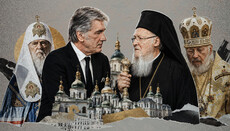
The negotiations concerned a plan for a new Ukrainian church to be headed by the now-deceased Metropolitan Volodymyr (Sabodan). But this was where the familiar "Filaret problem" arose. Filaret wanted to be the primate himself, something Bartholomew, according to Baloha, would not accept.
One episode is especially important here. According to Baloha's account, the main agreements had already been reached before Bartholomew's arrival, including the understanding that Filaret would not become primate. Filaret himself, however, had no intention of giving up his claim to leadership.
According to UOJ sources, Yushchenko personally visited Filaret for late-night negotiations, trying to persuade him to accept the arrangement proposed by the Phanar. But Denysenko stood firm: the new church structure would have to be headed by him.
Yushchenko faced a choice between Filaret and Bartholomew. He sided with Filaret. During his farewell meeting with Bartholomew, he asked the Phanar's leader to appoint Filaret as head of the future structure after all. Baloha recounts the Patriarch's response in vivid terms: Bartholomew allegedly struck the table with his staff and advised the president to attend to his own duties rather than interfere in church affairs.
Whether everything happened exactly that way is beside the point. What matters is that the effort ended in failure.
Ten years later, events followed almost the same course.
Filaret gives up the title, but not the power
In the fall of 2018, Filaret informed Bartholomew in writing that he would not seek election as primate of the new church. At first glance, this seemed to resolve the main obstacle that had derailed the 2008 effort. But the same letter contained an important qualification: Filaret asked to be entrusted with chairing the Synod of the united structure. He proposed that his "loyal disciple," Epifaniy Dumenko, become primate.
In other words, Filaret wanted to retain real power, while Epifaniy was being prepared for the role of a figurehead.
Gregorios' chronicle clearly illustrates the arrangement proposed by UOC-KP representatives during the negotiations. The "Unification Council" would elect the primate of the new structure, but Filaret would become chairman of the Holy Synod and exarch of all Ukraine, "with the rights of a Primate, namely, convening the Synod, episcopal elections, depositions, etc."
The result would have been a highly unusual arrangement. There would ostensibly be a primate bearing the title of metropolitan, but he would lack many essential powers. Alongside him would stand another man bearing the title of patriarch, who would exercise actual authority.
The Phanar's delegation refused to accept this two-headed structure. Metropolitan Emmanuel explained to Filaret's representatives that such a system of governance was absurd and had no precedent in Orthodox ecclesiology. Ivan (Eustratius) Zoria, who effectively conducted the negotiations on Filaret's behalf, refused to budge. According to Gregorios, he explicitly warned that without this condition, there would be no Council.
Even more interesting, however, was the position of the government representatives. Gregorios writes that they had previously assured the Greeks they were prepared to persuade Filaret to abandon his demands, but at the last moment they "went so far as to adopt Mr. Eustratius's position."
During the night of December 13–14, 2018, the confrontation intensified. Emmanuel was summoned to meet Poroshenko. Filaret and the head of the security service were already in the president's office. The meeting continued until approximately 2 a.m. When Emmanuel returned, he told his companions: "Elder Filaret was unyielding and inflexible, and refused to reduce his demands for special powers within the new structure. Moreover, he had the President's silent support." The metropolitan concluded: "Unfortunately, shall fail."
Here, the events of 2008 and 2018 almost perfectly overlap. Once again, Filaret refuses to relinquish power. Once again, the president sides with him. Once again, Constantinople's representatives refuse to accept his terms. And once again, the delegation is on the verge of leaving.
But this time, the Greeks did not leave
After the late-night meeting, the Phanar's representatives decide that the game is over and prepare to head home. The decision unfolds like something out of a spy thriller, complete with elaborate secrecy. According to Gregorios, the delegation members were convinced that the security services were constantly monitoring them. Rather than discussing their next steps aloud, they passed written notes to one another.
Then the plot takes an even more dramatic turn. Emmanuel buys a ticket, the suitcases are packed, and cars have been called to take them to the airport. But Rostyslav Pavlenko, then deputy head of the Presidential Administration and the official overseeing the entire OCU project, learns of their planned departure and calls the president "in terror."
Poroshenko asks Emmanuel to stop by on his way to the airport, while the police bring the remaining Phanar representatives to the presidential offices. As Gregorios later writes: "We were brought there under heavy police escort."
This was no ceremonial escort but an act of coercion. And it was so blatant that one member of the Constantinople delegation complained to the U.S. Embassy about being "forcibly conveyed" to the meeting, while another reported the incident to the Greek Foreign Ministry.
Once there, the Phanar's representatives had their cell phones confiscated and were subjected to personal searches. Emmanuel described the situation this way: "We are being detained and are forbidden to leave the country."
All this is difficult to believe, but Gregorios was a participant in the events and described them in detail.
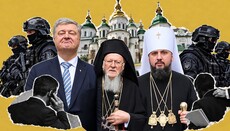
The decisive hour
So the Greeks are now effectively honored captives in the president's palace. Poroshenko calls Bartholomew, only to hear the same demand as before: either Filaret relinquishes his claim to power, or the exarchs leave Ukraine.
Poroshenko then reads out a draft statement in which Filaret renounces all positions in the new structure except permanent membership in the Synod. The chronicle records the following exchange between Poroshenko and Patriarch Bartholomew: "If I obtain Filaret’s signature on that document, then do we proceed, Your All-Holiness?"
His All-Holiness raised no objection but said that his exarchs would have to ensure that the rights of the Patriarchate of Constantinople were not compromised. Poroshenko then went to see Filaret.
At this point, Gregorios' chronicle falls into a telling silence. We know in detail what happened before the conversation, and we know what happened afterward. But we know nothing about the conversation itself.
Gregorios merely reports that the president immediately hurried to Elder Filaret so that "by his own authority he may obtain his signature," adding further on that Mr. Pavlenko had delivered the signed document within an hour.
What happened during that hour? Why was Filaret "unyielding and inflexible" during the night, only to sign a document the following morning that clashed with his previous demands?
The answer may lie in Filaret's own revelations six months later, following his high-profile break with the OCU.
"You will govern the Church"
In June 2019, when the conflict between Filaret and Epifaniy had already become public, the UOC-KP leader revealed that a verbal agreement on the division of power had been reached before the "Unification Council."
According to Filaret, Poroshenko had promised him in Epifaniy's presence: "You will govern the Church as you have always governed it." Epifaniy, meanwhile, would be responsible for external representation.
In another statement, Filaret elaborated: "There was an agreement between the president, Epifaniy, and me that Epifaniy would be the primate, but he would represent the Ukrainian Church externally, while internally the Kyiv Patriarchate would remain, and Patriarch Filaret would lead that Patriarchate."
He explained: "This was the agreement I accepted when I withdrew my candidacy. That was the condition, and that is why I was deceived. They told me I would govern the Kyiv Patriarchate, but it turned out otherwise."
In January 2021, Oleksandr Drabynko indirectly corroborated this account, stating that Filaret had been promised effective control over the new church, while Epifaniy was supposed to play the role of the "Queen of England."
With the publication of Gregory's chronicle, the pieces of the puzzle fall into a reasonably clear picture. It appears that Filaret agreed to abandon his claim to the official primacy of the OCU in exchange for verbal guarantees from Poroshenko and Epifaniy. Otherwise, his sudden change of position is difficult to explain.
Filaret himself put it this way: "We did not put this agreement in writing because I trusted them. I trusted the President, and I trusted Epifaniy. And they deceived me."
Why Poroshenko could not afford another 2008
In 2008, President Yushchenko tried to persuade Patriarch Bartholomew to make concessions in Filaret's favor. When that failed, the project collapsed. In 2018, Poroshenko tried to achieve the same thing. He failed as well. But Petro Poroshenko did what Yushchenko had refused to do: he deceived Filaret.
What was the difference between 2008 and 2018? The answer is obvious.
In 2008, the project to create what would effectively have been the OCU was merely one episode in Ukrainian political life. By 2018, however, it had become Poroshenko's single biggest political undertaking. His second presidential term was at stake.
Even people from his own political circle acknowledged this. In the summer of 2018, Taras Berezovets, a political strategist on Poroshenko's team, said: "One could say this is an ordinary election campaign tactic. And that would be true..."
Of course, supporters of the project presented autocephaly as a matter of national independence, national security, and so forth. But by late 2018, it had become impossible to separate the issue from politics.
As his presidential term drew to a close, Poroshenko had no economic breakthrough to show the public, no significant improvement in living standards, and no peace in Donbas, which he had promised at the beginning of his presidency.
That is why he made the Tomos the centerpiece of his reelection campaign and his slogan, "Army. Language. Faith." A last-minute collapse of the "Unification Council" would have been more than a failure of church negotiations. It would have amounted to a political defeat before the election had even begun.
And so, when Poroshenko found himself in virtually the same position as Yushchenko ten years earlier, just one day before the "Council," he simply could not afford to fail.
That is why Pavlenko called the president "in horror" upon learning that the Greeks were leaving. That is why the Phanar's delegation was effectively placed under arrest. And that is why Filaret was apparently given promises that no one intended to keep.
But what does any of this have to do with the Church?
What is most striking about this entire story is not even the sheer number of intrigues, secret agreements, political pressure tactics, and betrayed expectations.
It is something else: What does any of this have to do with the Gospel and the mission for which the Church exists?
Politicians view the Church as a tool. They need it to win elections, mobilize voters, consolidate power, and pursue geopolitical objectives.
But let us ask ourselves: What geopolitical objective was Christ pursuing when He said, "...I will build My church..." (Matthew 16:18)? Whose power was He seeking to strengthen? What voters was He trying to mobilize?
Does the Church not exist to unite people with God? To make Christ's words, "...that they all may be one; as thou, Father, art in me, and I in thee, that they also may be one in us..." (John 17:21), a reality for every believer?
Yet when we read Gregorios' chronicle and the revelations of Filaret, Drabynko, Baloha, and others about how the OCU was created, it is difficult to escape the impression that all of this is leading in precisely the opposite direction.