“Unification Council”: ice cold politics
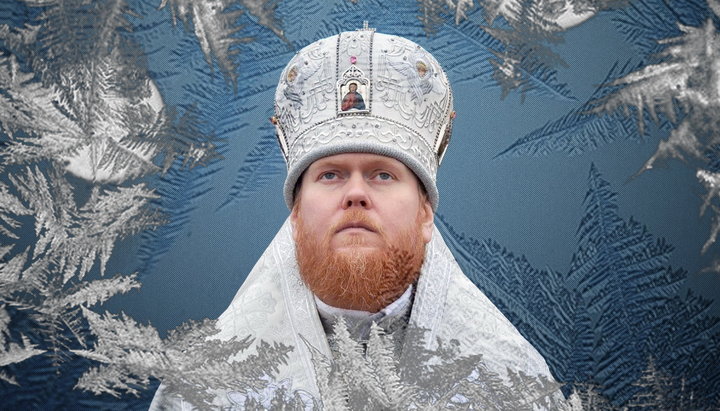
Spokesman of the UOC KP Eustratiy Zoria
A recent interview of the BBC with representative of the Kiev Patriarchate Eustratiy Zoria once again designated a “single local project” as a purely political one that is developing according to purely political rules: people fight for their interests, there can arise situational alliances with people of completely opposite convictions, while the cynical use of partners in the game, betrayal and deception are deemed common.
The correspondent asks: “Aren't you surprised that even several months after the beginning of the process of granting autocephaly to the Ukrainian Church, the number of hierarchs of the UOC MP, backing this idea, remains at the same level as announced in April?”
Zoria: “They have not made up their minds yet because they are not sure what the result will be... When the new church has been created, it will become an argument for them: if we join this, we will really get something bigger and better than now. And vice versa: if we don’t join, our situation will worsen because if we don’t take the lead in this process, parishes will leave us, and though we will remain bishops with our arch-sees, out of 300 parishes we will have 100 or 50.”
The idea that the bishops of the Church may have convictions, not just interests, and do not betray their Primate because it is contrary to their faith, not because it seems unprofitable to them, somehow does not come to mind at all to the representative of the Kiev Patriarchate.
The correspondent clarifies, “You mean in this purely theoretical example of yours only career-based considerations ...” and Zoria confirms, “If we want to achieve success, we must deal with the real situation, rather than the ideal one, which we’d like to have."
The idea that the bishops of the Church may have convictions, not just interests, and do not betray their Primate because it is contrary to their faith, not because it seems unprofitable to them, somehow does not come to mind at all to the representative of the Kiev Patriarchate.
He believes that the hierarchs of the UOC have not yet sold Metropolitan Onufriy (and each other) just because they are haggling over the price.
Of course, poor Filaret appeared in an extremely vulnerable position among the people with such ideas of loyalty – anyway, it was his choice.
Further Eustratiy Zoria foreordains for the UOC the fate of the “Party of Regions” but for now let's pin it down.
What is striking is the lack of, in fact, religious motivation. Behind the whole project of creating a new structure are national and political considerations. What Eustratiy Zoria defines as “the will of the Ukrainian people”, in particular, not the practicing, believing people, but the people as a nation in the person of politicians who have the courage to speak on behalf of the nation, he does not say anything new: the momentum of this ecclesiastic project was politicians rather than pastors. The key actors are either religiously indifferent (like Poroshenko) or who identify themselves as non-Orthodox or even non-Christian – like the Uniate Tiagnybok or the Muslim Jemilev.
Nobody hides the fact that the project was actively promoted (if not directly created) by the political forces being not only completely alien to the Orthodox faith, but completely unrelated to the Ukrainian people and who don’t even speak Ukrainian, or in Russian.
The other day, Filaret rewarded Jack Devine, ex-deputy director of the CIA, "for helping to create a united church. “Obviously, both Filaret and Jack consider any conspiracy completely unnecessary, and this is understandable – the US politicians do not even think to veil their participation in the project. US Department of State, Ambassador for Religious Freedom (!) Samuel Brownback, former US Vice President and an active supporter of promoting abortions and same-sex marriages Joe Biden, US Special Representative for Ukraine Kurt Volker, US Secretary of State Michael Pompeo – all of them tried to emphasize the active participation of such a powerful foreign state as the USA in addressing the Ukrainian ecclesiastic affairs.
The words of Eustratiy Zoria that the main reason for joining the newly created structure should be the desire to “get something bigger and better than now” can shock any practicing believer. These words bewildered even the BBC correspondent with their ice cold cynicism. However, in the context of a purely political project, which is the creation of a “single local church”, there is nothing unexpected in them. This is the policy, and the content of the whole process is the distribution of material resources.
This is a deal – be unfaithful, and you save access to resources. If you remain faithful, your resources will at least be reduced, and you will have problems.
Yet, at a purely practical level, this attitude to life has one fatal defect: in order for defectors to believe your guarantees, you must be credible. They must be sure that by calling them to commit a treachery you will not, in the end, betray them.
If the crucial motivation to participate in the new structure is the desire to “get something bigger and better than now”, then fierce competition for resources is inevitable, in which potential defectors find themselves in a predictably more disadvantageous position than Filaret followers who have already occupied all warm seats.
There is an apparent tension between the Kiev Patriarchate and the UAOC caused by the distribution of power and property in the anticipated structure: it is already evident that there will not be enough pie for everyone and that Bolivar cannot carry double. If there are arch-sees of both the UOC KP and the UAOC, and only one should remain in the new structure, this means that someone will have to move over.
Does the Filaret circle (who will constitute a hardcore in the new organization) feel as much heartfelt fraternal love for the hierarchy of the Ukrainian Orthodox Church as to be able to resolve all these issues somehow peacefully and kindly?
It’s not my observation but supporters of the "unification council" declare the clergy of the canonical Church "the enemy's tentacles", "FSB agents", "traitors", "Putin's agents" and generally, villains and vipers, at the same time urging them to join the new structure.
But why do they need “FSB agents” at this new meeting? And will the hostility, which the schismatics had for the UOC hierarchy, vanish once the latter turn up at the event? On the contrary, from distant enemies they will turn into competitors in the distribution of arch-sees and parishes, which will only aggravate hostility. After all, the motivation of the whole process, as defined by Eustratiy Zoria, is to “get something bigger and better”, and not to give it to someone else.
To commit a betrayal of one’s primate is to be in a world where everyone betrays one another.
If you renounce the principles on which the Church is built — loyalty and faith, love and trust, humility and service — then you fall into the cold, deceptive and ruthless world of politics.
To commit a betrayal of one’s primate is to be in a world where everyone betrays one another. It means to sit at the card table, where everyone cheats each other, and, as a result, everyone loses – both in time and in eternity.
Read also
Pentarchy with Rome: A return to the roots or a new schism?
Patriarch Bartholomew wants to revive a council of five patriarchates, including Rome. What would reunion with Catholics look like, and what role would be left for the other Churches?
Concubine or daughter? On words that cannot be used about the Church
An archon of the Church of Constantinople likened the UOC to Moscow’s “concubine.” But for St. Epiphanius of Cyprus, “concubines” are heresies.
Shameful chronicle of one week: how the OCU was born
Exarchs under escort, a call from the operations room, and 36 votes for Epifaniy: what a member of the Phanar delegation revealed about the 2018 "Council".
Can UOC eparchies be dissolved before court ruling on Metropolia?
DESS is launching separate proceedings against UOC eparchies, monasteries, and institutions while the case involving the Kyiv Metropolia is still pending.
Two murders, one silence
Zelensky condemned the killing of a Catholic priest in Poland the very same day. A month earlier, a UOC monk was murdered at the Sviatohirsk Lavra – and the president has remained silent ever since.
A bow to Phanar? Why did UOC academy congratulate Constantinople’s exarch?
A delegation from the Kyiv Theological Academy congratulated the Phanar’s exarch, who has remained silent about the persecution of the UOC. Who authorized this gesture, and why did even OCU supporters fail to appreciate it?