The city where free medical care was a crime against the state
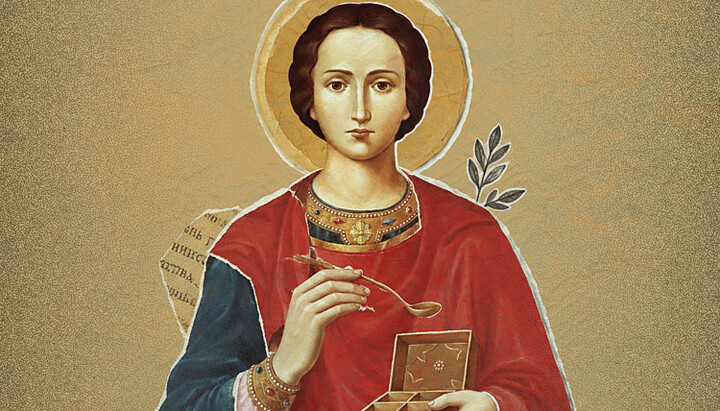
Holy Great-Martyr and Healer Panteleimon. Photo: UOJ
In the late third century, Nicomedia was known both for its highly trained physicians and for the prices they charged. Doctors belonged to professional associations and set fees for consultations and prescriptions – fees well beyond the means of the poor. Slaves, day laborers, and beggars at the city gates were left to fend for themselves when they fell ill: medical care cost money, and they had none. In some ways, the system feels surprisingly familiar today – private medicine works well enough, but not everyone can afford it.
A young man named Pantoleon was expected to take his place in this privileged medical world. The son of a wealthy pagan, Eustorgius, and a Christian mother, Eubula, he trained under Euphrosynus, one of the finest physicians in the city, and was destined for a position as court physician to Emperor Maximian. His future seemed perfectly mapped out.
Even the name his parents gave him reflected their ambitions for him: Pantoleon – “lion in all things.” They wanted their son to grow up fearless. Their hopes were fulfilled – just not in the way they had anticipated.
The teacher who opened his eyes
At the time, a presbyter named Hermolaus was living in hiding in Nicomedia – one of the few priests to have survived the persecutions. Pantoleon began visiting him and listening to his teachings. And there he heard something that no one at medical school was likely to have told him: from a spiritual point of view, all the money physicians were so proud of earning was worth nothing.
Presbyter Hermolaus was an educated man. In his conversations with the young physician, he spoke of Asclepiades, Hippocrates, and Galen – the three great pillars of ancient medicine. Yet he described their teaching as “worthless and of little help to those who turn to it.”
For Pantoleon, who had just completed his training under one of the city’s finest doctors, this was a crushing blow to his professional pride.
Before long, however, the young man had a chance to see for himself whether Father Hermolaus was right. Pantoleon came across a child in the street who had been bitten by a snake. The child was dead. The young physician prayed – and, according to tradition, the child came back to life. That was something neither Hippocrates nor Galen had ever been able to do.
After this, the young physician was baptized and received a new name – Panteleimon, meaning “all-merciful.” The small change in his name reflected the much greater change that had taken place within him: the lion raised to be fearless had become merciful – without becoming any less courageous.
No fee for treatment
Panteleimon began treating people free of charge. This was not a one-off charity campaign of the kind private clinics and laboratories sometimes like to advertise. It was how he practiced medicine every day. Anyone who was sick and could not afford Nicomedia’s doctors now knew where to turn.
One blind man, for example, had already spent his money on the city’s physicians without being cured. Panteleimon healed him and asked for nothing in return. According to tradition, it was this miracle that brought Panteleimon’s own father, Eustorgius, to Christ.
But Nicomedia’s medical system was built in such a way that one doctor treating people for free inevitably meant fewer patients for everyone else. Once someone had received treatment without paying for it, there was little reason to go back to doctors who charged every penny they could. And so Nicomedia’s physicians gradually began to see their incomes fall.
The logic of competition soon took over: they began looking for a way to get rid of the man who was taking away their patients.
A carefully crafted denunciation
And this is where the story becomes particularly interesting – because finding the right grounds on which to denounce Panteleimon was not so simple.
They could hardly go to the emperor and complain that they were losing money. Maximian was unlikely to concern himself with a dispute among doctors over patients. And even if he had, the complainants would simply have looked greedy – men angry because they were losing income to a colleague who treated the poor out of mercy. Put that way, the accusation would have collapsed before the denunciation was even finished.
So they framed their complaint in the language of religious loyalty – the one language that, at the height of the persecutions under Diocletian and Maximian, could be relied upon to destroy an enemy.
“O King! The young man whom you commanded to be instructed in the art of medicine, desiring to have him with you in your palace, has despised your manifest favor toward him and goes about the prisons, healing prisoners who blaspheme our gods, sharing their beliefs concerning our gods and leading others into the same wicked thinking,” the complaint read.
Notice what is missing: not a word about money. Not a word about lost patients. The young man visits prisons, treats condemned Christians, shares their beliefs, and persuades others to do the same – that is the crime they chose to put before the emperor. Economic envy had dressed itself in the robes of pious outrage over offended gods.
It is always easier to defend your own interests when you can pretend to be defending someone else’s. The doctors were not protecting the gods – the gods were not what concerned them. What they were protecting was the steady flow of paying patients through their doors.
Maximian offered Panteleimon the simplest way to clear himself of the charges – sacrifice to the idols. Instead, the matter was to be settled through a public healing.
A paralyzed man was brought before the pagan priests and Panteleimon: whichever faith proved capable of healing him would be shown to be the true one. The priests tried and failed, despite their many incantations. Panteleimon invoked the name of the Lord Jesus Christ – and, according to tradition, the man rose to his feet before the eyes of the entire imperial court.
When medicine is powerless before holiness
After such a public miracle, one might have expected the emperor to acquit the accused physician. Instead, the miracle sealed his death sentence.
Panteleimon was tied to an olive tree. According to tradition, the first sword blows could not harm the martyr – the blades went soft, and the executioners, terrified by what they had seen, begged the saint for forgiveness. The execution was carried out only after Panteleimon himself insisted that they obey the order. This happened around the year 305.
On paper, the doctors who had denounced him got exactly what they wanted. Their competitor had finally been removed. No one was disrupting their business anymore by treating patients for free. But the Church would remember forever the name of the man who healed people for the glory of God.
Nicomedia’s medicine treated those who could afford it. Panteleimon treated people without asking for payment – and for that, he was killed.
Centuries have passed, but human nature has not changed. And to this day, the Holy Great Martyr remains the heavenly patron of those physicians for whom the Hippocratic oath is more than empty words.
Read also
Freedom begins when there's nothing left to take
Fear of persecutors takes root in our attachment to possessions. We turn to St. Basil the Great to understand why the prefect's threats held no power over him.
The bride in the window frame
The author of the earliest account of St. Thecla’s life was defrocked. Yet it was his book that preserved the only ancient description of the Apostle Paul’s appearance.
Drinking priest, or the flip side of parish life
In his epistle, the Apostle Jude describes a scene familiar to anyone who has seen a church meal turn into a drinking party.
A lesson from a speechless donkey
The famous seer struck his donkey three times for refusing to go forward. All the while, she was saving his life – and seeing what he could not.
The time when the soul ripens
Modern society has turned youth into a cult and old age into a period of merely “living out one’s days.” The Christian perspective reveals the profound spiritual meaning of our later years.
Faith is not a checker piece in a spectator sport
Arguments about faith on social media increasingly resemble no-holds-barred fights. We turn to a saint who, sixteen centuries ago, knew how to speak to those interested only in turning theology into a combat arena.