The beloved physician: How science and faith serve Christ
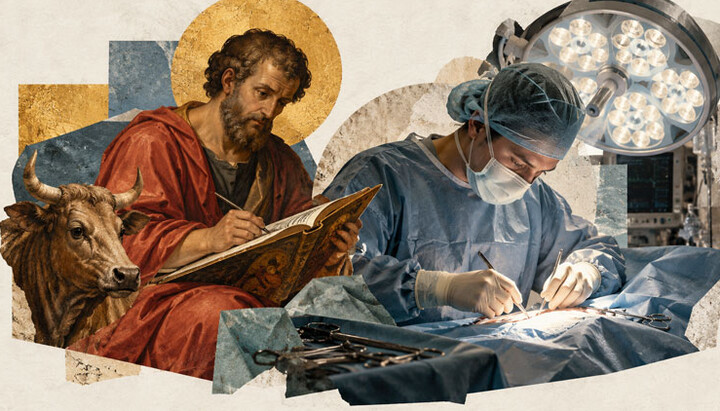
Sacred history preserves a remarkable account of a physician who remained at the Apostle Paul's side during his darkest hours.
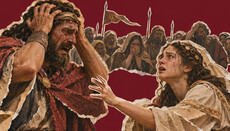
In the dim light of a Roman prison, with the end of his earthly life seemingly inevitable, the Holy Apostle Paul takes up his pen and writes his final words. Silence surrounds him. Bishops, disciples, and companions have been sent to distant Christian communities. Some have been unable to withstand the weight of persecution and have returned to worldly affairs. Amid this loneliness come words of profound gratitude: “Only Luke is with me” (2 Timothy 4:11).
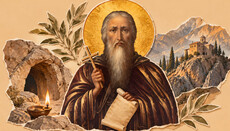
Scripture tells us the profession of this faithful companion. In his Epistle to the Colossians, the Apostle Paul calls him “Luke, the beloved physician” (Colossians 4:14). The man who remains beside the prisoner in chains is not merely a fellow preacher but a trained medical practitioner. The ancient historian Eusebius of Caesarea recorded: “Luke, who was by race an Antiochian, and a physician by profession, was long a companion of Paul.”
At the time, Antioch in Syria was a major cultural center of the Roman Empire, where medicine had reached a high level of development. Classically educated, the native of Antioch left behind a successful medical practice to share in the labors, dangers, and shipwrecks endured by the great Apostle.
A clinical eye on the pages of the Gospel
Reading the Gospel of Luke and the Acts of the Apostles, one is struck by the author's close attention to the physical manifestations of illness.
His accounts of healing reveal the observant eye of a medical professional.
Where other Evangelists simply mention a fever, St. Luke uses more precise terminology. Describing the healing of the Apostle Peter's mother-in-law, he writes that she “was sick with a great fever” (Luke 4:38). In ancient medicine, including the writings of Galen, fevers were classified as “great” or “small” according to their intensity and the danger they posed to life. In his account of a leper, Luke describes the man as “full of leprosy” (Luke 5:12), indicating an advanced stage of the disease.
In the Book of Acts, recounting events on the island of Malta after a devastating shipwreck, the Evangelist describes the illness of Publius' father, who “lay sick of a fever and of a bloody flux” (Acts 28:8). The original Greek text uses a specific medical term for a severe intestinal disorder, one frequently associated with fever in ancient medical literature.
Even the treatment of wounds in the parable of the Good Samaritan reflects contemporary medical practice. The Samaritan binds the injured man's wounds, pouring in “oil and wine” (Luke 10:34). This combination of an antiseptic and a soothing agent was considered a standard treatment for injuries.
In the 19th century, researcher William Hobart identified approximately 400 specialized terms in Luke's writings, arguing that they demonstrated the Evangelist's medical training.
It is not without reason that Scripture calls Saint Luke a physician, and his attention to human suffering is illumined by deep mercy.
Healing as ministry
In the Old Testament tradition, attitudes toward medicine were sometimes ambivalent. Seeking help from physicians was at times regarded as a sign of insufficient faith in God's power.
Yet the Book of Sirach offers clear spiritual guidance: “Honor a physician with the honor due unto him for the uses which ye may have of him: for the Lord hath created him. For of the most High cometh healing” (Sirach 38:1–2).
The author makes clear that prayer should seek not only miraculous healing but also wisdom for physicians: “And they shall also pray unto the Lord, that he would prosper that, which they give for ease and remedy to prolong life” (Sirach 38:14).
The Holy Fathers developed this understanding further. In his ascetic rules, St. Basil the Great observed: “Just as we should not reject the art of medicine altogether, neither should we place all our hope in it.”
St. John Chrysostom, reflecting on the Apostle Timothy's illnesses, emphasized that Paul did not heal his disciple through a miracle but advised him to make use of ordinary medical remedies.
In the Christian understanding, medicine is a gift from the Creator – a means of relieving the suffering of others.
It is no coincidence that the ancient unmercenary healers Saints Cosmas and Damian of Asia Minor took a solemn vow to treat the sick without payment, seeing Christ Himself in every suffering person.
The path of a holy surgeon
This profound understanding of a physician's calling endured through the centuries.
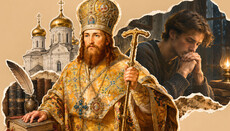
At the end of the 19th century, a young student named Valentin Voyno-Yasenetsky enrolled in the medical faculty of the Imperial University of St. Vladimir in Kyiv. During his studies, he visited the Kyiv-Pechersk Lavra every day, sometimes twice a day.
A gifted painter who had graduated from the Kyiv Art School, he deliberately gave up an artistic career. His ambition was to become a rural district physician, serving the poor.
After years of demanding work in rural medicine, he became an outstanding surgeon and the author of important works on purulent surgery. In 1923, at the height of fierce persecution against the Church, Bishop Andrei (Ukhtomsky) secretly tonsured him as a monk in Tashkent.
The bishop initially intended to give him the name of the holy healer Panteleimon. But after reflecting on the future saint's work and preaching, he chose another name.
As St. Luke later recalled, the bishop “decided that the name of the Apostle and Evangelist Luke, the physician and icon painter, suited me much better.”
Thus, two lives became intertwined across the centuries.
St. Luke of Crimea endured Stalinist prison camps, exile, and torture, yet he never abandoned his medical calling. Before every operation, the holy surgeon prayed before an icon of the Mother of God hanging in the operating room and traced a cross with iodine on the patient's body.
For him, as for the Evangelist, healing and prayer were inseparable.
Seeing the whole person behind the illness
In his advice to young physicians and surgeons, St. Luke repeatedly emphasized that beyond anatomical details and serious diagnoses, a doctor must learn to see the whole person – including the patient's emotional suffering, fears, and hopes.
We find this same approach in the Gospel of Luke.
The Holy Apostle does far more than describe the clinical symptoms of disease. His Gospel is often called the Gospel of Mercy.
Throughout its pages, the Savior appears as the Physician of souls and bodies, the Protector of the outcast, and the Comforter of those who suffer.
The Holy Apostle Luke completed his earthly journey at an advanced age, leaving the Church a magnificent spiritual legacy.
His example reminds us that professional knowledge, human compassion, and faithfulness to God can come together in one blessed ministry. And even in the most difficult times, when human strength is nearly exhausted, a true Christian remains beside those who need help.