
Spiritual scoliosis: How sin breaks the spine of our will

Why do we stare at our feet instead of at the heavens? How does the gravitational pull of sin bend the soul downward, and how do we recover an inner backbone through prayer and silence?
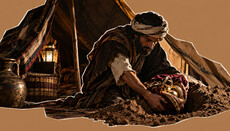
This Sunday we hear the Gospel reading about the healing of the woman bent over for eighteen years. Imagine a human being who has not seen the sky, the sun, or a single human face for nearly two decades. Her horizon is dust underfoot, strangers’ shoes, filth, and her own frail knees. Spiritually, this is humanity’s most terrifying diagnosis.
Human beings, unlike many animals, can look upward. Our upright posture symbolizes the soul’s natural orientation toward Heaven and toward God. Yet something has happened to us that has made us worse than the beasts.
Our mind has become shackled to dust, to routine, to the raw matter of this world. We have lost the capacity for contemplation, lost the perspective of Heaven, and learned to gaze only at the dirt beneath our feet.
The gravity of sin
Sin is not merely the violation of a rule – it is an ontological distortion, a violent bending of our higher nature toward lower matter. Christ speaks plainly: the woman was bound by Satan. The devil seeks to humiliate the image of God within us, to turn us from kings of creation into slaves crawling in the dust.
Satan has not bound us with ropes, but with the weight of “earthly gravity.” A soul meant to fly now creeps. We search for happiness in dust – in money, in human approval. We dig in the earth for treasure that is, in truth, buried in the depths of our own hearts. We do not see other people – only their “shoes,” that is, their outer shell. Sin has broken the spine of our will.
The mind imprisoned by distraction
What is the cause of this crookedness? It lies in the head. The mind is glued to the earth: to its pain, its pleasures, its anxieties, its fears. The mind has abandoned its sacred dwelling – the heart – and spilled outward into the world of sensations and emotions, becoming captive to wandering thoughts. It looks downward.
We try to pray, but the mind brings up the news, starts an argument with someone, plans tomorrow or replays yesterday. We want to lift our gaze to God, yet the mind forces our “I” back into the dust of distraction. We cannot straighten up.
The sacrament of touch and the grace that heals
The Gospel says: “Jesus saw her and called her to Him...” Healing begins not with our effort. If we imagine that we can grit our teeth and become holy, we are gravely mistaken. We must approach Christ and allow Him to lay His hands upon us so that His grace may touch the heart and transform the mind.
Healing begins with awareness of His presence. In prayer there comes a moment when, through the noise of thoughts, we suddenly sense silence. This means Christ has “seen” us in the darkness of our heart.
As soon as you notice your inward “bentness” – your distraction – stop and let God look at you. Bring Him your weakness, not your imagined spiritual achievements.
No psychological technique and no moral exertion can straighten a crooked mind or unbind a bent will. Only the hands of Christ can do this.
The grace of God heals our infirmities. Yes, it may hurt. The straightening of a long-established “spiritual scoliosis” is painful.
Imagine having to pass through a narrow vertical slit in a wall. A person hunched over, burdened by attachments, bags of earthly baggage, an inflated ego – cannot pass. One must straighten up and shed the excess. This is the narrow path of salvation.
What is required is the concentration of attention. A distracted mind is wide – everywhere and nowhere. An attentive mind is focused in a single point – in God.
But the moment we bring our attention into focus, the enemy immediately tries to bend us again: a tempting thought knocks at the door, and attention shifts from Christ to the suggestion. The mind slips out of the heart and falls back to earth. The vertical line is lost. Thus the prophet David teaches: “Blessed is he who seizes your little ones and dashes them against the rock.” While thoughts are still “infants,” dash them against the Cornerstone, the name of Christ.
Three lines of defense for keeping the vertical
To keep the vertical alignment granted by Christ’s touch, we must build three lines of defense:
- The wall of silence – guarding the lips. The fastest way to spill grace and become bent again is idle talk.
- Not judging others. The bent woman saw only dirt; the straightened one sees faces. The moment we judge someone, our mind collapses downward. Judgment is the gravity of hell.
- Small anchors. We cannot remain in full spiritual tension all day, but we can cast small anchors. Every hour, or during a change of activity, pause for a moment. Physically straighten your back, breathe in and out, and say, “Glory to You, O God, glory to You,” or the Jesus Prayer, or simply, “Lord, have mercy.” This restores the sense of presence and keeps the “hump” of distraction from growing again.
Do you remember Lot’s wife? She left Sodom, but looked back – and froze as a pillar of salt. A spiritual law is revealed here: if God has straightened you, do not look back on your former sickness with curiosity. Often, after receiving forgiveness and freedom, we begin to “savor” old grievances or sins, chewing on the past.
We think we are analyzing, but in truth we are sinking back into the dirt.
Forgetting evil is a condition of freedom. The past is dead. There is only the now – in which Christ stands and holds us by the hand.
The preservation of uprightness is not muscular strain but the continual return of attention to the Source. We will fall. We will bend again under the day’s weight. But the difference between the spiritual and the worldly person is this: the spiritual one knows how to rise at once – with a repentant sigh and the invocation of the name of God. The worldly one does not.
Inner backbone for everyday life
To remain upright in daily life, one needs an inner spine. The diaphragm of the bent woman was constricted for eighteen years. Fear and distraction always make us breathe shallowly, with the “top” of the lungs. When we lose peace, our breath becomes rapid and thin. This means we have begun to bend.
Resist it. Take a deep, calm breath with the Jesus Prayer. Physically square your shoulders. This will signal your body: “I am free in Christ.”
Bentness also forces us to avert our gaze. Such a person fears to look others in the eye. So strive to look at the world straight on.
The Christian gaze is open but not brazen; meek but not crushed.
Imagine that Christ has placed an invisible rod in your spine – a beam of light. Whatever happens around you, this rod does not bend. Outwardly you may nod, agree, humble yourself, yield – like water or soft clay – but inwardly your connection to Heaven remains a straight, unbroken line.
Close your eyes and ask honestly: where is your mind looking? Is it fixed to resentment, fear, desire, or a troubling piece of news? This is the weight that forces your neck toward the ground. Acknowledge your helplessness.
Say within yourself: “Lord, I am bent. I cannot lift myself out of this turmoil. I see only dust. I am sick with the spirit of infirmity.” Let this be your humility – the door through which grace enters.
Then begin slowly and attentively to recite the Jesus Prayer. The hand of Christ will gently straighten your inner spine. Do not fight the thoughts; do not attend to them. Simply turn your gaze from the earth to Heaven.
And if you feel, even for a moment, silence and lightness – this is your Sabbath, your peace, your liberation.