
Zacchaeus syndrome: How to step out of crowd and stop being a “vegetable”
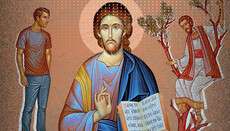
We are used to seeing Zacchaeus as a simple sinner. But he is the portrait of a modern, successful man – someone who builds his private paradise on other people’s tears. Here is how to break the death-matrix, and why God comes without being invited.
Zacchaeus is a chief tax collector. Translated into modern language: a traitor, a degenerate, a man who built his personal paradise on the tears of his own people. Yet behind that façade of power and money hides an ontological horror – a person drowned in his own smallness and pettiness.

In general, it seems to me that modern society deliberately cultivates Zacchaeuses, the way vegetables are grown in a greenhouse. The world feels as though it has been stretched over with a film that blocks the sky from the human being.
People are convinced that they are free. In reality, they merely repeat what they have heard, follow what has been suggested to them, make the choice that others have already made for them.
People live within a hedonistic system of values. Everything that troubles them, everything they worry about, are fascinated by, and strive for – exists exclusively on the horizontal plane of being.
Dictatorship of the crowd
We have lost ourselves in a crowd of algorithms, чужих opinions, and endless informational noise. A person feels defective if he does not match the trends imposed on him by so-called public opinion. The crowd that surrounds us and does not allow us to see Christ is the noise of thoughts – a swarm of ideas, passions, and mental scripts that fill our consciousness.
The soul’s intelligent eye is filmed over by earthly cares and cannot see beyond the level of material desires.
Consumer greed is an attempt to fill the emptiness inside with external acquisitions and a socially meaningful status.
All our current tasks, anxieties, news, the stream of urgent affairs – this is the boiling, noisy crowd in Jericho. Separate yourself from that crowd. Feel that you are not its part. You are the one whom God calls by name. But we cannot hear that call while we remain inside the “crowd” of our reactions. To do that, we must step out from under the film of automatic thinking.
The leap of faith
Zacchaeus throws aside his pride, his status, his dignity, and makes a “leap of faith” (Kierkegaard). He agrees to become funny, awkward, unworthy of his social rank – just to glimpse the Light for a moment. Zacchaeus seeks Christ; he climbs above the crowd in order to break free of the “dictatorship of mediocrity” and meet the Truth.
The sycamore fig tree is the tree of life growing in the middle of the desert of his soul. For Zacchaeus it becomes the axis of the world, the place where the earthly meets the heavenly. For him it is a portal into another – spiritual – world.
Climbing that tree is not easy. It is the path of dying to the old man and being reborn as the new. One must tear the mind away – stuck and soldered to this world’s horizontal plane – and break the chains of attachments that do not allow one to rise to height.
Life in the crowd is easier. The crowd creates an illusion of safety. In the crowd I am “like everyone else,” the same as the others. I am not seen. I am only a tiny drop in a common dirty swamp. When everyone shouts “hosanna,” I shout it too. When everyone shouts “crucify,” I demand the same. Everyone jumps – and I jump. Everyone is put on their knees – and I kneel. Everyone is led to execution – and I do not resist. This is the path of death.
The path of life is different. You must climb the tree and separate yourself from the crowd. It is frightening, painful, and mortally dangerous, because deadly stones will fly up at you from below. You think not as everyone thinks, live not as others live, have an opinion unlike everyone else’s – you have become a destructive element in the universal matrix of death. But there is no other path.
Therapy by name
Christ calls Zacchaeus by name. In biblical metaphysics, a name is essence. God knows Zacchaeus in his original design – before he became a “sinner” and a “tax collector.” When God addresses you by name, it is nothing other than an act of restoring a person out of the faceless mass of sin.
The name of Zacchaeus, spoken by God, revives his true personhood, buried under sin.
The gaze of God is an outpouring of divine energies, of which Gregory Palamas taught. In that moment Zacchaeus does not merely “see” a Man – he is illumined by the Light that transfigures his nature. The same happens when we call upon God by the Name that must not be taken in vain. In hesychasm, the Divine Name (“Lord Jesus Christ…”) possesses immense creative power.
Freeze-frame
After Zacchaeus climbs the tree, one of the most piercing moments in the Gospel story arrives. Jesus stops under the tree and lifts His gaze to Zacchaeus.
Let us pause here. Let us listen into this silence. Christ has not yet said anything; He looks silently into the face of Zacchaeus. Everything stands still. The God-Man sees the wounded beauty locked inside this chief tax collector. God sees in each of us, in the same way, what we ourselves buried long ago.
Then the Savior calls Zacchaeus by name. With that, He tears him out of the jaws of death and non-being. You are no longer a “tax collector.” You are Zacchaeus – which means “pure,” “innocent.”
“Hurry and come down, for I must stay at your house today,” the Savior says. This is not a request, but a necessity. There can be no objections here. Zacchaeus was not ready for this; his house is a mess, nothing is cleaned up, the household is not prepared. But Zacchaeus does not say to Christ, “Wait – I will get things ready, and then I will invite You.” He receives Him at once.
An invasion into chaos
We are used to hiding what is inside the house of our soul behind beautiful façades. We do not show what could shame us, so that people will not think badly of us. And Christ quite literally breaks into Zacchaeus’ house – unexpectedly, both for the owner and for those who live with him.
God is not disgusted by our dirt. He enters it in order to illumine it from within.
And here a miracle happens. In Zacchaeus’ house, a mystical transubstantiation of space takes place. The air becomes different. The walls that had witnessed greed and fear now absorb holiness. This is the moment when God and man converge in one shared space of communion. Such is the coming of grace. In it all arguments vanish. The grumbling of the crowd outside grows quiet. A hush of presence descends. This is a state of the deepest peace. Prayer is transfigured: it is no longer merely spoken – it is heard from within. Grace itself begins to pray. Such prayer is called self-moving.
Transparency of the soul
Zacchaeus’ promise to give away his property is not social reform. It is the fruit of deification. When the Light flares up inside a person, matter loses its density and its power. Zacchaeus gives money away not because he “must,” but because he has become “transparent.” He no longer clings to anything for himself, because he has become a vessel for God.
Here the logic of possession gives way to the logic of gift.
Zacchaeus realizes that the fullness of being makes material hoarding meaningless. His gesture is not simply charity; it is an act of spiritual liberation.
Salvation “here and now”
“Today salvation has come to this house” – these words of Christ sound like a triumphal hymn. Salvation is not something that will happen after death. It is what pierces reality right now. Zacchaeus becomes again a “son of Abraham.” He returns to the cradle of spiritual history. He is no longer an orphan in a cold cosmos; he is a beloved child, found in a dark forest and brought back to the hearth.
“The Son of Man came to seek and to save the lost.” In these words is all the tenderness of God.
All of us are “lost” in one way or another. All of us have wandered in the labyrinths of our ambitions, fears, and mistakes.
The whole Gospel story teaches us that there is no depth of fall into which Christ’s gaze cannot reach – and no person whom He cannot look upon with love.
The story of Zacchaeus is the story of Creator and creature meeting in an embrace – and of a new, shining human being rising from the ashes of an old, greedy life. It is a hymn to the second chance, given to each of us not sometime later, but precisely here and now.