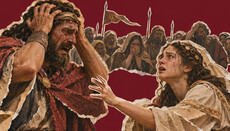

How to stop beating yourself up over a missed prayer

When you oversleep your morning prayer, you want either to find a dozen excuses or to give in to pangs of conscience. St. Demetrius of Rostov acted differently.
The famous "Diary" (Diarium) of St. Demetrius of Rostov is kept in the Kyiv Caves Lavra. If you open it hoping to find secret confessions or intimate complaints about life, disappointment awaits. This is not the kind of diary that psychologists advise us to keep, but a chronicle of life. It contains the dates of tonsures performed by the hierarch, the days of death of his acquaintances, even notes about natural disasters. "On the 9th of August the earth shook at midnight," the bishop wrote in 1681.

Having carefully read the saint's diary, I address its author in bewilderment:
– Vladyka, I look at your entries and recall how this morning I slept through my prayer rule. I turned off the alarm clock, rolled over onto my other side, and when I opened my eyes, it was already time to rush off to my affairs. And now I walk around with a stone on my soul. At times I begin to justify myself: I went to bed late, the week was hard, there was yet another shelling during the night. At other times, on the contrary, I engage in self-flagellation: "What kind of Christian are you, if you couldn't even get up fifteen minutes earlier?" And you write so calmly about how you overslept just once...
– I overslept, – the saint agrees. – And not just my cell rule, but the beginning of Matins in the monastery.
Negligence through sloth
This story took place in August 1685. A little more than a year earlier, the future saint had moved from Baturyn to the Kyiv Caves Lavra at the invitation of Archimandrite Varlaam (Yasynsky) and set about writing the lives of the saints.
This labor consumed almost all of his free time. The bishop wrote at night, and sometimes went to bed fully clothed, only an hour before Matins, which he tried to attend faithfully. And so one day, as the saint writes, "I heard the bell ringing for Matins, but, owing to my usual sloth, having overslept, I did not arrive in time for the beginning."
– Wait, Vladyka, – I interrupt. – What kind of sloth is that? You worked at night on the lives, you slept in snatches. Your body simply could not bear it. If I were in your place, I would have written it down this way: "I was exhausted from my labors, therefore I did not get up."
The saint smiled slightly.
– And who would have felt better for such honesty? God? He knows without my explanations what time I went to bed and how much I worked. Myself? If I start justifying myself, my conversation with the Lord will quickly turn into a trial in which I am my own advocate.
If you overslept, then you overslept. Call a thing by its name, and it immediately becomes easier.
Indeed, the bishop states his lapse with the same precision with which he recorded the nighttime earthquake in the "Diary."
Prayer in the Roman manner in a dream
Then, remaining in his cell, the saint dozed off again and saw a dream. It was as though he had been entrusted with watching over the cave where the holy relics repose. He sees the relics of the Great Martyr Barbara – a saint he especially venerated ever since Hegumen Meletius sent him a particle of her relics. In the dream, the saint's body seemed alive and snow-white, but the coffin was wretched and decrepit.
The saint began to think where he might obtain a rich reliquary, and addressed the martyr herself: "Holy Virgin Barbara, my benefactress! Entreat God for my sins." The answer rang out sharply and categorically: "I do not know whether I will entreat, for you pray in the Roman manner."
What exactly these words meant, the saint did not explain. Nor does the saint himself speculate on the matter. He understood these words as a reproach for his brief and infrequent prayer. And because of this he began to grieve.
"Vladyka, but isn't that hurtful?" I say. "You labored so much for the Church, and you were told that your prayer is weak. Didn't you want to object?"
"Object, being a saint?" Saint Demetrius smiles wryly. "Why? Especially since, if my conscience immediately responded and confirmed the reproach, it means the blow hit its mark. I did not argue. I simply grew sorrowful."
Seeing that the archpastor had grown downcast, Great Martyr Barbara suddenly looked at him cheerfully, said "Do not be afraid," and added a few more words of comfort. The saint awoke. He was sorry that the vision had broken off, but joy remained in his heart.
In his diary he concludes this account with humility: "God knows what this dream signifies."
Why is self-justification heavier than sin itself?
We often think that the main trouble lies in the very fact of a missed prayer. But in reality, what destroys us far more is what begins afterward.
One can resort to self-justification. We begin to bargain with our conscience, trying to prove that circumstances were stronger than we were. Another scenario is self-reproach. We become fixated on our own worthlessness, grow resentful of ourselves, and at the same time of God, Who, as it seems to us, now looks upon us with reproach.
In both the first and the second case, our self-love stands at the center.
The Psalmist knew this state all too well: "Because I kept silent, my bones grew old through my groaning all the day long <…> I acknowledged my sin to Thee, and my iniquity I did not hide; I said, 'I will confess my transgressions to the Lord'" (Ps. 31:3–5). As long as a person remains silent or twists and turns in every way, guilt gnaws at him from within. Once he honestly speaks the truth, space is cleared for God's mercy.
The publican of the Gospel acted in the same way. He did not list his merits or explain why life had forced him to collect taxes. He simply said: "God, be merciful to me a sinner!" (Lk. 18:13). And Christ bore witness: "this man went down to his house justified" (Lk. 18:14).
How many times can one start all over again?
And yet, what is one to do right now, when the morning has already passed, the rule has not been read, and the day goes on its way?
We find the answer of Saint Demetrius in those very "Lives of the Saints" over which he sat through the nights in the Lavra. Under July 6 he recorded a conversation between Abba Sisoes and a certain brother.
The brother came to the elder in distress: "What shall I do, Father, since I have fallen into sin?" The elder answered simply: "Amend yourself, child, and you will be saved." The brother honestly confessed that he rises and falls again. "Amend yourself again," said Abba Sisoes. "But until when?" the disciple could not help asking. And he heard in reply: until the end comes, therefore "one must always remain in amendment."
Reproach and consolation in the spiritual life go hand in hand.
Saint Barbara did not pat Saint Demetrius on the head for oversleeping Matins and praying seldom. She told him the truth. He accepted this truth without needless argument. And at once he heard in reply the consoling words: "Do not be afraid."
I close the "Diary." The morning has already passed, the alarm clock fell silent long ago, and there is still much to do before evening. To justify myself before God is pointless—He saw well enough how I languidly pulled the blanket over my head. To punish myself is only to lose precious time. What remains is to acknowledge my laziness, say "Forgive me, Lord," and from the next day begin the spiritual life anew. As if for the first time.