
Why Theodore the Studite defies emperor and patriarch
The courage of one ascetic can halt the dictate of rulers and preserve the purity of the faith. At what point does the loyalty of clergy turn into a spiritual catastrophe?
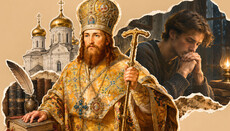
On November 24 (New Style), the Orthodox Church commemorates St. Theodore the Studite (759–826) – a man whose name in Byzantine history became synonymous with uncompromising stance, monastic confession of faith, and absolute fidelity to canonical truth.

We are accustomed to perceiving the saints of antiquity through the pious frame of an icon. It seems to us that their struggle consisted of distant theological disputes that have no bearing on our reality. Not so: this conflict repeats itself in every historical epoch, because it is where the contradictions between the prophetic radicalism of the Gospel and institutional conformism collide.
In an attempt to preserve its earthly status, property, and influence, the Church hierarchy, century after century, faces the temptation of accommodation with the secular world, the state, and the spirit of the age.
By cloaking this compromise in pious theological terminology such as "pastoral economy" and "preserving peace," the Church risks imperceptibly turning from the Bride of Christ into a handmaid of empires and political regimes.
Where is the line beyond which a reasonable "pastoral economy" becomes a betrayal of the Gospel? Does radicalism make sense today, or is it doomed to be branded "fanaticism"? To answer these questions, one must look closely at the events through which St. Theodore the Studite passed. His life included two key crises in which the very understanding of the nature of the Church was at stake.
The "Adulterous Schism": the conflict with the Patriarch in 795
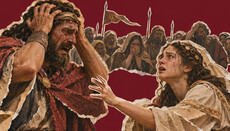
In 795, the Byzantine Emperor Constantine VI decided to forcibly send his lawful wife Maria to a convent and marry her lady-in-waiting Theodote. Patriarch Tarasius of Constantinople, understanding the complete illegitimacy of this step, nevertheless showed "flexibility": he did not personally officiate at the emperor's wedding, but neither did he denounce him, so as to avoid the wrath of the basileus.
The wedding was performed by the priest Joseph. Most of the Byzantine clergy preferred to "overlook" this offense. After all, reasons of state demanded peace with the emperor.
But the young abbot of the Stoudios Monastery, Theodore, and his uncle Plato refused to remain silent. They loudly and openly declared this marriage to be adultery, and the actions of the patriarch to be a betrayal of canonical order. Theodore broke Eucharistic communion with both the patriarch and the emperor.
The reaction of the state and of the "hierarchical mainstream" was swift. The Studite monks were declared "rebels," "proud men," "schismatics," and "fanatics." Theodore was subjected to cruel torture and sent into exile in Thessalonica.
The second wave of iconoclasm: how monks went out with icons against the emperor
In 815, Emperor Leo V the Armenian resumed the state policy of iconoclasm. He convened a council of bishops under his control, who, in order to keep their sees and retain the sovereign's favor, obediently signed a renunciation of the veneration of icons. And once again St. Theodore the Studite rose to his full stature.
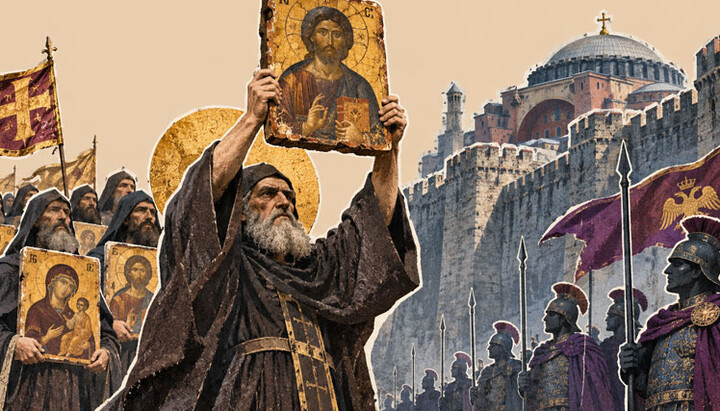
On Palm Sunday in the year 815, he organized a grandiose procession of the Cross: hundreds of Studite monks walked through the streets of Constantinople, holding icons high. It was a direct, open challenge to the totalitarian state machine. Theodore flung into the emperor's face words that became a manifesto of ecclesiastical freedom: "Emperor! Only state and military affairs are subject to your authority. The care of the Church belongs to bishops and pastors. You have not been given the right to judge or alter divine dogmas and canons!"
Most brutal tortures, prisons, and isolation followed, where Theodore was kept in hunger and cold. But it was precisely his uncompromising stand that saved Byzantine Orthodoxy from turning into a puppet institution of the empire.
When "pastoral economy" turns into a justification of sin
The main instrument by which conformists of all ages justified their accommodation with sin and power was a distortion of the patristic concept of "economy." Economy is transformed from an instrument of healing into an instrument of justifying sin. When the patriarchs and bishops of the time of Theodore the Studite covered up the emperor's adulterous marriage, they argued precisely from "economy": "We condescend to the weakness of the sovereign in order to protect the Church from persecution, in order to preserve peace in the state."
To this Venerable Theodore gave an answer that is as relevant today as ever: "Economy is intended to save the sinner, not to legitimize sin itself. When a departure from the canons justifies the transgression of a commandment and turns into a rule, it is no longer economy, but lawlessness and a betrayal of the Truth!"
As soon as "condescension" begins to cover sin for the sake of obtaining benefits, it ceases to be economy.
What is the "logic of Caiaphas" and how it worked in the history of the Church
Why does the church institution so easily yield to the temptation of accommodation? The Church in its earthly aspect is not only the mystical Body of Christ, but also an institution that possesses buildings, lands, administrative structures, and social privileges. At the moment when the earthly well-being of the institution becomes a priority for its leadership, the so-called "logic of Caiaphas" begins to work: "It is expedient for us that one man should die for the people, and that the whole nation perish not" (John 11:50).
This is the classic logic of institutional conformism! For the sake of preserving "our place and nation" (structure, security, buildings, influence), the Truth can be sacrificed. An uncompromising prophet can be offered as a sacrifice, slandered, declared a "schismatic" or a "conspirator," so long as the world and the authorities are not angered at the system.
In the history of Orthodoxy this logic has been reproduced repeatedly:
- In the era of iconoclasm, when hundreds of bishops signed heretical horoi in order to keep their sees.
- In the era of unions with Catholicism, when Byzantine emperors pressured the Church in order to obtain military aid from the West.
- In the Synodal period, when the Church was turned into a "department of the Orthodox confession" under an absolutist state.
- In the twentieth century, when under totalitarian regimes hierarchs, for the sake of "preserving the structure," went as far as directly justifying God-fighting repressions and the persecution of their own clergy.
Conformism always masquerades as "wisdom" and "responsibility for the people." For a bishop or pastor who compromises with his conscience, it is very comfortable to think: "I am doing this not for myself. I am doing this so that the churches remain open, so that people have a place to receive Communion, so that the flock may be spared from destruction."
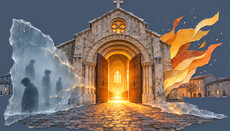
But Saint Theodore proves by his whole life: the Church is saved not by cunning politics, but by the presence of the Holy Spirit within her. And the Holy Spirit departs from a structure that has replaced the Truth of Christ with earthly calculation. A church preserved at the price of betraying the Gospel turns into an empty gilded shell.
Why monasticism was the Church's main immunity against conformism
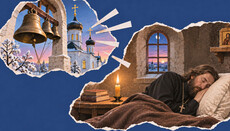
In this historical drama, a special role has always belonged to monasticism. A monk, by definition, has nothing to lose in this world. He has no property, no family that could be taken hostage, no career that could be broken. He has already "died to the world" in his monastic vows.
When monasticism today turns into an instrument of commerce, comfort, administration, or the service of the interests of the state, it loses its true dimension.
Having lost monastic radicalism, the Church is deprived of her main immune mechanism and becomes defenseless against the virus of conformism.
Three kinds of modern conformism: where the boundary of compromise lies
The modern world offers the Church new, sophisticated forms of conformism:
- Conformism before political power. The temptation to become a "state ideology," to receive resources, status, and protection in exchange for sanctifying any actions of the authorities and keeping silent in the face of social injustice or violence.
- Conformism before the spirit of secularism. The temptation to rewrite Christian ethics, to blur the boundaries between sin and holiness, to discard "inconvenient" Gospel commandments in order to appear "modern," "humane," and agreeable to secular society.
- Conformism of comfort and security. The desire of the faithful and clergy to preserve their customary comfort, to flee from any sharp topics, the principle of "it's none of my business, the main thing is to serve quietly and not get involved in anything."
But if the Church ceases to call evil evil — who will do so in the world? If pastors remain silent in the face of injustice in order to preserve their residences and positions — who will need such a Church? If "economy" turns into a universal indulgence for any compromise with conscience — how will we differ from a secular bureaucratic apparatus?
The radicalism of Theodore the Studite is the radicalism of utmost love for God.
It is the understanding that Christ is the only absolute value, for the sake of which one can sacrifice everything: security, comfort, and earthly life itself.
The memory of Saint Theodore the Studite is a day of personal inspection of conscience for every believer and bishop. Where does the boundary of compromise lie? It lies where we are required to lie in the name of "expediency." It lies where we are asked to call sin the norm, violence a good, and the betrayal of Truth "pastoral wisdom."
The example of the Abbot of Studion proves that the history of the Church is made neither by flexible diplomats nor by silent conformists. The history of the Church is made by those who are "madmen in the eyes of the world" – those who, in the darkest of times, know how to stand up, look the powerful of this world in the eye, and say: "We ought to obey God rather than men" (Acts 5:29).