
Memorial Saturday: Bearing witness to those who have entered Eternity
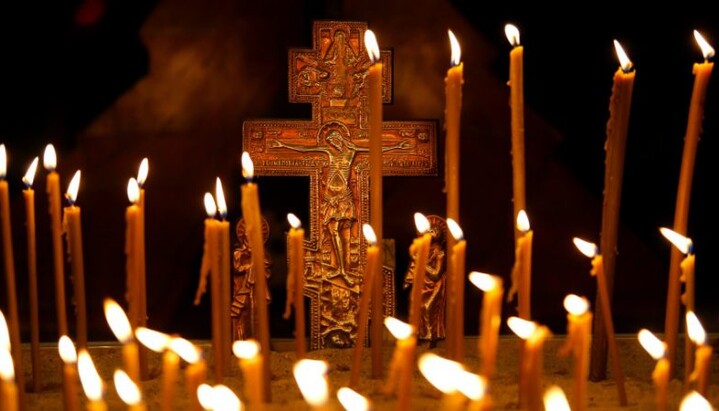
During Great Lent, we devote more attention than usual to commemorating the departed. The second, third, and fourth Saturdays of Lent are designated as days of remembrance.
Every prayer for the departed is an act of intercession by the Church on behalf of its members who have crossed the threshold into eternity. What matters most in this intercession is not so much the content of the familiar petitions for the departed – "the mercy of God, the Kingdom of Heaven, and the forgiveness of sins" – as the very reason we dare to ask for these things.
Prayer for the departed is, above all, an act of witness. It bears witness to the fact that those for whom the Church intercedes belong to her. When we pray for the departed, we affirm that they are members of the Church.
Here he is, O Lord, our departed brother. His life was far from blameless. He was no stranger to sin, nor was he free from passions. But he is one of us. He is a child of the Church, and today we, the entire body of the faithful, intercede together for him and for others like him – those who lived and died within Your Church, in unity and peace with her. And so we ask You to grant them whatever heavenly blessings they may be worthy to receive.
It is therefore only natural that the Church intensifies her prayers for the departed during Great Lent.
For one thing, Lent itself is a time of spiritual struggle. Our efforts may be modest and far from perfect, but they are efforts nonetheless. When a person undertakes such a struggle, his prayer becomes at least a little purer and more attentive. One way or another, he approaches communion with God with greater diligence and reverence than at other times. And how could we fail, at such a time, to remember those who need our prayers and the Church's intercession even more than the living do?
Another important consideration is that during Lent, the Church prays for the departed as one body. As we have said, the Church's prayer for the dead is, first and foremost, a testimony to her unity – a unity embracing both Christians living in this world and those who now dwell in eternity.
Great Lent is a time of spiritual struggle. Each of us has our own struggle, but everyone makes some effort to overcome himself. Yet no spiritual struggle is without temptation, especially when temptations seem to lie scattered right in our path.
One such temptation is pride.
At a certain point, a person engaged in spiritual struggle may begin to see himself as self-sufficient, someone capable of building his relationship with God entirely on his own. He may even come to regard the Church as little more than an intermediary.
As a priest, I personally encounter such people more and more often. In the past, statements like "I can pray to God on my own; I don't need intermediaries" were largely the preserve of the unchurched and those who barely believed at all. Today, however, I increasingly hear such remarks from people who are quite religious.
Against this backdrop, the Church reminds us that all Christians are one in Christ, but that this unity finds its expression exclusively in the Church – the only place where a true dialogue between man and God is possible.
Yes, anyone can turn to the Almighty, at any time and in any place. But every human prayer, even the most sincere and pure, is no more than a monologue. A true dialogue between man and God is possible only within the Church. It is only in the Church that God answers human prayer, forgiving sins, allowing us to partake of the living reality of His Heavenly Kingdom, sanctifying us, and transforming us.
By emphasizing her unity, which extends beyond the boundaries of this world and of time itself, the Church does not allow us to forget that a person standing before God is a person within the Church. There can be no other way.
Thus, by inviting us to participate in the prescribed commemoration of the departed, the Church draws our attention to several things of particular importance during Great Lent.
First, we must remember in prayer those who most need our prayers and the Church's intercession. Second, our personal spiritual efforts can benefit not only ourselves but others as well.
And finally, the dialogue with God that we strive so diligently to cultivate through fasting and prayer, according to our strength, is possible only if we remain united with the Church and truly belong to her.
This means having both the willingness and the ability to live within the Church, following the principles she sets before us and drawing upon the centuries-old tradition of piety she has faithfully preserved through every upheaval of history and every trial of our own time.