
Mystery of the Ark of Covenant: What lies hidden beneath the Temple Mount
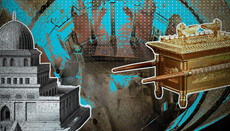
Where did the world’s most sacred relic disappear, and what is truly concealed beneath the “Foundation Stone”? An investigation spanning biblical legend, mystical lore, and an early-20th-century adventure worthy of Indiana Jones.
During the era of the Second Temple – the time in which the events of the New Testament unfolded – neither the Ark of the Covenant nor the tablets of the Law were present in the Holy of Holies. None of the sacred objects once kept there remained. In the very center of the Temple, in its most sanctified place, only a protrusion of the ancient rock was visible – the mysterious outcrop known as the “Foundation Stone.”
A vanished relic and the search to find it
Where did the Ark of the Covenant go?
The Ark disappeared nearly six centuries before the birth of Christ. Most likely this happened when the Babylonian king Nebuchadnezzar II captured Jerusalem and destroyed the First Temple in 586 BC.
The intrigue lies in this: the Bible gives a detailed list of trophies taken by the Babylonians – and the Ark is not mentioned among them. Yet when the Jews returned from captivity, the Holy of Holies was empty. Over the centuries, many theories have been proposed to explain the disappearance of the world’s most sacred object:
- The Jeremiah tradition: One ancient legend claims that the prophet Jeremiah, foreseeing Jerusalem’s fall, hid the Ark somewhere around Mount Nebo, in what is now Jordan.
- The tunnel hypothesis: Rabbinic tradition suggests that King Josiah ordered the Ark to be hidden in a labyrinth of tunnels and secret chambers beneath the Temple Mount.
- The Ethiopian trail: The most exotic theory asserts that Menelik I – son of Solomon and the Queen of Sheba – secretly transported the real Ark to Ethiopia, leaving a replica in Jerusalem. According to this story, the true Ark now rests in Aksum at the Church of Saint Mary of Zion, guarded by a single monk who never leaves his post until death.
The most likely explanation, however, is brutally simple: the Babylonians broke the Ark apart to extract its gold, as they did with other sacred objects. Its absence from the trophy lists may be explained by the fact that it no longer existed as a single artifact.
The navel of the world and the center of creation
We will return to the Ark, but first we must turn to the stone itself. The Even ha-Shtiya – the “Foundation Stone,” the “Cornerstone” – is perhaps the most sacred and contested piece of bedrock on earth. Its history intertwines mysticism, geology, and politics. For Judaism it is the physical center of the universe; for Islam it is the point of the Prophet’s ascent to heaven.
According to Midrash and the Talmud, the stone’s story begins even before that of the world itself.
God, it is said, began creation from this very point: He cast the stone into the primordial chaos, and from it, like ripples on water, all matter in the universe spread forth. Hence its name – the Foundation Stone, the support of the world.
Tradition also holds that here Adam offered the first sacrifice after being expelled from Eden; that Noah built his altar here after leaving the ark; and that this is the rock of the Akedah – where Abraham laid Isaac in obedience to God.
The stone enters documented history in the time of King David. At first it was simply a threshing floor. David purchased the site to halt a plague that had struck the people and erected an altar. His son Solomon then built the Temple around the rock, placing it at the heart of the Holy of Holies – the pedestal of the Ark of the Covenant.
After the destruction of the First Temple, only this bare rock remained in the inner sanctum. During the Second Temple period, the high priest entered once a year on Yom Kippur. With the Ark gone, he set the censer of incense directly upon the stone – the climactic moment of the year’s liturgy. The stone was also sprinkled with the blood of sacrificial animals.
When the Romans destroyed the Second Temple in AD 70, the site fell into ruin. The Romans attempted to erect a temple to Jupiter here, but with the rise of Christianity the Temple Mount became a dump. The rock lay buried under heaps of refuse.
In AD 638 the Arabs under Caliph Umar captured Jerusalem. Horrified by the state of the holy site, Umar ordered the stone to be cleared. In Islam, this rock – as-Sakhra – is linked with the Prophet Muhammad’s Night Journey. It is believed to be the point from which he ascended to heaven on the winged steed Buraq. In 691, Caliph Abd al-Malik built the Dome of the Rock above it, the iconic shrine crowned with its golden dome.
Secrets beneath the stone – and the abyss of chaos
Inside the Dome of the Rock lies another intriguing feature: the “Well of Souls.” On the southeastern side of the stone there is an opening leading down into a natural cave where Muslims pray. In the floor of this cave lies a slab that, when struck, produces a hollow echo, hinting at a cavity beneath.
The rational explanation is that this is part of the ancient drainage system. Countless sacrifices were offered on the stone in Temple times, and the mixture of water and blood flowed down channels – the shittin – deep under the mountain and into the Kidron Valley.
But the mystical interpretation is far more dramatic: beneath the stone lies the primordial watery abyss, the chaos before creation. The void beneath is the beginning of that abyss itself, and the Foundation Stone is the “stopper” holding back the subterranean waters so they do not burst forth and flood the world.
An Indiana Jones–style escapade
The third theory – that the cavities beneath the stone contain a secret chamber hiding the Ark of the Covenant – inspired one of the most extraordinary episodes in the history of Jerusalem, worthy of an Indiana Jones film.
It was this theory that a group of British adventurers attempted to test under the leadership of Montagu Parker. Their 1909–1911 expedition became the most scandalous ever undertaken in Jerusalem.
It all began with the so-called “Cipher of Ezekiel.” Walter Juvelius, a Finnish poet and mystic, claimed he had discovered encoded topographic data in the Bible indicating where Jeremiah had hidden the treasures of the First Temple. Juvelius convinced British aristocrats to fund a dig. They hoped to find the Ark, the Tablets of the Law, the Menorah, and a colossal hoard of gold, valued in modern terms at hundreds of millions of dollars.
The expedition behaved recklessly. They bribed the Ottoman governor and dug tunnels beneath Jerusalem for two years, but found only shards of pottery. By April 1911, the enterprise was near bankruptcy. Desperate, Parker decided to take the ultimate risk. Bribing the guards, he and his men entered the Dome of the Rock by night and began chiseling into the Foundation Stone itself, attempting to widen the passage into the Well of Souls. A simple watchman caught them in the act.
Chaos erupted. Outrage swept the Muslim community; riots broke out across the city. Parker and his team barely escaped to a yacht in Jaffa. The governor was arrested, and the Islamic Waqf imposed a strict ban on archaeological work on the Mount – a ban that remains in place to this day.
The only benefit from this reckless adventure was the work of Father Louis-Hugues Vincent, a Dominican monk and archaeologist hired by Parker as “cover.” Vincent used the opportunity to create extraordinarily precise maps of subterranean Jerusalem, which scholars rely on even now.