
Red terror in Ukraine: How the Bolsheviks looted and desecrated churches
Behind the dry GPU reports about “scrap silver” lay a whole system of deliberate sacrilege. Let us look at the documented chronicle of 1919–1922.
A crowbar slips under an icon’s silver cover: the metal buckles under the lever like foil. The wooden panel bearing the holy face is thrown to the floor or into the fire – wood will not appear on the inventory sheet. A chalice is flattened with a sledgehammer blow so it will take up less space in a wooden crate. In the confiscation report, all of this will be entered as “scrap silver,” with the weight recorded in pounds.
This was the mechanics of confiscating church valuables in Soviet Ukraine – and not there alone, but across the Soviet Union. Yet what was happening cannot be explained by economics alone.
Lenin’s 1922 directive and sacrilege as a method of terror
If the state had wanted only silver, it could simply have seized it, issued a receipt, and left. But that was not what happened. Moonshine was drunk from Eucharistic chalices right in the altar. Snacks were sliced on the Holy Table. Iconostases were shot at – not to make it easier to remove their metal covers, but precisely to riddle the sacred faces with bullets. The eyes of Christ and the Mother of God were gouged out with bayonets.
All this is recorded in the materials of the Special Investigative Commission for the Inquiry into Bolshevik Crimes in 1919. The commission worked in the immediate aftermath, questioned witnesses, and drew up formal reports. Testimony repeats the same details again and again, only with different perpetrators in different districts.
This was not the freelance brutality of individual soldiers, but a well-established system that had a purpose – though not an economic one. Public sacrilege, followed by the visible absence of any heavenly punishment, did exactly what it was meant to do: it paralyzed the peasantry. If no lightning strikes for this, then heaven is empty, God does not exist. And if He does not exist, then those standing before you with rifles are the only real authority.
The bullets in the icons were an argument in a theological dispute. The cheapest argument imaginable.
That this was state policy rather than mere soldiers’ vandalism is confirmed by a document declassified in 1990. On March 19, 1922, Lenin sent a secret letter to the members of the Politburo: “The greater the number of representatives of the reactionary clergy and the reactionary bourgeoisie that we succeed in shooting on this occasion, the better. It is precisely now that we must teach this public a lesson so that for several decades to come they will not dare even think of any resistance.”
The letter is dated 1922. But the practice it codified had taken shape much earlier.
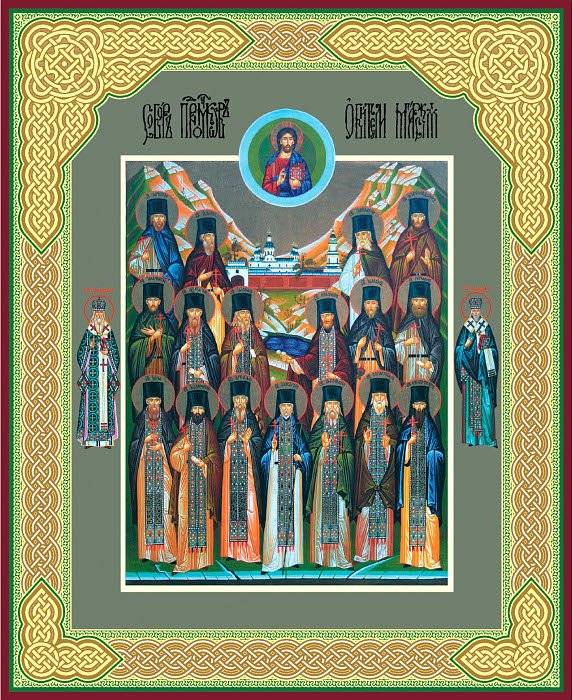
The execution of 17 monks of the Mhar Monastery: murder without trial
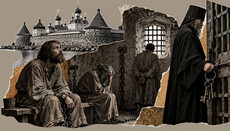
On August 5, 1919, on the eve of the monastery feast of the Transfiguration, at about four in the afternoon – just before the start of the all-night vigil – a phaeton carrying several Bolsheviks rolled into the grounds of the Savior–Transfiguration Mhar Monastery near Lubny. The monks were ordered to gather, supposedly for a census.
When Abbot Ambrose arrived with twenty-four monks, they were informed that they were under arrest. The accusation was this: helping White Army forces cross the Sula River. The abbot was taken into Commissar Bakai’s office. He remained there for more than an hour. When he came out, he looked deeply distressed and spoke quietly with the monastery treasurer.
Around midnight they were all driven to the railway station. They were kept there for two hours. Then they were marched at a rapid pace down the Pyriatyn road.
In the darkness, the voice of a clean-shaven man of about twenty-five, wearing a gray tunic, was heard. It was Commissar Bakai. He ordered the monks to be divided into three groups. Abbot Ambrose was placed in the first. He began begging the commissar to spare the brethren. Bakai stepped up close and hissed through his teeth: “Enough of deceiving the people” – and shot him point-blank with a revolver. The abbot fell. Then came the order: “Execution squad, form up” – and the soldiers fired a volley.
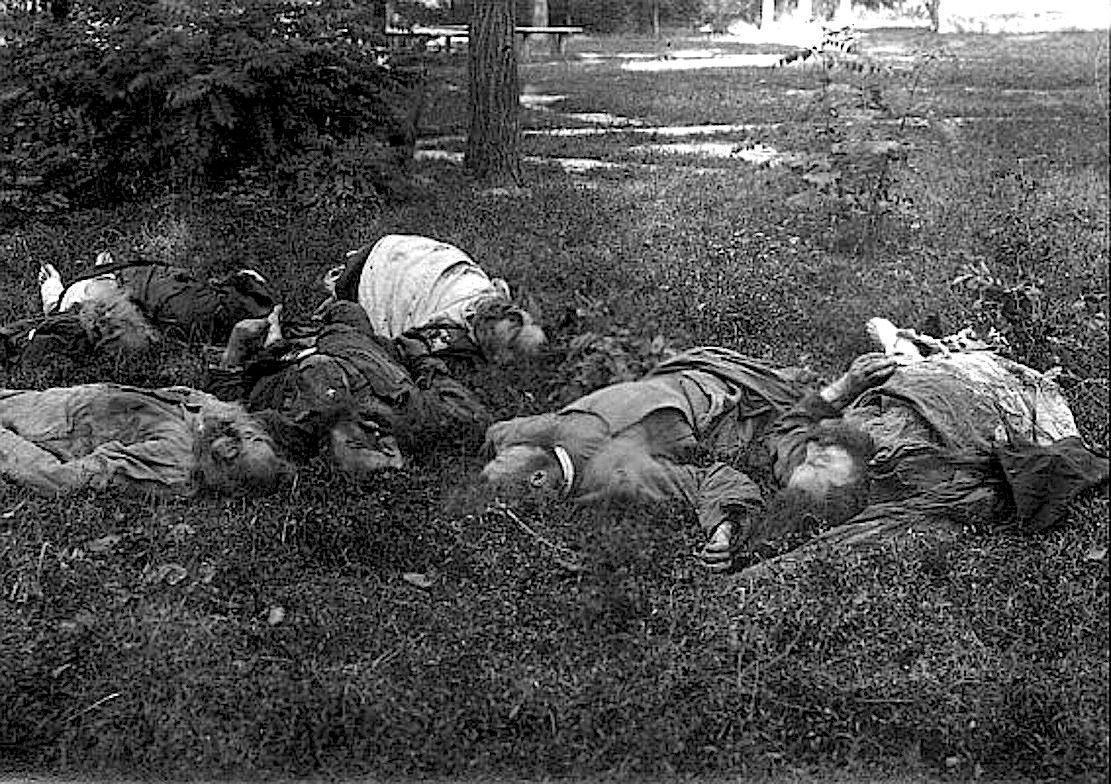
Those shot were: Abbot Ambrose; hieromonks Arkady, Ioanniky, Iona, Iosif, Nikanor, Afanasy, Theophan, Serapion, Nikostratus; hierodeacon Iulian; and monks Ioanniky, Herman, Nazary, Parthenius, Patapius, and Dorimedon.
Seventeen names. Most of them were over sixty years old. The killing took place in darkness, on the side of the road.
In the Soviet archives there is not a single tribunal verdict in this case. There is no decree ordering the execution. There is not even a formal record of detention. It remains unknown who gave the final order – whether Bakai acted on direct instructions from above or on his own initiative.
Denikin’s investigative commission carried out an exhumation in the autumn of 1919. On the bodies were found not only bullet wounds, but also marks from bayonets and rifle butts. Bishop Alexy of Poltava refused to permit a medical autopsy: “I do not find it possible to disturb the dust of the martyrs,” he said briefly.
In 2008, the Synod of the Ukrainian Orthodox Church glorified all seventeen sufferers among the saints.
Chalices as scrap silver: how the provincial Cheka kept accounts of plundered shrines
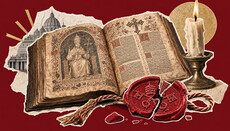
Alongside open violence ran an office routine of its own. During the confiscation of church property, chalices and tabernacles were entered in official provincial Cheka reports as “scrap silver” and “yellow metal,” with precise weight in pounds. Precious stones pried out of Gospels and miters were dumped into canvas sacks under the notation “white stones” or “colored glass.” Icons stripped of their covers went into the column marked “cult objects.” As we can see, time passes, but the methods and techniques of fighting the Church remain much the same.
A chalice – the vessel which, according to the Church’s teaching, contains the Blood of Christ – became “yellow metal” the moment it was entered into the ledger.
This renaming was an ontological act: the object was stripped of its nature on paper before it was physically destroyed.
Speed, too, was part of the method. The liturgical life of centuries was reduced to dry figures with ruthless swiftness – and this too served the same goal: to prove that there was nothing behind these objects, that God was silent, that lightning would not strike.
It did not strike. But the repressive machinery of that empire, having outlived several generations of persecutors, collapsed. All the silver they looted was weighed, every report signed, the perpetrators known. The heavenly sentence was never revoked.