
One-way ticket: how pilgrims reached Jerusalem in the 18th century
A pilgrimage to the Holy Sepulchre was far from a peaceful journey. Before setting out, travelers wrote their wills and bid farewell to their families forever.
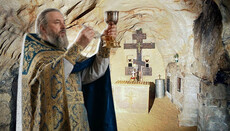
A healthy man in the prime of life sits before a scribe and dictates his last will and testament. He divides his yard and livestock among his children, specifies who will inherit the house, and appoints guardians for the youngest. He is neither ill nor dying. He is going to Jerusalem – and so he puts his affairs in order beforehand, just as a man on his deathbed would. The priest’s farewell blessing sounds less like a prayer for a safe journey and more like the final prayers for the departing soul. When the pilgrim finally leaves the village, the community has already buried him in its thoughts.
This was how our forebears set out on pilgrimage in the eighteenth century. It is not hard to guess that many never returned. To understand the true cost of such a journey, it is best to divide it into stages.
The first stage: the wild fields
The journey began with crossing the Black Sea steppes – the so-called Wild Fields, where Nogai hordes roamed and kept the frontier in constant fear. The chief commodity of these lands was human beings.
For nearly three centuries, the slave trade remained the principal source of income for the Crimean Khanate. In the Ottoman port of Kaffa – modern-day Feodosia – stood the largest slave market on the Black Sea, from which “living merchandise” from Eastern Europe was shipped onward to Constantinople, a voyage of about ten days by galley. Hundreds of thousands passed through this market. It was here, incidentally, that the daughter of a priest from Rohatyn, later known as Roxolana, was sold in 1522 before rising to prominence in the Sultan’s court. To a steppe slave hunter, a pious pilgrim was no different from any other traveler.
Therefore, pilgrims traveled shrewdly: not in large groups but in small parties, deliberately dressed in rags and pretending to be beggars with nothing worth stealing and no value as captives.
In this way, the pilgrim became poor not only before God – in fulfillment of the Gospel commandment – but also before robbers.
The second stage: the hold
Those fortunate enough to reach a port alive and free faced the next ordeal. The sea passage aboard Ottoman or Greek merchant vessels could last a month, and poor pilgrims were crowded into the hold alongside livestock and cargo.
There one could neither draw a full breath nor drink a cup of clean water.
The heat of the wooden hold was thick with the stench of sheep’s wool, tar, vomit from seasick passengers, and unwashed bodies. In such cramped conditions, the ship became a floating breeding ground for disease. Plague and dysentery swept through the passengers below deck. Those who died before reaching shore were simply thrown overboard without elaborate funeral rites. And when a vessel became trapped in a dead calm and drifted motionless at sea, the death toll only rose.
The third stage: the kafar tax
The most dangerous stretch was the final and shortest one – roughly sixty versts from Jaffa to Jerusalem through rocky hills. Ottoman authority in this remote region was weak, and the roads were controlled by local Bedouins.
At every pass, Christians were forced to pay a special toll known as the kafar.
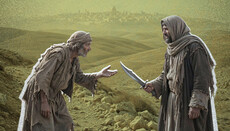
Officially, it was collected in exchange for protection from bandits. Yet contemporary sources reveal a less flattering truth: those collecting the kafar were often in league with the very robbers from whom they supposedly offered protection and sometimes directed them toward likely victims. Those unable to pay were stripped and beaten right on the road.
The most famous Kyiv pilgrim, Vasyl Hryhorovych-Barsky, who traveled this route on foot, recorded in his notes that he was robbed and beaten by Arabs between Ramla and Jerusalem. From Jaffa he walked with a caravan of fellow paupers, while the wealthy rode camels “as if in chariots.”
What did pilgrims gain at such a cost?
Let us conclude with the testimony of Barsky himself, since he was one of the few who returned home and left a written record. He departed Kyiv in 1723 as a strong young man from a merchant family. He returned only in 1747 – twenty-four years later. During that time he wandered across much of the Near East on foot, suffered recurring fevers, traveled on diseased legs, endured hunger, slept on bare ground, and was robbed and beaten more than once.
In essence, pilgrimage transformed a person completely. Before an Ottoman customs officer or an armed Bedouin, neither social rank nor wealth meant anything. A respected citizen became a filthy, lice-ridden wanderer entirely dependent on the mercy of strangers of another faith.
The pilgrim’s pride died long before he first caught sight of Jerusalem’s walls in the distance. That death of self-importance was perhaps the greatest price of all – heavier than the kafar tax and deadlier than the epidemics in the ship’s hold.
And what was purchased at such a cost? The chance to touch the Stone of Anointing with one’s own hand, to light a candle at the Holy Sepulchre, and to stand where the spiritual destiny of the entire world was decided.
If one reduces everything to ordinary arithmetic, the road to the Holy Land was pure ruin: years of life, health, and often life itself were laid upon the altar of the desire to touch the greatest of shrines. It was a bargain that no rational businessman would ever make. Often it was a one-way ticket. Yet year after year, more and more of these “already buried alive” pilgrims walked beyond the outskirts of towns and villages and set out on the same road.