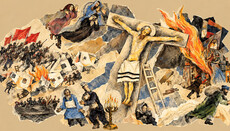

The golden seams of Resurrection
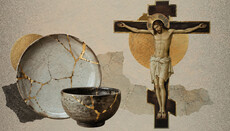
The Japanese tradition of mending broken bowls with lacquer and precious metal powder finds a striking echo in the imagery of the Gospel.
Walking through the galleries of a museum of Asian art, we stop before an ancient bowl once used in the traditional Japanese tea ceremony. Its clay body is covered with a web of deep cracks. The dark fractures have not been concealed beneath paint. Instead, they have been traced with lacquer mixed with powdered gold. In the craft of kintsugi, damage does not condemn an object to the trash.
The craftsman makes no attempt to restore the pottery to its original, flawless smoothness. On the contrary, the fracture becomes the defining feature of the piece – its visible biography.
In this Japanese aesthetic lies a profound respect for an object’s history, its imperfection and its capacity to change.
There is a beautiful legend about how this unusual tradition was born. In the 15th century, the ruler Ashikaga Yoshimasa accidentally broke his favorite Chinese celadon tea bowl. The vessel was sent to China for repair, only to return held together with metal staples. Determined to save the precious object, Japanese craftsmen supposedly devised a new method: filling the cracks with the sap of the lacquer tree mixed with powdered gold.
Yet the true history of this decorative art turns out to be even more dramatic. The very Longquan bowl associated with the story survives today in the collection of the Tokyo National Museum. We approach the display case and discover something remarkable: the legendary vessel was never repaired using kintsugi. Its pale green glaze is indeed crossed by metal staples resembling the legs of a locust. The craftsmen did not gild the fracture.
The discovery tells us something about human nature. We readily invent beautiful stories about suffering transformed into precious radiance, yet shy away from looking at the actual scars left by catastrophe. We want to erase the memory of destruction, disguise the accidental chip, pretend that nothing painful ever happened. Our culture teaches us to be ashamed of wounds because they reveal our vulnerability.
But in the Christian understanding, a scar ceases to be a mark of defeat.
A shining wound beneath crimson robes
Now let us turn our gaze from a display case of Eastern antiquities to the Byzantine icon The Incredulity of Thomas. Before us unfolds the scene described in the Gospel of John. The Savior stands among His bewildered disciples, His figure set against a field of gold. With a gentle gesture, Christ draws aside the crimson fabric of His garment, revealing His pierced side.
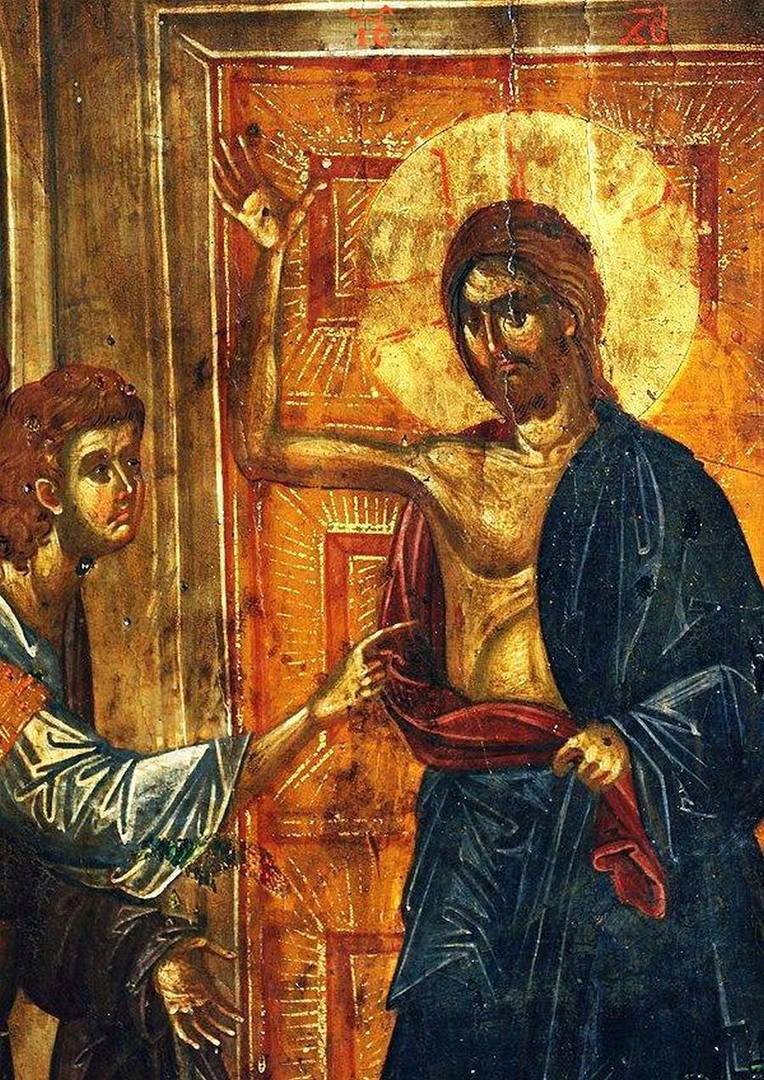
The Apostle Thomas reaches out his hand. His finger approaches the wound in the side of the Risen Lord. And from the Gospel come Christ’s insistent words: “Reach your finger here, and look at My hands; and reach your hand here, and put it into My side. Do not be unbelieving, but believing” (John 20:27).
What was the flesh of the Risen Savior like? His body had conquered death; it had become incorruptible and glorified. And yet it still bore the marks of the nails on His wrists and the wound where the spear had pierced His side.
St John Chrysostom explains this mystery with remarkable depth. The holy hierarch points out that the Savior preserved the marks of His Passion not out of weakness. He could have healed His flesh in an instant, leaving it perfectly smooth and unblemished. Yet the Lord kept His wounds as an eternal testimony to the reality of His sacrifice. In Chrysostom’s understanding, the Risen Christ retained the wounds to show that the One standing before the disciples was the very same Teacher Who had been crucified upon the Cross.
The wounds of Christ were transformed from marks of suffering into trophies of His victory over death.
In the iconographic tradition, the wound in the Savior’s side is often highlighted with golden assist. The finest threads of gold leaf trace the edge of the opening. In Orthodox tradition, gold symbolizes the Uncreated Divine Light. The iconographer thus outlines Christ’s wound with the same precious material used to depict His halo.
Golden wounds on the bodies of the martyrs
The memory of human suffering is not erased in the Kingdom of Heaven – it is transfigured.
In The City of God, Blessed Augustine asks what the holy martyrs will look like when they rise from the dead. Will their bodies still bear the marks of the torments they endured for the faith?
The Bishop of Hippo gives an unequivocal answer. In the life to come, the bodies of those who suffered for Christ will retain their scars. But those scars will no longer be seen as defects.
Blessed Augustine writes that the martyrs’ scars will shine with a special beauty – the beauty of virtue. The marks left by swords, fire and wild beasts will become signs of exalted dignity.
Just as the dark fracture in a kintsugi bowl becomes its most striking ornament, so in the resurrection of the body the wounds of the saints will become precious adornments.
In ancient mosaics, we see witnesses to the faith holding the instruments of their own martyrdom. The saints do not hide the suffering they endured.
A grace-sealed heart
We often try to tear the darkest pages out of our memory. We imagine that spiritual life should make us invulnerable – perfect, untouched, without cracks. We are ashamed of the catastrophes we have lived through, of broken relationships, of the places where our souls have fractured.
But the Gospel shows us another way. Divine grace does not erase our history. The Lord does not turn a human being into a blank page, wiping the past clean. He enters into our broken places.
When a person brings his shattered life to God, an invisible restoration begins. Grace flows into every crack in our memory like golden urushi lacquer. Our past, melted down and transformed through repentance, ceases to be a source of shame. It becomes a place where we encounter God.
The scars of the Risen Christ remind us that not a single tear, not a single fracture of the human heart, is forgotten by God.
Our pain becomes the golden seam that binds us to eternity.