Why were holy monasteries turned into state prisons?
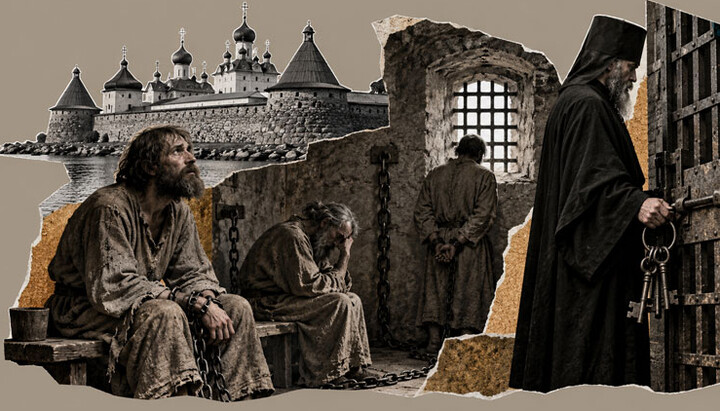
The history of Christian Europe preserves the memory of times when monasteries served as places of exile imposed by the state. Within their walls, the fates of monarchs and righteous men were decided.
In April 1042, rebellion raged through the streets of Constantinople. The deposed Emperor Michael V and his uncle were desperately trying to escape. Aboard an imperial vessel, they fled to the Monastery of Stoudios, hoping to find refuge behind its sacred gates. The monastery opened its doors to them, but an enraged mob soon surrounded the church.
The ruler who had held power only the day before clung desperately to the altar, believing that its sacred status would stop his pursuers. He was wrong. Guards and townspeople dragged the fugitives into the square and blinded them. The historian Michael Psellos, an eyewitness to these dramatic events, stood nearby in tears. He later recorded the emperor's words before his punishment, when Michael acknowledged that his fate was deserved: "God is just, and justice now punishes me for what I have done."
The blinded Michael was first sent to the Monastery of Elegmon and then exiled to the island of Chios. This was a long-established practice in Byzantine politics. Monastic tonsure was regarded as a form of civil death, allowing a political rival to be removed without bloodshed. An outright execution risked provoking rebellion, while the monastic habit permanently stripped a person of any claim to the throne while sparing his life.
Empress Irene suffered a similar fate. In 802, she was exiled to the island of Prinkipo and later transferred to Lesbos, where the former ruler of the empire earned her living by spinning wool.
Half a century before Michael V sought refuge, in December 944, the sons of Emperor Romanos I Lekapenos overthrew their father. They forced him to take monastic vows and exiled him to the island of Prote. Yet in January 945, the conspirators met the same fate: they were stripped of power and sent to the very same island.
The former emperor greeted his own sons already dressed in monastic robes. According to the chronicles, he quoted the words of the Prophet Isaiah: "I have nourished and brought up children, and they have rebelled against me."
Law instead of the executioner's block
The legal foundations of this practice had been established long before the Byzantine palace coups. In the sixth century, Emperor Justinian enacted a Novella containing a provision on punishment for adultery.
A civil court could sentence a woman found guilty of adultery to flogging, after which she was sent to a monastery. Her husband was given two years to reconsider. If he agreed to forgive his wife, he could take her home. If no reconciliation occurred within those two years, the woman would be tonsured and remain in the monastery for life. Her property was divided, with two-thirds going to her children and one-third to the monastery.
Confinement was originally conceived as an act of state mercy.
It gave offenders time for correction and repentance, replacing the death penalty. Over time, however, the Christian monastery was transformed from a place of spiritual rehabilitation into a place of compulsory imprisonment.
A prince in chains in Kyiv
In the lands of Rus', the practice of monastic exile emerged in the twelfth century. In 1146, during an internecine struggle, Prince Igor Olgovich of Chernihiv was taken prisoner. Shackled in irons, he was confined to St. John's Monastery in Pereiaslav. The captive became gravely ill and asked to be tonsured a monk. Bishop Euthymius performed the rite.
The ailing prince was transferred to Kyiv, where he took the Great Schema at St. Theodore's Monastery. The former ruler hoped to spend the rest of his days in prayerful seclusion. But political conflict would not leave the schema-monk in peace.
In September 1147, the Kyiv veche, or popular assembly, decided to settle accounts with the Olgovich dynasty once and for all.
An enraged mob stormed the church during a service, dragged the schema-monk into the street, and brutally killed him. His monastic rank did not protect him from the violence, even though the prince had completely renounced worldly power.
Earthen pits and imperial decrees
By the sixteenth century, monastic prisons had become an established institution of state repression and investigation. In 1554, the name of the first officially recorded prisoner appeared in the documents of the Solovetsky Monastery. He was Artemy, the abbot of the Trinity Monastery. From that point onward, the northern monastery became a major prison for religious and political dissidents.
A century later, Patriarch Nikon found himself imprisoned. In 1666, following an ecclesiastical trial, the disgraced primate was exiled to the Ferapontov Monastery and later transferred to the Kirillo-Belozersky Monastery.
In all, he spent fifteen years in confinement. The former Patriarch was guarded by a bailiff, a centurion, and twenty streltsy armed with clubs.
A remarkable testimony to his spiritual resilience has survived: the former Patriarch personally made a wooden chair and carved an inscription into it: "This chair was made by the humble Patriarch Nikon in captivity."
In the eighteenth century, the Savior-St. Euthymius Monastery in Suzdal became another center of exile. Between 1766 and 1902, more than four hundred people passed through its prison cells, including priests and monks. Prisoners were still being held there in 1902, some having spent fifteen or even twenty years behind bars.
The system of exile was strictly bureaucratized. From 1835, a person could be sent to a monastery solely by Supreme Decree.
The system of exile was governed by strict bureaucratic procedures. Beginning in 1835, a person could be sent to a monastery only by imperial decree.
The paperwork followed a lengthy route: from the parish priest to the eparchial bishop, then to the Synod, the ober-procurator, and finally the emperor himself.
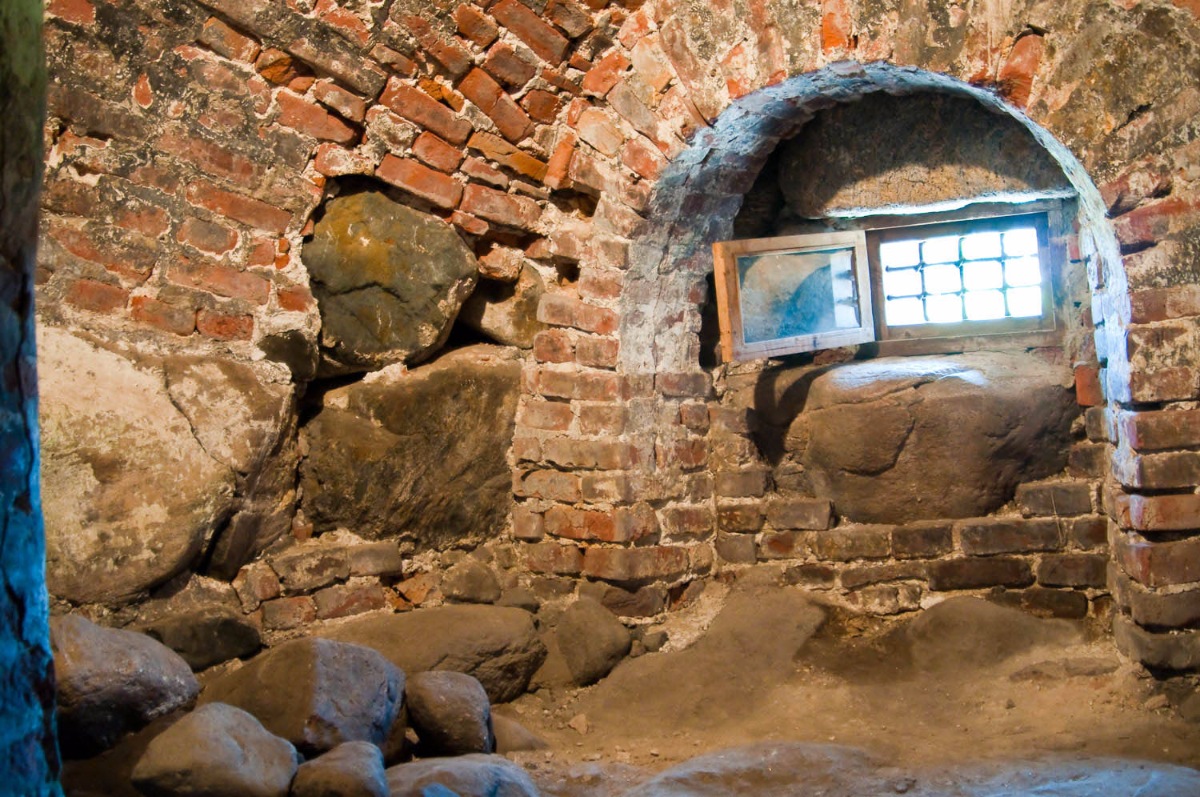
Conditions of confinement were exceptionally harsh. At Solovki, underground prisons were constructed in the form of pits about three arshins deep, lined with brick. Prisoners were lowered through a hatch, which was also used to deliver food.
In the 1830s, inmates were held two to a cell in cramped closets measuring just two by three arshins. Those who died were buried in the monastery garden without crosses or inscriptions.
Sectarians imprisoned there frequently engaged in theological disputes that ended with them throwing pieces of bread and spoons at one another.
An exiled medical assistant named Kolchin gained access to the secret archives and became the first historian of the Solovetsky prison.
In the 1860s, the monastery's abbot, Archimandrite Porfiry (Karabinevich), described the prisoners' plight in these words: "Once exiled, you sit there until death takes pity on you and puts an end to your suffering."
The last Kosh Otaman
Among the prisoners of Solovki, Petro Kalnyshevskyi, the last Kosh Otaman of the Zaporizhian Sich, endured a particularly remarkable fate.
In 1776, by personal decree of Empress Catherine II, the elderly otaman was exiled to the North. He spent twenty-five years imprisoned in the monastery.
.jpeg)
In 1801, the new emperor signed a decree ordering his release. However, the former otaman refused to return to his homeland, choosing instead to remain at the monastery for the rest of his life.
Kalnyshevskyi died on October 31, 1803. In 2015, the Ukrainian Orthodox Church glorified Righteous Petro among the saints.
Monastic prisons were abolished only gradually. In 1883, the Solovetsky prison stood empty for the first time in three centuries, although it was not officially closed until the fall of 1903.
In Kyiv, the history of St. Cyril's Monastery took a different course. Following the secularization reform of 1786, the monastery was closed, and in 1803, state authorities established a hospital for the mentally ill on its grounds.
The monastic buildings were converted into hospital wards. Once again, the monastery grounds became a refuge for society's outcasts, but now they were cared for by doctors rather than monks.