
On sausage and milk during the fast
The true meaning of fasting is not gastronomical but spiritual. Yet how many of us can honestly say that during the fast we pray more, refrain from judging anyone, visit hospitals and prisons, and tend to those in distress?
Popular blogger and OCU “priest” Oleksii Filyuk has urged people to drink milk during the fast, claiming that fasting rules were “invented by Russians.” One might have dismissed this as the absurdity of an isolated marginal figure, if not for the fact that Filyuk has 2.2 million followers on social media – an enormous audience.
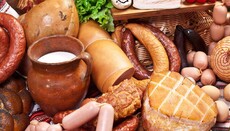
And this is far from the first such statement within the OCU. They appear regularly. The same Filyuk “permitted” eating sausage during Great Lent, arguing that “fasting is not a diet.”
OCU theologian A. Dudchenko, during the same Great Lent, encouraged people to eat fish, which, according to him, is allowed at all times except during the first and Holy Weeks. And in 2021, when the OCU was still following the Julian calendar, Serhii Dumenko allowed the New Year’s feast to override the Nativity Fast.
This text is not a call to condemn or brand the OCU. It is not another round of interconfessional sparring. The question is deeper: do such statements truly benefit the faithful?
The general message behind these “anti-fasting” declarations from representatives of Dumenko’s structure is clear: in the “bad,” backward UOC believers are tormented by unnecessary restrictions, whereas the “good,” enlightened OCU has come to free Christians from these burdens. But let us recall that in any sphere of life, one reaches meaningful results only through effort, discipline, and overcoming oneself.
Schoolchildren (and even some university students) naturally prefer those teachers who do not demand that they learn their lessons and rarely check homework, rather than those who insist on mastery of the subject. Among doctors we are more inclined toward those who do not insist we abandon harmful habits or strictly follow prescribed diets. At the gym, we are far more likely to choose the trainer who offers an “easy” program rather than the one who drives us to exhaustion.
But what is the outcome? Students achieve real knowledge only with the teachers who “wring every drop” of effort out of them. We regain our health only with the doctors who demand unwavering adherence to their recommendations. And in sports, the greatest results come only from the strictest, most uncompromising training.
Of course, God does not need our fasts. He loses nothing if we drink milk or eat eggs or meat. And indeed, the meaning of the fast is spiritual, not culinary. Yet how many of us can honestly say that during the fast we pray significantly more, refrain from judging others, or visit the sick and imprisoned? Very few. The vast majority choose the simplest path – we restrain ourselves in food. Yes, this is not what Christ ultimately seeks from us, but it is that tiny, microscopic sacrifice we are capable of offering Him.
Is even that too much for us?