UOC vs. OCU: Why do official and grassroots polls differ so much?
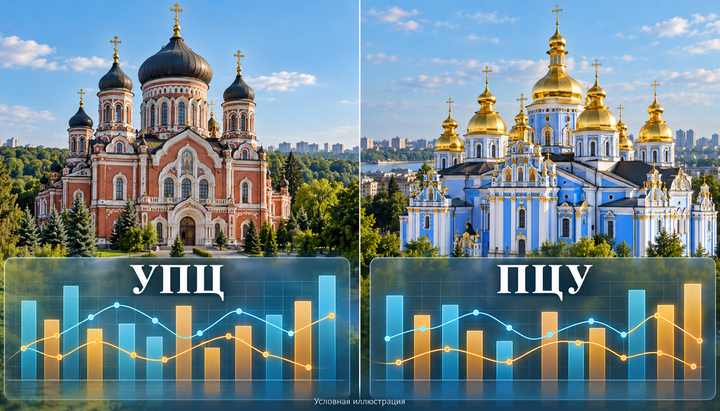
Four polls in six weeks. The exact figures vary, but the overall pattern is similar: the UOC leads by a wide margin, with support for the OCU and UGCC several times lower.
Another online poll about the Church calendar has appeared. Facebook user A. Bilokon asked Ukrainians when they celebrate Christmas – January 7 or December 25.
What makes this poll particularly interesting to us is that it offers an indirect way to estimate the number of UOC parishioners. After all, the UOC is the only major denomination in Ukraine that still celebrates Christmas according to the old calendar, on January 7, while the others observe it on December 25.
The post received more than 1,200 comments. Of those who responded, 96% said they celebrate Christmas on January 7, just 3% chose December 25, and fewer than 1% observe both dates.
The breakdown of likes was even more striking: comments favoring January 7 received more than 5,100 likes – 99.9% of all likes counted on the comments – while those supporting December 25 received just five.
Shortly before the Feast of the Intercession, the Ternopil pizzeria KISTO asked its Facebook followers what they thought about people who still celebrate the feast according to the old calendar, on October 14. The results closely resembled those of the Christmas poll: 86% of the more than 2,500 comments supported that date.
In September, Threads user lisira_aa asked: “Which church do you attend in Ukraine – the OCU or the UOC?” The post received around 1,200 responses. The UOC accounted for 67%, the OCU for 14%, and the Ukrainian Greek Catholic Church (UGCC) for another 14%.
OCU cleric Andriy Levytsky conducted another poll on Threads, with remarkably similar results: the UOC led with 56%, followed by the UGCC at 18%, while the OCU came third with just 12%.
So there we have it: four polls in six weeks. The precise figures differ, but the overall picture is much the same. The UOC leads by a substantial margin, while support for the OCU and UGCC is several times lower.
Now consider the results of professional opinion polls. They paint an entirely different picture. According to the latest survey by the Kyiv International Institute of Sociology (KIIS), for example, 11 times as many respondents identify with the OCU as with the UOC.
Meanwhile, anyone can check the grassroots polls for themselves: simply open the posts and read every comment. The methods used by professional polling agencies, on the other hand, cannot be independently verified by an outside observer. It brings to mind the old joke about a card game in which “a gentleman's word is taken on trust.”
Yet leaders of both the OCU and UGCC readily cite the results of these professional surveys.
So where does the truth lie?
The contrast is striking.