
The Union of KP and UAOC and the position of Constantinople
Not so long ago, Ukraine's info media were stirred up by an important event in the religious life of the country: Kyiv Patriarchate and the Ukrainian Autocephalous Orthodox Church announced their intention to convene the General Council (Sobor) and even appointed the date of the event – September 14, 2015.
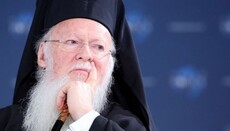
Many experts and journalists have pointed out that a significant role in issuing the Declaration on the United KP and the UAOC was played by bishops of the Ukrainian Orthodox Church of the United States, Daniel (Zelinsky) and Hilarion (Rudnyk), who reportedly represented the Patriarchate of Constantinople. On March 16 this year, the Ecumenical Patriarch Bartholomew met with Bishop of Pamphilon Daniel (Zelinsky) in his residence in Parma and, according to the official website of the Ecumenical Patriarchate, discussed recent events in Ukraine. It is possible that among the issues raised was the question of the fate of church structures in Ukraine, unrecognized by Holy Orders and Fullness of the Orthodox Church. The position of the Ecumenical Patriarchate on the Ukrainian Orthodox Church could be described as quite "reserved", without further explanation, which caused speculation on the part of canonically isolated KP and UAOC. They appeal to Constantinople as the "Mother Church," which, in their view, has a full jurisdiction on the territory of Ukraine. Could the bishops of the UOC in the United States have really "channeled" the position of the Ecumenical Patriarch? We can recall the statement of Archbishop Vsevolod Skopelsky (Maidansky) in 2000 that the Ecumenical Patriarchate considers itself the Mother Church in relation to the Ukrainian Orthodox Church. This statement caused a negative reaction on behalf of the Russian Orthodox Church, which was outraged by this statement and demanded explanations from the Patriarchate of Constantinople. In August of the same year the Synod of the Ecumenical Patriarchate officially denied Vsevolod‘s statement.
In 2010, during his visit to Russia, Patriarch Bartholomew urged the dissenters to join without hesitation the canonical Church, but which one – he did not clarify. However, the position of the Patriarch irritated not only the Russian Orthodox Church, but also Kiev Patriarchate. The latter, being offended at some of Bartholomew’s statements, called him "the Patriarch of Istanbul", alluding to his illusory and formal status among Orthodox Churches.
Unfortunately, the impact of the Ecumenical Patriarchate on the life of the Russian and Ukrainian Orthodoxy has not always been constructive in the last century. We can recall a number of historical episodes, when the intervention of Constantinople in the church life in Ukraine inflicted more harm than good.
Thus, in the 20s of the last century, the Patriarch of Constantinople Gregory VII did the Bolsheviks’ bidding and on May 6, 1924 adopted a resolution on dismissal of Patriarch Tikhon from the leadership of the Russian Church and on recognition of the "renovated" Synod. In fact, he recognized a Renovation Church initiated by the "red power" to destroy the Orthodox Church in our land. Hundreds of priests and hierarchs of the Russian Orthodox Church and the Ukrainian exarchate, who did not betray the canonical church, suffered arrests, tortures, exile, most of them were shot by the Bolsheviks. So far, martyrs, including Ukrainians, haven’t heard the voice of the Ecumenical Patriarch, condemning the crimes of the Bolsheviks.
Even earlier, in 1923, the Patriarch of Constantinople Gregory VII, without the consent of the Russian Orthodox Church, jurisdiction of which also covers the Polish Orthodox Church, approved the election of Dionysius (Valedynsky), a new metropolitan of the POC. Gregory VII motivated his decision by the illegal transfer of the Kyiv Metropolis under the jurisdiction of the Moscow Patriarchate in 1686. In 1924, the Ecumenical Patriarch went further and on November 13 approved the autocephalous status of the Polish Church, ignoring the protests of the Russian Orthodox Church, whose head he illegally removed from the leadership of the Russian Orthodox Church in May, as we have already mentioned.
If you connect these two actions of the Patriarchate of Constantinople, we can conclude that he lacked awareness of the difficult situation the Orthodox Church was faced up to on the territory of the disintegrated Russian Empire. Instead of backing the Church, suffering from persecution of atheists, and lending a helping hand, the Ecumenical Patriarch wittingly or unwittingly facilitated torture of Orthodox brethren at hands of the Bolshevik power.
Metropolitan Dionysius, Gregory’s appointee, was destined to play a negative role in the Ukrainian Orthodoxy. In December 1941, taking advantage of the German occupation of Ukraine, he exalted Polycarp (Sikorsky), the Bishop of Lutsk, to the rank of archbishop, and blessed him to establish the Ukrainian Autocephalous Orthodox Church by appointing a "temporary administrator of the UAOC in the liberated lands of Ukraine", although in occupied Ukraine the canonical Ukrainian Orthodox Church with an autonomous status, headed by Metropolitan Alexy (Gromadsky), was in existence. Many bishops and priests of the autonomous Ukrainian Orthodox Church were murdered by Germans or Ukrainian nationalists. Metropolitan Alexy shared their tragic fate. Dionysius ordained "bishop" Polycarp to undertake the creation of the Ukrainian Autocephalous Orthodox Church. Among the newly-minted "bishops" of the UAOC was Mstyslav (Skrypnyk), the nephew of Simon Petlyura. The newly formed Ukrainian Autocephalous Orthodox Church, according to historical sources, collaborated with the Nazi regime. During the Germans’ retreat, almost all the bishops of the UAOC fled into exile.
Here we return to the notorious "Ukrainian Orthodox Church in the United States" and the question, how it relates to the Ecumenical Patriarchate. Emigration of representatives of "Samosvyatsky" and "Polikarpovsky" schisms to the United States and Canada resulted in the formation of a few hundred religious communities. In the US, in 1924, they were led by a "Samosvyatsky" Bishop John (Theodorovich), who in this non-canonical status run the group of parishes until 1949, when two canonical bishops of Alexandria Patriarchate in the USA relayed hands on him and his deputy Mstyslav (Skrypnyk). However, the canonical status of the Ukrainian Orthodox Church in the United States remained uncertain until 1995, when it entered the jurisdiction of Constantinople. Prior to that, the UOC in the US managed to support a dissent in Ukraine - in 1990, Mstyslav (Skrypnyk) re-ordained those "bishops" who a supernumerary ROC Bishop John (Bondarchuk), together with the Russian Orthodox Church deacon Vikenty Chekalin, suspended from exercising all clerical functions, managed to deliver. By the way, for the third time, they were reordained by Filaret, doubting Mstyslav’s canonical ordinations. You can also recall the participation of a representative of the Ukrainian Orthodox Church in the United States Vsevolod (Maidansky) in the Synod of the Ukrainian Greek Catholic Church at the beginning of the 90s, where he said about a possible merger of the UGCC with the Ukrainian Orthodoxy. It sounded very symptomatic, especially in the context of Bartholomew‘s contemporary filo-catholic activities. We wonder whether the Ecumenical Patriarchate is preparing such a scenario of events, when the KP, the UAOC and the UGCC unite into a single structure and are recognized by the Pope and Patriarch Bartholomew himself. Apparently, this is a dream of Greek Catholics. The Vice-Rector of the Ukrainian Catholic University Myroslav Marynovych dedicated the whole book to his dreams of a unified structure. And does it seem unreal after a call from Igor Isichenko, Kharkiv and Poltava "Bishop", for the Greek Catholics to join the UGCC?
If the Patriarchate of Constantinople decided to take the Ukrainian Orthodox Church in the US under its jurisdiction, such a step should aim at altering the canonical consciousness of those people who came out of the Ukrainian Autocephalous Orthodox Church. However, despite the fact that after the accession of the American Ukrainian Orthodox Church, Constantinople obliged bishops under its jurisdiction "to declare that they will not seek autocephaly of the Ukrainian Church or her part by methods of " autocephalists "who use all sorts of ways," and forbade "cooperation and communication with the schismatic Ukrainian groups that are off the fullness of the Orthodox Church," the representatives of the Ukrainian Orthodox Church in the United States still continue to do it. Their participation in the unification process of "schismatic Ukrainian groups" could indicate either the inconsistency of the Ecumenical Patriarch in its foreign policy, or the fact that he was not aware of actions of his subordinates.
In that light, the decision of the Holy Synod of June 24 on the need to appeal to Patriarch Bartholomew of Constantinople for clarification on the situation when his representatives, without coordination with the hierarchies of the Ukrainian Orthodox Church, intervene in its canonical territory is absolutely logical. Perhaps, this time all “i”s will be dotted.