
Police in Lviv Region: We cannot influence UOC services held in apartments

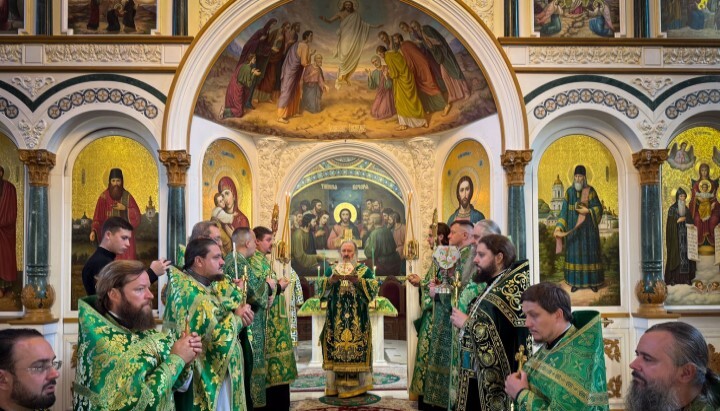
Police in the Lviv Region complain that they cannot stop UOC worship services held in private homes.
The police of Lviv Region stated that they cannot influence the holding of worship services by believers of the Ukrainian Orthodox Church in private apartments, since this lies outside the scope of their authority.
This was reported on the website of the Lviv Regional Council, where Oleksandr Savchuk, head of the Department of Preventive Activities of the Main Directorate of the National Police in Lviv Region, spoke at an extraordinary session.
Savchuk noted that two criminal proceedings are currently being investigated in connection with “illegal construction” on private land plots. However, when it comes to worship services conducted in private houses and apartments, law enforcement officers have no legal grounds to intervene.
“In the public sphere, UOC MP services do not take place. If people gather at home, we cannot influence it,” Oleksandr Savchuk complained.
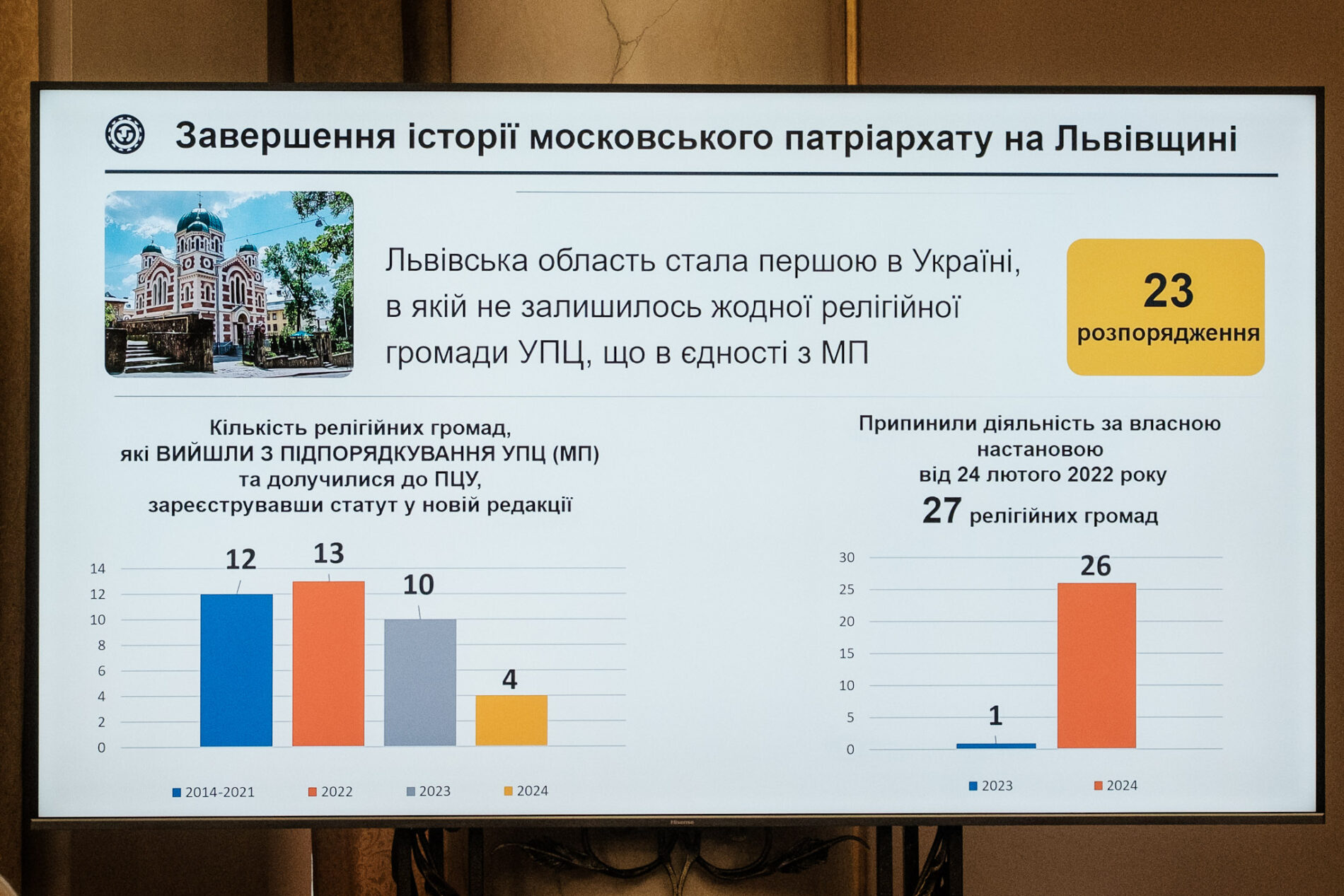
Iryna Havryliuk, director of the Department for Culture, Nationalities, and Religions of the Lviv Regional Military Administration, said that all four UOC religious communities in Lviv Region that had land plots “transferred” to the jurisdiction of the OCU. She was referring to communities in Boryslav, Zhovkva, Mostyska, and Sheptytskyi.
“In this way, Lviv Region became the first in Ukraine where not a single UOC (MP) religious community remains,” Havryliuk boasted.
According to her, before the full-scale invasion, 12 communities “transferred” to the OCU; in 2022 – 13 communities; in 2023 – 10 communities; and in 2024 – the last four religious communities. Another 27 communities “ceased activity by their own decision.”
Havryliuk added that in populated areas where UOC communities had previously operated, local authorities are “conducting explanatory work with residents.”
Following the discussion, the deputies appealed to law enforcement to strengthen preventive measures in communities where UOC religious organizations had previously operated, and also to “respond to possible manifestations of anti-state activity by certain individuals.”
Earlier, the UOJ reported that the Lviv and Ivano-Frankivsk Regional Military Administrations had reported the complete elimination of the UOC in their regions.