
“Rejection recommended”: expert assessment of Bill No. 5309

The Verkhovna Rada’s Main Scientific and Expert Department acknowledges that Bill No. 5309 blatantly contradicts the Constitution. Will this stop lawmakers?
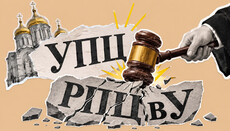
On Thursday, December 20, the Verkhovna Rada is scheduled to consider Bill No. 5309, which seeks to rename the Ukrainian Orthodox Church as the Russian Orthodox Church in Ukraine. However, as early as 2017, parliament’s Main Scientific and Expert Department recommended rejecting the bill on the grounds that it blatantly contradicted the Constitution and was inconsistent with the objectives stated by its authors. Let us examine the substance of the experts’ objections.
First, a few preliminary remarks.
1) The Main Scientific and Expert Department is one of the principal divisions of the Verkhovna Rada’s administrative apparatus. It reviews all bills submitted to lawmakers for consideration. The documents are assessed not only for compliance with the Constitution and existing legislation but also for their economic and social merits, consistency with the fundamental principles of state policy, and potential consequences.
2) The department’s staff are not elected lawmakers expected to voice positions that appeal to their constituents. Nor are they media personalities seeking to please television audiences or newspaper readers.
3) Naturally, the department’s expert assessments cannot be entirely free from bias or perfectly objective. Staff salaries, bonuses, and career advancement all depend on the leadership of the Verkhovna Rada. Consequently, wherever possible, they prefer to avoid issuing negative assessments of bills backed by that leadership. When the parliamentary leadership supports a bill but the Main Scientific and Expert Department opposes it, this means that the document runs so blatantly counter to the Constitution, existing legislation, and common sense that giving it a favorable assessment is simply impossible.
Now let us turn to the expert assessment of Bill No. 5309 itself.
The bill has a rather cumbersome title: the Law of Ukraine “On Amendments to the Law of Ukraine ‘On Freedom of Conscience and Religious Organizations’ Regarding the Names of Religious Organizations (Associations) That Form Part of the Structure of (Are Part of) a Religious Organization (Association) Whose Governing Center (Administration) Is Located Outside Ukraine, in a State Recognized under Ukrainian Law as Engaging in Military Aggression against Ukraine and/or Having Temporarily Occupied Part of Ukraine’s Territory.”
Essentially, the document proposes the following:
- Requiring the Ukrainian Orthodox Church to change its name to the Russian Orthodox Church in Ukraine.
- Establishing the criteria by which the UOC is deemed part of the Russian Orthodox Church (ROC).
- Restricting the ability of UOC clergy to provide pastoral care to Ukrainian military personnel.
The bill, of course, does not explicitly state that it is the UOC that must change its name. Instead, it uses vague wording, referring to a religious organization whose governing center is located in an “aggressor state” – a designation the Verkhovna Rada has applied to Russia. Although there are probably several dozen such religious organizations in Ukraine – Orthodox, Protestant, and pagan alike – everyone understands that Bill No. 5309 targets only one of them: the UOC. That is why we are discussing the UOC rather than some abstract religious organization with a “governing center.”
Having analyzed the bill, the Main Scientific and Expert Department reached an unequivocal conclusion: it is inconsistent with the Constitution and existing legislation.
“The innovations proposed in the bill, which, in the opinion of the Main Department, appear insufficiently substantiated and justified, go beyond the limits established by the relevant provisions of Article 35 of the Constitution and the Law of Ukraine ‘On Freedom of Conscience and Religious Organizations.’”
Which specific provisions of Ukraine’s constitutional legislation does Bill No. 5309 violate? According to the department, they include the following:
- The exercise of the right to freedom of worldview and religion may be restricted by law only in the interests of protecting public order, public health and morality, or the rights and freedoms of others.
- The Church and religious organizations in Ukraine are separate from the state.
- The state does not interfere in the activities of religious organizations conducted within the framework of the law.
- All religions, religious doctrines, and religious organizations are equal before the law.
- No religion, religious doctrine, or religious organization may be granted privileges or subjected to restrictions relative to others.
Supporters of Bill No. 5309 argue that the UOC’s rights must be restricted precisely because of the alleged threat it poses to the Ukrainian state and its people, and that such restrictions are permitted by law. The authors of the bill stated as much in their explanatory memorandum:
“There is a direct threat of destructive propaganda being disseminated by the aggressor state through the use of the religious factor, which will have tangible consequences for Ukraine’s national interests, territorial integrity, and national security.”
The Main Scientific and Expert Department examined this issue as well and concluded that the authors of the bill had presented no “specific, irrefutable facts demonstrating an urgent need to introduce the relevant amendments to the aforementioned Law.”
Moreover, the department stated that Ukraine’s existing legislation already provides all the necessary means to counter threats to the state and its citizens:
“Thus, there are sufficient grounds to believe that Ukraine’s current legislation already contains an adequate range of legal mechanisms (including measures of legal liability for violations of existing Ukrainian legislation) aimed at safeguarding Ukraine’s national interests, territorial integrity, state security, and sovereignty.”
Regarding the bill’s requirement that the UOC identify its “governing center” in its name, the department draws attention to the following provision:
“In accordance with Article 8 of the Law (‘On Freedom of Conscience and Religious Organizations’ – Ed.), a religious community, as a type of religious organization, has the right to be subordinate in canonical and organizational matters to any religious center operating within or outside Ukraine and to freely change such subordination. Furthermore, notification of government authorities regarding the establishment of such a religious community is not mandatory.”
In other words, a religious organization is free to change its governing center without notifying government authorities, because the matter is simply none of their business.
Moreover, the Main Department points out that the very purpose of registering a religious organization’s statute is to enable it to acquire legal entity status, not to legitimize its activities. This means that a religious organization may operate in Ukraine without registering at all, and its activities will remain lawful as long as they are conducted within the framework of existing legislation. Making a name change a condition for a religious organization to operate in Ukraine is therefore unlawful.
“A religious community has the right to be subordinate in canonical and organizational matters to any religious center operating within or outside Ukraine and to freely change such subordination.”
(From the findings of the Verkhovna Rada’s Main Scientific and Expert Department)
As for restricting the ability of UOC priests to provide pastoral care to military personnel, the experts consider this a direct violation of the principle of non-discrimination, since it entails restricting people’s rights on religious grounds:
“This means that in a democratic state governed by the rule of law, which Ukraine aspires to become, different arrangements for exercising the right to freedom of conscience and religion cannot be established on the basis of religious beliefs or other factors referred to in the bill.”
The experts’ final conclusion reads as follows:
“Taking the above into account, there are grounds to believe that the provisions of the bill exhibit signs of incompatibility with the Constitution of Ukraine, which precludes imposing special requirements on the names and contents of the statutes (regulations) of particular religious organizations (associations), or restricting their clergy’s access to units of the Armed Forces and other military formations of Ukraine compared with clergy of other religious organizations.”
“Overall conclusion: following consideration at the first reading, rejection of the bill is recommended.”
We shall see whether the Verkhovna Rada passes this test of its commitment to democratic principles and the primacy of human rights. Will it choose to violate Ukraine’s Constitution and laws, as well as its numerous international obligations? Ukraine has declared its commitment to a European course. The vote on Bill No. 5309 will make it abundantly clear how true it remains to that commitment.