
UOC renaming law takes effect: what comes next?

If we agree to surrender our name, they will demand that we surrender the lavras. If we surrender the lavras, they will demand our churches and monasteries. And so it will continue until the Church is completely destroyed.
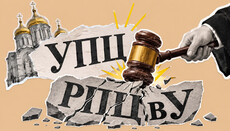
The other day, Law No. 5309 came into force, requiring the Ukrainian Orthodox Church to be renamed the Russian Orthodox Church in Ukraine. For all its absurdity, this law is merely a small component of the campaign against the Church, and it would be a grave mistake to assume that the issue is simply about changing the UOC’s name.
Let us examine the legal and several other aspects of the “renaming law” – as we will call it for convenience – as well as the broader developments unfolding in Ukraine.
The legal aspect
From a legal standpoint, the renaming law is not merely controversial but blatantly unlawful. Strictly speaking, it can only be implemented if the UOC episcopate becomes so terrified that it convenes an emergency Local Council and adopts a decision to rename (read: dissolve) the Church. Naturally, this will not happen. The law can and must be resisted, within the framework of Ukraine’s Constitution and legislation.
First, the renaming law was adopted in violation of parliamentary procedure. Many MPs whose votes were counted were simply absent from the Verkhovna Rada’s chamber during the plenary session. Some immediately made public statements to that effect. Video footage has also been released showing lawmakers running around the chamber and pressing voting buttons on behalf of their absent colleagues. Yet the law requires MPs to vote in person. Proxy voting, handing over voting cards, and similar practices are prohibited.
These facts could provide grounds for overturning the law if there were the political will to do so. However, given the authorities’ determination and the fact that this is a routine way of passing legislation in the Verkhovna Rada, the law is unlikely to be overturned on procedural grounds. Nevertheless, these violations must be brought to public attention. The Ukrainian people need to see how unlawfully the legislation was adopted. Moreover, procedural violations provide an additional argument for challenging the law in courts and before international organizations.
Second, the renaming law directly contradicts Ukraine’s Constitution and legislation, as well as international treaties. The expert opinion issued by the Verkhovna Rada’s Main Scientific and Expert Department lists the following legal instruments and judicial decisions:
- The Constitution of Ukraine;
- The Law of Ukraine on Freedom of Conscience and Religious Organizations;
- The 1966 International Covenant on Civil and Political Rights;
- The 1950 Convention for the Protection of Human Rights and Fundamental Freedoms;
- Protocol No. 12 to the Convention for the Protection of Human Rights and Fundamental Freedoms;
- The 1948 Universal Declaration of Human Rights;
- Decisions of the Constitutional Court of Ukraine;
- Judgments of the European Court of Human Rights.
All of this provides grounds for petitioning the Constitutional Court to declare the renaming law unconstitutional, which would result in its invalidation. Under the Law on the Constitutional Court, such a petition may be submitted by 45 MPs. Presumably, that many lawmakers can be found in the Verkhovna Rada, and a petition will be filed with the Constitutional Court.
Furthermore, any citizen whose rights are violated may bring an appropriate action before the courts of general jurisdiction. Since the Constitution of Ukraine stipulates that its provisions have direct effect, citizens can defend their rights in court by relying directly on constitutional provisions. And even if courts of first instance rule against citizens, it will be virtually impossible for higher courts, the Supreme Court, and especially the European Court of Human Rights to uphold the legality of the renaming law.
In addition to individual citizens, the Ukrainian Orthodox Church itself will be able to take legal action once an executive authority – most likely the Ministry of Culture’s Department for Religious Affairs or the Prosecutor General’s Office – issues an order requiring the UOC to change its name in accordance with the renaming law. That order will be challenged in court, where compelling evidence of the law’s incompatibility with the Constitution will be presented. Incidentally, Archpriest Alexander Bakhov, head of the UOC Legal Department, has already announced that the Church will appeal to the Constitutional Court.
Third, in addition to challenging the law in court, appeals can be made to various international organizations, including the UN, the OSCE, and the Council of Europe. Despite their frequently demonstrated bias, these institutions will be unable to endorse the renaming law because it so blatantly violates international human rights conventions.
Fourth, there is another legal argument for maintaining that the UOC does not fall within the scope of the renaming law. The UOC Statute, duly registered in Ukraine, does not identify the Russian Orthodox Church as the UOC’s governing center. It merely states that “the Ukrainian Orthodox Church is connected with the Local Orthodox Churches through the Russian Orthodox Church” (Paragraph 3 of the Statute) and that the UOC “is a self-governing part of the Russian Orthodox Church” (Paragraph 5 of the Statute). The term “self-governing” means that the UOC’s governing center is located in Ukraine.
Thus, the provisions of the UOC Statute provide no grounds whatsoever for applying the renaming law to the Church. But matters are not quite so simple. The law contains a provision stipulating that if UOC bishops are members of the ROC’s governing bodies and the ROC serves as the highest judicial authority for the UOC in ecclesiastical disputes, then the ROC constitutes the UOC’s governing center. In other words, to determine where an organization’s governing center is located, the renaming law proposes relying not on an internal Ukrainian regulatory instrument – the UOC Statute – but on a Russian one.
According to the theory of state and law, internal corporate regulations are a category of subordinate regulatory instruments adopted by enterprises, institutions, and organizations. Consequently, to apply the provisions of the renaming law to the UOC, it would be necessary to recognize that the ROC Statute, registered by the authorities of the Russian Federation, has legal force within Ukraine. Will our judicial system and our proud sense of national identity allow this? After all, it would amount to Ukraine acknowledging that regulatory instruments of a “state recognized by the Verkhovna Rada as an aggressor” have legal effect on Ukrainian territory.
Understanding all the legal aspects outlined here, however, requires a little intellectual effort – something we have lately grown rather reluctant to make.
The geopolitical aspect
None other than the President of Ukraine has repeatedly stated that the creation of the Orthodox Church of Ukraine (OCU) is a geopolitical issue. In this particular case, it is a matter of confronting the Russian Federation, something that has also been expressed in various terms. But let us ask ourselves: who exactly, which geopolitical actor, is confronting Russia? Ukraine? Hardly! Ukraine is not confronting Russia – it is actively trading with it. Let us visit the website of Ukraine’s State Statistics Service and examine the country’s foreign trade figures for January–October 2018.
It turns out that Ukraine’s largest trading partner is – what a betrayal! – the “aggressor state.” Here are the top five:
- Russian Federation: exports – $3 billion, or 7.7% of total exports; imports – $6.6 billion, or 14.1% of total imports.
- Poland: exports – $2.7 billion, or 6.9% of total exports; imports – $3 billion, or 6.4% of total imports.
- Italy: exports – $2.2 billion; imports – $1.6 billion.
- Turkey: exports – $2 billion; imports – $1.3 billion.
- China: exports – $1.6 billion; imports – $6 billion (China ranks second in terms of imports).
You do not trade with your adversary – that is elementary. And if we also consider that trade with Russia grew by 30.5% (!) in 2018, the situation becomes downright absurd: the more often our president says “goodbye for good,” the more trade increases. And if we consider that Ukraine’s trade deficit with Russia amounts to approximately $4 billion a year, we discover, to our horror, that Ukraine itself is putting money into the Russian budget, which Russia then uses to wage its “hybrid war” against Ukraine.
All of this means that Russia’s real geopolitical adversary is not the Ukrainian state but someone else. And that someone else is the United States of America. This is no secret either. The United States has officially declared Russia, China, and Iran its geopolitical adversaries. More importantly, the United States acts in accordance with this doctrine.
Thus, through a few simple logical deductions, we arrive at an obvious conclusion: the OCU is nothing more than an instrument in the US confrontation with Russia. Beyond Petro Poroshenko’s own statements, this is borne out by the negotiations on the creation of the OCU conducted by US government officials at the Ukrainian Presidential Administration and the Patriarchate of Constantinople, as reported by the media. It is further borne out by the official congratulations that the US Embassy and the State Department were the first to extend to Poroshenko and Epifaniy.
But the most telling indication that the United States was steering the entire OCU project was the first official meeting between OCU head Epifaniy and representatives of the diplomatic corps. Whom did the newly minted “Metropolitan of Kyiv” thank for his election and the creation of the OCU? That’s right – US Ambassador to Ukraine Marie Yovanovitch!
We can therefore conclude that the adoption of the renaming law is a small component of the OCU project, while the OCU project itself is a small component of the geopolitical confrontation between the United States and Russia. What does any of this have to do with Ukrainian clergy and believers? Let everyone joining the OCU answer that question for themselves!
The religious aspect
Perhaps some people seriously believe that the OCU will actually lead people to God. But the preaching of John the Baptist, Jesus Christ, and the apostles began with the call: “Repent, for the kingdom of heaven is at hand” (Matt. 4:17). What did the newly elected head of the OCU, Epifaniy Dumenko, begin his first “sermon” with? The Ukrainian national anthem!
The Church of Christ was founded through the descent of the Holy Spirit upon the apostles. The OCU was founded with Petro Poroshenko’s arrival at St. Sophia Cathedral in Kyiv to the ringing of bells! The president did more than announce the date of the “Unification Council” and attend it. He directed the “council” from the presidium, instructed its participants, and rescued the OCU’s creation process from collapse no fewer than five times, as he subsequently admitted. Verkhovna Rada Speaker Andriy Parubiy was also involved in the entire affair, earning special thanks from Epifaniy Dumenko.
All right, the OCU has been created, and perhaps there will be a Tomos – but what comes next? Judging by the enthusiasm with which the Ukrainian authorities are creating their own national, independent, patriotic Ukrainian Church, one might imagine that its emergence would lead to a ban on gay pride parades in Ukraine, a statutory prohibition on the recognition of same-sex marriages, the introduction of religious instruction in schools, the cancellation of entertainment events during fasting periods (at least during Great Lent), and an end to the promotion of violence and sexual immorality on television.
Naturally, none of this will happen. That is not what the OCU is being created for. It is being established as an attribute of Ukrainian statehood. The president says so, Filaret Denysenko says so, Epifaniy Dumenko says so, and even former Metropolitan Simeon (Shostatskyi) of Vinnytsia has begun saying so. Nothing more is required of the OCU than to serve as a unifying pillar of statehood.
History repeats itself with remarkable consistency. Why were Christians persecuted during the first three centuries of Christianity? The Roman Empire enjoyed a considerable degree of religious pluralism. In principle, people could believe whatever they wanted and worship however they wished. Participation in pagan worship, however, was mandatory as a demonstration of loyalty to the state and its rulers. Burn some incense before a statue of the emperor or some other idol – and then go on believing whatever you like. Following the Revolution of 1917, the Bolsheviks established the “Living Church.” It was declared legitimate and politically trustworthy. Membership in it came to be regarded as a symbol of loyalty to the new Soviet state. Those who attended its services were left alone. Those who attended the “wrong” Church, headed by Patriarch Tikhon, faced repression.
Today in Ukraine, the OCU serves as just such a symbol of loyalty to the state and its authorities. You can be a pagan or even an “atheist of the Kyiv Patriarchate” – just acknowledge Epifaniy as your primate, and you will be deemed a patriot!
The OCU is being created as an attribute of Ukrainian statehood. The president says so, Filaret Denysenko says so, and Epifaniy Dumenko says so.
Yet just as in 1917, God has not abandoned His faithful today. At the beginning of the twentieth century, the Lord raised up St. Tikhon, giving the people a spiritual guide in his person. Faithfulness to the patriarch and the Church he headed meant faithfulness to Christ. Today, His Beatitude Metropolitan Onuphry, Primate of the UOC, serves as such a spiritual guide for believers. Incidentally, the Phanar is calling on him, just as it did on Patriarch Tikhon, to step down as primate. Thank God, His Beatitude Onuphry refuses to compromise or sell out the Church for the sake of carrying on with life “as usual.” Thank God, we have an archpastor who leads us to Christ. Thank God, the episcopate, clergy, and faithful are following him.
Returning to the renaming law, it must be said that legal avenues for resisting it do exist and must be pursued. We cannot acquiesce to this unlawful law. At the same time, we must understand that it will not end there. If we agree to surrender our name, they will next demand that we surrender the lavras. If we surrender the lavras, they will demand our other churches and monasteries. And so it will continue until the Church is completely destroyed. The Roman emperors who persecuted Christians said it openly: “You have no right to exist!” Today, the language is more diplomatic, but the underlying message remains the same.