
Who will tell a bishop he is wrong?
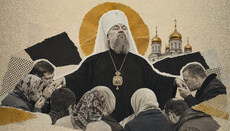
Why is confidence in one’s own rightness so easily mistaken for spiritual growth – and why is this conversation not only about bishops?
World Orthodoxy is becoming increasingly divided into camps whose representatives relentlessly criticize one another. There is probably little point in dissecting the arguments of each side. It is more important to understand why the current situation in Orthodoxy became possible in the first place. Why do respected hierarchs and primates of Local Churches consider it acceptable to say and do things they should not? And what does any of this have to do with each of us personally?
The Stanford experiment
Let us begin from afar. In the summer of 1971, an advertisement appeared in Palo Alto, California, seeking volunteers for a psychological study of prison life. The researchers were not really studying prisons, but people: which is stronger – a person’s character or the role assigned to him?
Around seventy people responded. The researchers carefully screened out anyone with a criminal record, aggressive tendencies, or health problems. In other words, those selected for the experiment were deliberately chosen as well-adjusted young men – students at a good university, future lawyers and doctors.
Who would become a guard and who a prisoner was decided by chance. This detail deserves particular attention: there was no difference between the people in the two groups – their roles were assigned randomly.
The “prisoners” were taken to the basement of Stanford University’s psychology department, stripped, given smocks with numbers instead of names, and fitted with chains around their ankles – just like in a real prison. Except, let us remind ourselves once again, the “prison” was imaginary, and the people were merely playing the role of “prisoners.” But...
By the second day, the “guards” were already waking their charges in the middle of the night for roll calls, forcing them to do push-ups as punishment, taking away their mattresses, putting them in a closet that served as solitary confinement, and placing bags over their heads. That same day, the “prisoners” tried to rebel – and the “guards” responded by using a carbon-dioxide fire extinguisher, storming the cells, stripping the ringleaders, and removing their beds.
That was the turning point: what had been written into the scenario for the “guards” became “natural” behavior for them. They had acquired a taste for power.
By the third day, some of the “prisoners” began experiencing what later reports described as acute stress reactions: crying, panic attacks, pleas for mercy. The experiment, which was supposed to last two weeks, was terminated on the sixth day.
The man everyone forgets
This is usually where the story ends: ordinary students became brutal guards in less than a week. But the most interesting person in this story was not one of the “guards.” It was the man who had set the whole thing up.
Philip Zimbardo did not observe the experiment from the sidelines. He assumed the role of “prison superintendent” and, as later became clear, found himself trapped inside his own construct as well. Thirty-six years later, he wrote a book about what happened, The Lucifer Effect, which could be described as not only scientific but also penitential. Zimbardo described his own transformation very clearly: the people around him treated him as though he really were the prison superintendent – and he became one.
At the same time, he emphasized the difference between himself and the participants. They were merely inexperienced young men with almost no life experience, while he was a mature man, an experienced researcher who understood perfectly well what was happening. And yet he, too, gradually became a living embodiment of prison authority: he began to walk, speak, and carry himself the way others expected him to.
Over the past several decades, a large body of observations has accumulated showing that people who are given even a temporary taste of power become less able to understand other people’s perspectives and less responsive to their pain – while becoming noticeably more confident in their own judgments. They listen to advice less often and, as a result, make more mistakes. Psychiatrists observing politicians have proposed a separate term for this condition – “hubris syndrome.” It develops in people who have spent a long time at the top and, tellingly, usually subsides soon after they leave office.
Now put all these pieces together: a person never doubts that he is right, does not hear objections, has little sense of what those around him are feeling, gives orders without understanding how they will affect other people’s lives, and is utterly convinced that he has the right to interfere in those lives. Does the portrait look familiar?
If it does, let us continue.
Our own basement
If we bring all of this inside the Church, the picture becomes unsettling – and in many respects even more dangerous than Zimbardo’s experiment.
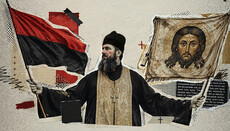
There, all the participants knew from the outset that it was only a game and that in two weeks they would go home. And still, the game became reality. In the Church, however, everything is real. A parishioner who says, “Father, it is all thanks to your prayers,” usually genuinely believes that the priest’s prayer is more powerful than his own. The form of address “Holy Master” is not flattery but wording enshrined in liturgical books. And the Many Years is not sung as a joke.
You can leave a fake prison simply by announcing that the experiment is over. But the order of Church life is real, not invented, and it did not arise from anyone’s malicious design.
Day after day, year after year, a person lives in an environment where people kiss his hand, rise when he enters, do not interrupt him, and do not contradict him openly. He is called wise and discerning, while his personal opinions about medicine, politics, raising children, or choosing a profession are treated as instructions to be followed. And most importantly, practically no one ever tells him “no.”
The result is exactly what Zimbardo described. When everyone around you treats you as though you really are “holy” and “wise,” sooner or later you begin to feel that way yourself.
You stop allowing for the possibility that you might be wrong. You listen to other people’s opinions merely out of politeness. Your instructions have less and less to do with the actual circumstances of the lives of those to whom they are addressed – because no one has told you the truth about those lives for a long time, and you no longer see that reality yourself. And with ever greater confidence, you begin making decisions for others that no one has the right to make for them.
Worst of all, from the outside this does not look like “hubris syndrome” but like “spiritual growth.” Confidence in one’s words is perceived by others as firmness of conviction, deafness to objections as faithfulness to spiritual principles, and a growing distance from “mere mortals” as spiritual elevation. And no one sounds the alarm, because there appears to be nothing to be alarmed about.
Apostle Peter and his understanding of priestly ministry
When Apostle Peter said, “Though all men shall be offended because of thee, yet will I never be offended,” he was neither lying nor putting on a show – he was certain that this was exactly what would happen.
But then the circumstances changed. He was not tortured or threatened with execution – he simply found himself at night in someone else’s courtyard and lost his nerve. A few minutes were enough for everything he believed about himself to crumble into dust.
There is another episode. Years later, already the foremost of the apostles, Peter comes to Antioch and freely eats with the Gentiles. But then “certain came from James” – and he begins withdrawing from the very Gentiles to whom he had preached. A pillar of the Church changes his behavior because another person has entered the room.
So when Apostle Peter addresses pastors, he writes about something he knows from personal experience:
“The elders which are among you I exhort, who am also an elder, and a witness of the sufferings of Christ, and also a partaker of the glory that shall be revealed: Feed the flock of God which is among you, taking the oversight thereof, not by constraint, but willingly and according to God; not for filthy lucre, but of a ready mind; neither as being lords over God’s heritage, but being examples to the flock. And when the chief Shepherd shall appear, ye shall receive a crown of glory that fadeth not away” (1 Pet. 5:1–4).
Let us unpack this passage: almost every word matters.
“Also an elder.” In Greek, συμπρεσβύτερος – “fellow presbyter.” An apostle, a disciple of Christ, a witness of the Transfiguration and Gethsemane, addresses presbyters – ordinary priests! – and calls himself one of them. He had every right to write differently and remind them that he was an apostle, and no one would have objected. But Peter humbles himself. This is the first and most important practical lesson in the entire passage: do not play the role others offer you, even when they offer it sincerely.
“A witness of the sufferings of Christ, and also a partaker of the glory that shall be revealed.” The sufferings are in the past – they have already happened, and he witnessed them. But the glory is in the future – it is still “to be revealed.” Between these two points, the pastor is promised nothing. Yet what often happens is that a priest or bishop is offered glory immediately, right here and now.
“Taking the oversight” – ἐπισκοποῦντες. This is the very root from which the word “bishop” comes. It means attentive care and watchfulness, not ruling over others. The Apostle immediately sets a limit: the flock is to be cared for “not by constraint, but willingly.” Not because one’s office requires it, but because of an inner desire to serve Christ in precisely this way.
The Apostle reinforces this thought with the words “not for filthy lucre.” This is not only about money. Lucre is any benefit one derives from ministry: honor, influence, the fear of others, a sense of one’s own importance, the ability to control other people’s lives. Money may actually be the least dangerous form – if only because when people take it, they understand that what they are doing is wrong. Honors, on the other hand, are accepted with a clear conscience.
“Neither as being lords over God’s heritage.” In the original – κατακυριεύοντες. This is the very verb Apostle Peter had heard from Christ Himself: “Ye know that they which are accounted to rule over the Gentiles exercise lordship (κατακυριεύουσιν) over them... but so shall it not be among you” (Mark 10:42–43). The authority of a clergyman, including a bishop, does not consist in being a master but in being a servant.
Peter then speaks of “God’s heritage.” The people in a parish or eparchy are neither property nor subordinates. They are a portion of someone else’s possession entrusted to a pastor’s care. And he will have to give an account of it to the One who entrusted it to him.
“But being examples to the flock.” The only instrument of authority the Apostle leaves to a pastor is his own example. And that, incidentally, is an instrument that cannot be wielded from an office, delegated to someone else, or faked.
How do I know if I have “hubris syndrome”?
The Church knew that external circumstances shape a person long before the Stanford basement. In the third book of On the Priesthood, St John Chrysostom examines in detail how the very atmosphere of “reverence” in which a pastor lives affects his soul. He concludes that the greatest danger comes not from persecutors or heretics, but precisely from there – from admirers.
But we cannot say that because circumstances are to blame, the person himself bears no responsibility. Freedom consists precisely in remaining yourself within an environment that exerts pressure on you. At the same time, the right conclusion is not simply that “you need to be strong in spirit.” It is more important to arrange your life in such a way that you do not have to rely solely on your own strength, wisdom, and imagined holiness.
Put very simply: every priest – and all the more so every bishop – needs someone in his life who is capable of telling him that he is wrong.
For a married priest, much of this role is played by his family. His wife and children see him without his vestments. And if it irritates him that no one bows to him at home the way they do in church, that is a bad sign.
Besides people who tell us the truth, we also need questions we can ask ourselves:
When was the last time I changed a decision because someone persuaded me that I was wrong?
When was the last time I asked forgiveness from someone who depends on me?
When was the last time I heard the word “no” from the people around me?
The answers will show us what is going wrong.
And one more thing – perhaps the hardest of all: we must learn to distinguish respect for the priesthood from respect for ourselves. It is not your hand they are kissing, and it is not you they are honoring. At every Liturgy, while the choir sings the Cherubic Hymn, the priest reads a prayer that begins with the words, “No one who is bound with the desires and pleasures of the flesh is worthy to approach or draw near or to minister to Thee, O King of Glory,” and before receiving Communion he calls himself the chief of sinners.
Instead of a conclusion
We are almost never who we appear to be. And, more uncomfortably still, we are almost never who we imagine ourselves to be. Our image of ourselves is only a flattering picture that lasts until circumstances change.
That brings us back to where we began. When a bishop or the primate of a Local Church says and does things he should not, the easiest explanation is malice or calculation. Sometimes that really is the case. But more often, what we are seeing is the same phenomenon that unfolded in the Stanford basement – except stretched out not over six days, but over decades. And no one is going to open the door: there is no one here to announce that the experiment is over.
The problem is also that there may long since be no one left around the hierarch who can tell him, “You are wrong,” without being punished for it. He does not fail to hear an opponent because he refuses to listen – there is simply no one left who will tell him an uncomfortable truth.
This is not a condemnation of the Church hierarchy. It is a conversation about something that happens to every one of us in exactly the same way – only on a smaller scale. A rector in his parish, a father in his family, a manager in his department – each can find himself in the same basement.
The Lord wants us to live by the words of the Gospel: “Whosoever will be great among you, shall be your minister” (Mark 10:43). Rank, position, and the reverence of those around us do not in themselves make us better. There is only one Chief Shepherd who can transform us – Christ. And before Him will stand only the person each of us has truly become.