OCU eparchy dissolved over "small size": Сracks in claims of mass support?
By abolishing its Uzhhorod-Khust Eparchy, the OCU has acknowledged for the first time that one of its structures operated for years with almost no flock.
On November 19, 2026, the Synod of the OCU (Orthodox Church of Ukraine) abolished the Uzhhorod-Khust Eparchy, stating that maintaining it as a separate eparchy was "not ecclesiastically expedient" because, in the Synod's words, it was "small in size." The decision came six and a half weeks after a court sentenced its former head, "Bishop" Kyrylo Mykhailiuk, for issuing documents certifying the "clerical status" of 291 men eligible for military service.
For nearly eight years, the eparchy had been part of the OCU, with its own "bishop" and administration, and its small size had never been an obstacle. This raises a question that extends far beyond Zakarpattia: How many other eparchies, parishes, and clergy within the OCU exist primarily on paper?

What exactly did the Synod acknowledge?
The Uzhhorod-Khust Eparchy joined the OCU on the day it was established, December 15, 2018. "Bishop" Kyrylo Mykhailiuk had headed the eparchy since 2014, initially as part of the Ukrainian Autocephalous Orthodox Church (UAOC). On November 13, 2025, when the criminal case became public, the OCU Synod suspended him from administering the eparchy pending an investigation and established a commission to examine its affairs. On February 2, 2026, the Synod removed Mykhailiuk from his see. Then, on November 19, 2026, it dissolved the eparchy altogether, citing its small size.
No figures were provided. The OCU Synod did not disclose how many parishes, "priests," or parishioners the eparchy had in 2018, in 2025, or now. What is known, however, is that according to the court's verdict, 291 people received documents certifying their "clerical status" on behalf of the eparchy between June 2023 and November 2025. In two and a half years, an eparchy that its own leadership now considers too small to exist produced nearly 300 "deacons."
The sequence of events is revealing. The eparchy's small size was nothing new: parishes do not disappear in six weeks. What was new was the criminal case and the verdict. Before the case emerged, the eparchy appeared on official lists alongside all the others, with its churches and clergy included in the OCU's overall statistics. Questions about whether the eparchy should continue to exist arose only after investigators took an interest in it, and the answer came only after the case reached court.
What the OCU says about itself
The OCU's public image rests on three claims:
- New communities are continually joining it.
- It is already the largest Church in the country.
- Most Ukrainians support it.
Dumenko describes the "transfers" of UOC communities to the OCU as an irreversible process, citing more than 2,000 communities. A year later, Viktor Yelensky, head of the State Service of Ukraine for Ethnopolitics and Freedom of Conscience (DESS), put the figure at 1,900 communities allegedly transferred to the OCU since 2018.
Yet the process of "transfers" has now nearly ground to a halt. In Volyn, according to the regional administration, only four communities transferred during all of 2025, with no surge expected in the near future. Moreover, Ukrainian media outlets report a sharp decline in transfers in Khmelnytskyi, Kyiv, and Volyn oblasts.
Dumenko has given varying figures for the size of his organization. At the OCU's "Council of Bishops" in July 2026, he claimed it had 9,200 communities. Yet just a few months later, the number suddenly dropped considerably. In various statements made in October 2026, Dumenko cited either more than 9,000 parishes or approximately 8,500.
The difference between 9,200 and 8,500 is substantial – 700 communities. It creates the impression that the OCU leader is simply pulling numbers out of thin air.
Government statistics as of January 1, 2026, list 8,547 OCU communities, of which 7,295 are registered as legal entities., while the Ukrainian Orthodox Church has 9,550 communities.
In other words, even after nearly eight years of "transfers" and the adoption of legislation directly targeting the UOC, the OCU still ranks second in the number of communities.
The situation with opinion polls is even more complicated. According to the Kyiv International Institute of Sociology, 50 percent of respondents identified with the OCU in fall 2025. In a May 2026 survey by the Rating Group, that figure was just 22 percent, while another 26 percent identified as Orthodox without specifying a jurisdiction. The more than twofold difference can be explained by how the questions were worded. A survey measures which affiliation respondents are willing to name when speaking to an interviewer. It does not measure how many people attend church on Sundays, much less whether those churches actually have priests.
Three eparchies for just over 50 parishes
Zakarpattia offers an opportunity to compare public claims with actual figures. Until November 19, the OCU had three eparchies in the region. In its own report for 2025, the Mukachevo-Carpathian Eparchy listed 23 parishes and 39 "clergy," including six deacons.
According to Ukrainian Wikipedia, the Zakarpattia Eparchy had 32 parishes and 22 "clergy."
The third, Uzhhorod-Khust, was deemed small even by these standards. The two eparchies considered large enough to remain in operation have a combined total of 55 parishes and 61 clergy.
For comparison, the Ukrainian Orthodox Church has two eparchies in the same region, with 271 and 242 parishes, respectively, according to the same Wikipedia source. Thus, the two OCU eparchies for which figures are available average fewer than 30 parishes each, while the UOC eparchies average more than 250.
Put simply, the two UOC eparchies in Zakarpattia have nearly ten times as many parishes as the two OCU eparchies.
Now consider the figure from the court verdict. Mykhailiuk issued 291 documents certifying "clerical status" – almost five times the entire clergy of the two neighboring OCU eparchies combined. If these individuals had genuinely been deacons, the Uzhhorod-Khust Eparchy would have had the largest number of "clergy" among all OCU structures in the region, making it impossible to describe it as small. Yet that is precisely how the Synod described it, suggesting that the Synod itself does not regard these individuals as actual clergy. What remains unclear is whether they were included in the eparchy's reports and the OCU's overall clergy statistics during the two and a half years their documents were valid.
The arithmetic of communities and priests
The Transcarpathian case might be dismissed as an exception if the OCU's overall statistics told a different story. The problem is that they reveal much the same picture.
According to Ukrainian journalists, by the end of 2024 the OCU had slightly more than 4,500 priests serving 8,300 parishes. DESS head Viktor Yelensky explained this by saying that communities often transfer from the UOC to the OCU without their priests. At the OCU's 2026 "Council of Bishops," Dumenko himself cited 6,000 clergy serving 9,200 communities. Under the first calculation, there are 54 "priests" per 100 communities. Under the second, there are 65 "clergy" per 100 communities, including "deacons," who cannot celebrate the "Divine Liturgy" on their own. Regional figures paint a similar picture: according to a representative of the OCU's Khmelnytskyi Eparchy, it has more than 500 parishes and approximately 220 clergy, meaning each cleric is responsible for two or three churches.
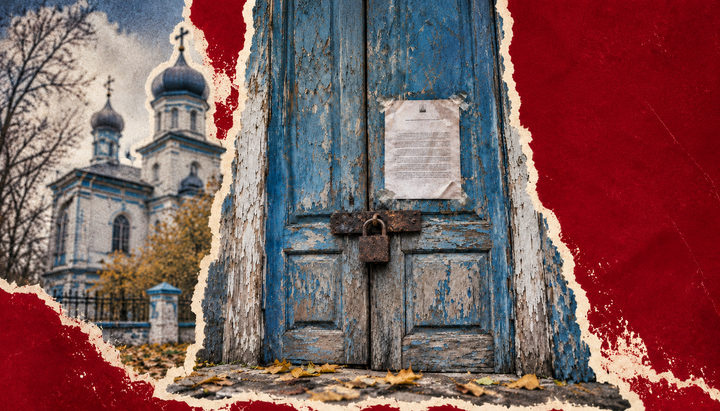
The conclusion is straightforward. Several thousand OCU communities have no "priest" of their own. Some are served by visiting clergy, while others exist only as entries in a registry and locked church doors. Neither the OCU nor the government discloses how many fall into each category. Add to this the fact that 1,252 of the OCU's 8,547 communities have no legal-entity status at all. Since the OCU faces no obstacles to registration, it is reasonable to suspect that these 1,252 communities do not actually exist – that they are "Potemkin villages."
Against this backdrop, the figure of 291 – the number of documents certifying "clerical status" issued by "Bishop" Kyrylo – takes on a different significance.
It represents more than five percent of the OCU's entire "clergy," assuming the total is 6,000, as Dumenko claimed at the OCU's 2026 "Council of Bishops." In other words, for every 20 OCU "clergy," there is one document issued under the Zakarpattia scheme. And that is the result of just one eparchy, one the Synod considered too small to maintain. What is happening in other, larger eparchies remains unknown: no public audits have been conducted there.
What keeps the structure going?
The answer to why an eparchy with almost no flock could exist for nearly eight years lies outside church life. The OCU operates under conditions enjoyed by no other religious denomination in the country.
Law No. 3894-IX, adopted in 2024, targets its main competitor – the UOC. The clergy exemption system is structured so that UOC religious organizations cannot be designated as critically important institutions, and their priests cannot receive exemptions from mobilization, as Yelensky has repeatedly stated. As a result, belonging to the OCU or another recognized denomination has become a prerequisite for men of draft age to obtain a lawful mobilization exemption, while membership in the UOC offers no such opportunity.
Under these circumstances, an OCU clergy certificate acquired a monetary value that the court established in dollars in the case of "Bishop" Kyrylo. The Zakarpattia scheme became possible not in spite of the system but because of it: it sold something the state grants to one church structure while denying it to another.
What happens when support runs out?
Church structures established with state involvement have a well-known history in the 20th century. The Renovationist Church, often called the "Living Church" after one of its factions, emerged in 1922. In the first half of the 1920s, more than half of the bishops and parishes were under its jurisdiction. Its statistics remained impressive for as long as the authorities found it useful. In September 1943, the state recognized only the Patriarchal Church, and by March 1946, Renovationism had ceased to exist. Within just over two years, its bishops and parishes had joined the Patriarchal Church, revealing that it had no independent flock large enough to justify maintaining a separate structure.
The second example is more recent. Before the OCU was established in December 2018, the Ukrainian Orthodox Church of the Kyiv Patriarchate (UOC-KP) announced its self-dissolution, and its communities joined the new organization. Filaret Denysenko's attempt to restore the Kyiv Patriarchate ended with a court ruling ordering its liquidation. By the time of Denysenko's death on March 20, 2026, only a handful of "bishops" remained associated with the organization, which lacked state registration. Today, it is becoming increasingly marginalized, drawing into its ranks individuals who have been defrocked by other Churches. In other words, a structure that had existed since 1992 lost almost everything once government support shifted to a new organization.
Conclusion
The significance of the abolition of the Uzhhorod-Khust Eparchy is not that Zakarpattia now has one fewer ecclesiastical administrative unit. It is that, for the first time, the OCU itself has acknowledged what previously only its critics had said about one of its eparchies: it is so small that maintaining it serves no purpose. And this admission came not after a year of work by a commission, but only after a court verdict. Without that verdict, the eparchy would most likely still be listed as part of the OCU today.
This raises three sets of questions for which the OCU and DESS have the relevant data but have published no answers.
- How many parishes, priests, and parishioners did the dissolved eparchy have, and how many does each remaining eparchy have?
- Does the OCU have 8,500 communities or 9,200?
- How many have a permanent priest and regular services?
- And how many people who obtained mobilization exemptions as OCU clergy actually serve as "priests," rather than merely appearing on the organization's clergy rolls?
Until these questions are answered, claims of nationwide popular support ring hollow. And a church structure propped up by those in power can survive only as long as their favor lasts. The fate of Renovationism and the Kyiv Patriarchate offers a stark warning: once that support disappears, the collapse can come with astonishing speed.