
“You don’t have to be almighty. You have to be faithful”
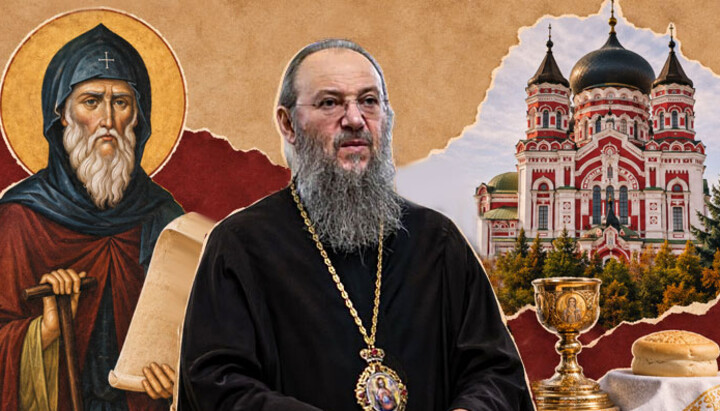
Metropolitan Anthony reflects on twenty years of his episcopal ministry, government pressure on the UOC, “dialogue” with DESS, and the conditions under which the Church schism can be healed.
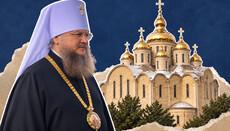
On November 26, 2006, at the Kyiv-Pechersk Lavra, His Beatitude Metropolitan Volodymyr presided over the episcopal consecration of Archimandrite Anthony (Pakanych) as Bishop of Boryspil. Twenty years have passed since then. During that time, the hierarch served for ten years as rector of the Kyiv Theological Academy, became Chancellor of the Ukrainian Orthodox Church, and lived through the events of 2018 alongside his Church, as well as church seizures, the eviction of the brethren from the Lavra, and the criminal prosecution of clergy.
In an anniversary interview with the UOJ, Metropolitan Anthony recalls his experiences on the day of his consecration, speaks about his childhood in Transcarpathia and his spiritual mentors, and remembers Metropolitan Volodymyr and the 2018 Council of Bishops, when UOC hierarchs remained faithful to the Church despite government pressure.
The metropolitan also addresses some of the most pressing questions: “dialogue” with DESS, the silence of the Local Orthodox Churches, how to pray for those who seize churches, and the conditions under which the ecclesiastical division in Ukraine can be healed. Finally, he reflects on what he would say to his younger self twenty years ago.
– Twenty years ago, you were consecrated a bishop at the Kyiv-Pechersk Lavra. Everyone is familiar with the rite of episcopal ordination. But what was happening within you that day? What were you thinking as you knelt before the Holy Altar? And what did you feel when you blessed the people for the first time, no longer as a priest but as a bishop?
– After twenty years, it is naturally difficult to recall the thoughts that filled my heart. As time passes, what remains in our memory is not so much particular thoughts as inner experiences. If I were to describe what I felt that day, I would probably use one word – awe. Awe before the Sacrament being performed upon you. Episcopal consecration is truly a personal Pentecost, when, through the laying on of hands by bishops, the Lord calls you to a special ministry and brings you into the history of the Church as a successor to the apostolic ministry. And, of course, there is awe before the ministry that begins at that moment.
It is a great ministry. Every bishop is not merely an individual but, in a certain sense, the living history of the Church, its tradition and continuity. When you realize the challenges and responsibilities facing the Church in the twenty-first century, you truly understand that human strength alone is insufficient for such a ministry. A natural question arises: where can you find the strength to make up for this weakness?
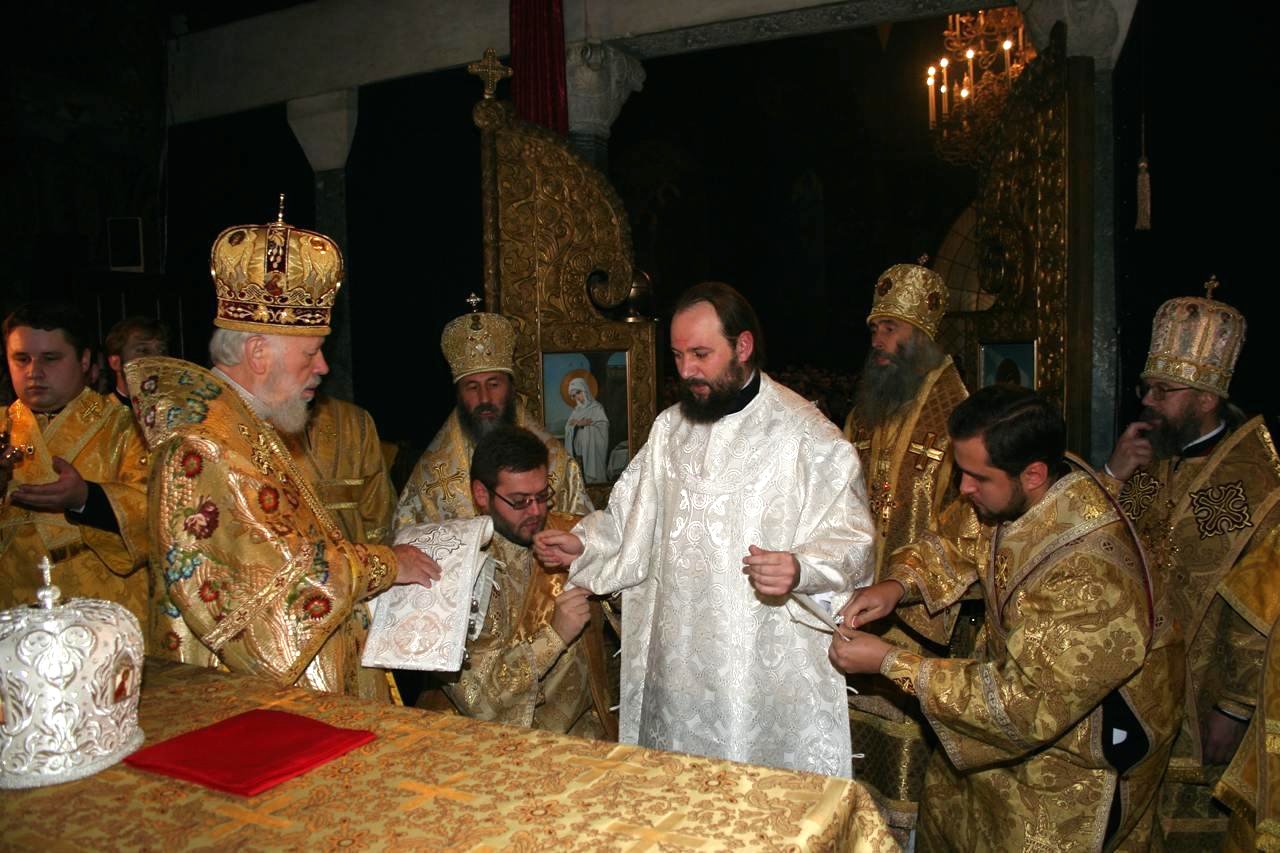
In theory, of course, we know a great deal. We read the Holy Fathers, study the teachings of those who have already walked this path, and try to comprehend the experience of previous generations. Yet none of this changes the fundamental fact that episcopal ministry is a personal spiritual struggle for everyone whom the Lord calls to it. And on that day, I believe, everyone receiving episcopal consecration feels with particular intensity the words of the Savior: “You did not choose Me, but I chose you” (John 15:16).
You specifically mentioned the first blessing of the people. Indeed, this is one of the most memorable and profound experiences for a newly consecrated bishop. You are handed the episcopal staff, and for the first time you stand before the people of God in your new capacity – as a hierarch, as a bishop. People approach you to receive your first episcopal blessing. At that moment, you feel the weight of responsibility particularly keenly. Many of those approaching you for a blessing are older than you, have far greater life experience, and perhaps even a deeper experience of spiritual and ecclesiastical life. Yet from that moment onward, you become their shepherd – a shepherd responsible for their spiritual lives. In a certain sense, their salvation depends on your words and, above all, on your actions.
– You were born and raised in Transcarpathia, a region where families preserved their faith even during the most difficult Soviet years. What was the church of your childhood like? Who was your first priest, and what were your family traditions? When did you first realize that you wanted to devote your entire life to serving God?
– I am grateful to God for everything in my life. First and foremost, for my parents, deeply religious people who instilled genuine faith and love for the Creator and the Church of Christ not only in me but also in my brother and sister.
I am also grateful to the Lord for my homeland, for the beautiful Carpathian Mountains, and for the fact that I was born in a village where a convent remained active even during the years of militant atheism. Its very existence was a living testimony to faith and taught us the true meaning of Christian life. Of course, not everyone became a priest or a monastic. But the convent provided spiritual guidance, showing people which direction to take in life and what truly mattered in human existence. This is a great gift from God. I genuinely cannot imagine myself without faith or outside the Church.
For as long as I can remember, the most vivid moments of my life have been associated with church. On Church feast days, as well as personal occasions – birthdays and name days – we always attended services at either the monastery or the parish church. Our mother raised us to understand that such days should be spent in the house of God, participating in worship and receiving the Sacrament of Holy Communion.
I particularly vividly remember meeting His Grace Bishop Savva (Babynets) of Mukachevo and Uzhhorod. He was a monk who was strict with himself, a tireless worker, and a devoted hierarch. I subsequently became his subdeacon and consider him my principal spiritual mentor. I was also fortunate to know St. Job of Ugol and other ascetics of the Carpathian region. Some of them had begun their monastic struggles on Mount Athos in the 1930s. Their very appearance captivated us. And how they prayed! For us as young boys, they were living examples of genuine piety – I would even say holiness. Thus, the entire spiritual atmosphere of my childhood had instilled in me, by the age of about eleven, a firm desire to devote my life to the service of the Church. I have never reconsidered that decision.
– Your episcopal consecration was presided over by His Beatitude Metropolitan Volodymyr, alongside whom you served until his repose in 2014. How do you remember him in everyday life and on solemn occasions? Is there something he said or did that you return to in difficult moments?
– Indeed, the beginning of my episcopal ministry is closely associated with His Beatitude Metropolitan Volodymyr. It was because he presented my candidacy to the Holy Synod that I was elected Bishop of Boryspil. Initially, I was instructed to continue serving as head of the chancery, and subsequently, at His Beatitude’s initiative, I assumed other responsibilities.
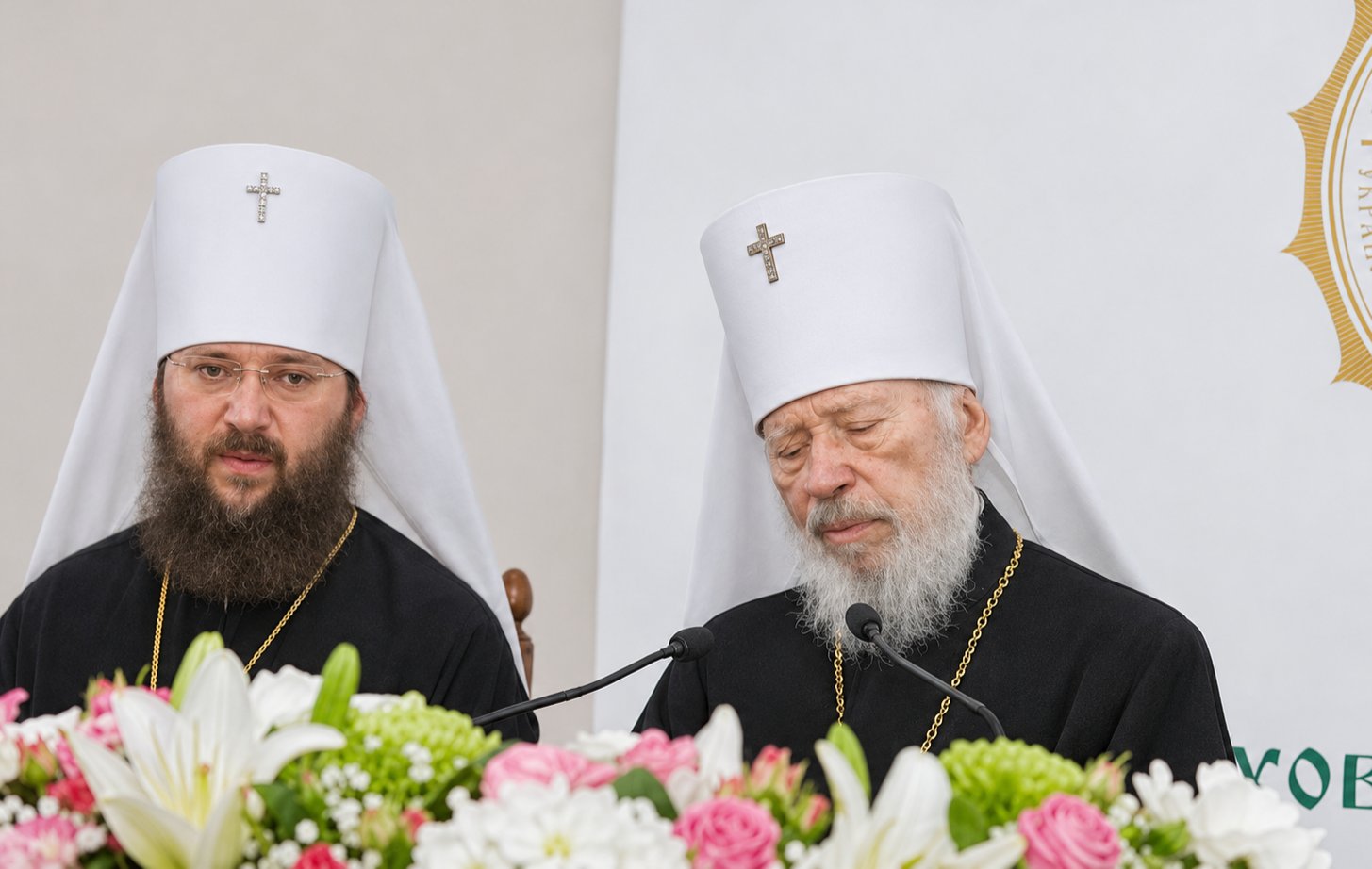
Metropolitan Volodymyr was a highly educated man who possessed a profound understanding not only of Church life but also of the human soul. He had the ability to see the bigger picture and look ahead. Moreover, he was an extraordinarily hardworking man. Whenever I entered his office, he would be sitting at his desk, bent over documents or texts he was editing. He was always calm and even-tempered, with kindness in his expression and a wealth of experience in Church administration.
I am grateful to God that the first steps of my episcopal ministry were associated with such a great primate of the Ukrainian Orthodox Church. It was during his tenure as Primate that the Ukrainian Orthodox Church largely took the shape we know today. He did not seek to construct artificial systems or impose programs. He allowed Church life to develop naturally, drawing on its inherent spiritual potential. And that spirit found expression in concrete deeds. I believe it was precisely this wise approach that made the remarkable growth of our Church possible.
In everyday life, Metropolitan Volodymyr was a very unassuming man. He did not create an artificial distance between himself and others or seek to emphasize his position. He combined simplicity in personal interactions with the inner dignity of a hierarch. He could be exceptionally gentle and attentive to people while remaining steadfast in matters of Church life.
He knew how to stand firm when it came to the canonical order and spiritual foundations of the Church. This combination is perhaps particularly important for everyone entrusted with episcopal ministry: to remain accessible to people, never placing oneself above them, while remaining faithful to what the Church has entrusted to you.
I remember how he repeatedly warned that very difficult times would come and that the Church would have to endure serious trials. To be honest, at the time I did not fully understand what he meant. I even tried to imagine what could possibly happen to the Church in the twenty-first century. Could we really face renewed persecution? After all, society appeared to be becoming more democratic, and all kinds of freedoms were being proclaimed. The direction in which society and the state were moving seemed clear and predictable. It was therefore difficult to understand why His Beatitude was warning us of such challenging times, when there would be little cause for rejoicing.
Another important quality that always distinguished His Beatitude Volodymyr was his ability to preserve inner peace even when surrounded by anxiety and difficult problems. He never gave the impression of someone who relied exclusively on his own strength to resolve everything. One could sense in him a profound trust in God and an understanding that Church life does not depend solely on human calculations and capabilities. Perhaps this was precisely what enabled him to preserve peace in his soul and impart it to those around him. For me, this is a very important lesson: a bishop must not only make decisions but also, through his own inner disposition, help people retain hope.
– You served for ten years as rector of the Kyiv Theological Academy, where an entire generation of priests was educated. What did you seek above all to teach your students? Today, years later, do you recognize in parish priests, monks, and bishops the values that were once instilled in them in the Academy’s classrooms?
– Recently, I spoke with a nun who recalled her spiritual mentor. On one occasion, her mentor asked her a very simple yet profound question: “How many times a day do you thank God?” It seems that every question you ask also prompts me to begin my answer with the words, “I am grateful to God.” Indeed, I am grateful to the Lord that ten years of my life were directly connected with the Kyiv Theological Academy, where I served as rector. The purpose of theological schools is to prepare the young people whom the Lord calls to the priesthood for this great ministry.
Perhaps the most important task in this regard is not merely to impart knowledge to students but, above all, to instill in them a desire for spiritual growth. Today, of course, the Church is developing many areas of activity: social ministry, missionary work, education, and much more. All of this is necessary and important. But the essential thing is to ensure that no form of Church ministry becomes a mere formality or simply the fulfillment of assigned duties.
It is extremely important that a priest’s ministry be part of his own personal salvation. If his work in the Church becomes part of his own journey toward Christ, then the parishioners whom the Lord entrusts to him will recognize this inner striving. They will follow their shepherd because they will sense that he himself is first and foremost following Christ.
Moreover, given the complexities of modern life, it has always been and remains essential to cultivate in future priests fidelity to the Church of Christ and a commitment to defending the purity of its teachings and canonical order. Modern society is changing rapidly and, in some respects, radically. At times, there is a temptation to regard ancient Church teachings as outdated and incompatible with the demands and moral perceptions of contemporary life.
However, we must always remember that the Church stands on the firm foundation of the Gospel faith and the canonical principles that have preserved it within authentic Orthodox Tradition throughout the centuries. Together with the faculty of our theological school, we sought to instill these teachings in the hearts of young people so that they would understand that fidelity to the Church is not merely a matter of outward affiliation but an inner conviction and a spiritual choice. I believe that, to some extent, the efforts of our faculty during the years when the Lord entrusted me with the position of rector were not in vain.
Despite the trials and persecution that the Ukrainian Orthodox Church has faced in recent years, the overwhelming majority of clergy educated at the Kyiv Theological Academy have remained faithful to their Mother Church. Unfortunately, there were also those who backslid into schism. This is particularly saddening because some of them not only studied at our theological schools but were also ordained or received monastic tonsure there. Yet there have been very few such cases. I believe and constantly pray that the Lord will enlighten them, that they will recognize the need for repentance and return to their Father’s house.
– The position of Chancellor involves an enormous amount of work that remains largely invisible to outsiders. There are documents, meetings, and decisions, each involving real people. How have you found the time and strength over the years to prevent administrative duties from overshadowing prayer and service at the altar? And what helps you remain, above all, a monk?
– This question requires a detailed answer. The position of Chancellor is not merely an administrative office involving organizational matters. First and foremost, it is a ministry to the Church, the episcopate, the clergy, and the faithful. To put it briefly, when holding an administrative position in the Church, it is essential not to become an official or a bureaucrat for whom a document, however important, becomes more important than the person it concerns.
Behind every document and every decision stands a real person, their destiny, their experiences, and their spiritual life. This requires constant inner work on oneself. Neither episcopal nor priestly ordination in itself guarantees absolute knowledge or a perfect understanding of everything concerning Church life. You remain a human being with your own weaknesses, shortcomings, and limitations. Only the grace of God, through the prayers of the entire Church, makes up for this weakness and gives you the strength and ability to help another person.
The present circumstances demand greater focus and discipline from us. There is an increasing need not only to address current issues but also to preserve the stability of Church life, facilitate cooperation between eparchies, support bishops and clergy, and assist those facing particularly difficult circumstances.
Administrative responsibility in the Church is inseparable from moral and spiritual responsibility. It is not enough to make the right decision from an organizational standpoint – one must also remember its consequences for people. Sometimes a responsible decision requires firmness, sometimes patience, and sometimes a willingness to listen to someone and share their pain.
The Church is a living organism, the Body of Christ, in which everyone fulfills their own ministry. Decisions must be made with discernment, prayer, respect for episcopal experience, and an understanding of the needs of the Church in its entirety. Everyone entrusted with a particular ecclesiastical obedience must remember that Church ministry is not power for its own sake, nor is it a position to be cherished for personal reasons. Above all, it means being willing to bear the burden of responsibility for others, remain alongside people in difficult moments, and do everything possible to ensure that the Church continues to fulfill its saving mission.
In reality, the principal task of a clergyman is to help people on their path to salvation. This applies not only to major issues, as we sometimes call them, but also to the simplest encounters with individual people. To avoid becoming a bureaucrat, one must first and foremost remain a person of faith. Love God, love your neighbor, and pray. Pray for those who are close to you and those who are far away; for those who accept you and those who do not; for those who speak well of you and those who slander you. This is the way of life of every believer.
To prevent faith from growing stagnant, one must constantly work on oneself: celebrate services, pray in church and at home, and maintain an enduring inner connection with God. After all, the bishop’s primary responsibility is sacred ministry. Administrative work is necessary, but it must not overshadow the very purpose for which a person receives holy orders.
As for the monastic struggle, it is naturally difficult to explain in a single answer how a bishop can also preserve his identity as a monk. It is, in fact, a great spiritual struggle involving constant self-examination and the ability to look honestly at one’s own life while placing one’s trust in God.
A bishop must never forget that he has taken monastic vows.
Ultimately, the measure of our responsibility is not the number of administrative issues we have resolved or the outward results of our work, but how conscientiously we fulfill the ministry entrusted to us before God and people. Each of us must constantly remember the words of the holy Apostle Paul: “Moreover it is required in stewards that one be found faithful” (1 Cor. 4:2).
– You have to make decisions that affect the lives of priests and parishes. Which of these decisions was the most difficult for you? How do you make decisions when there is no obvious right answer? Do you seek advice, pray, and wait for God’s will to become clear?
– Our entire life should be ordered according to the will of God. The more practical question is how to discern that will. But it seems to me that your question already contains the answer. First and foremost, we must pray that the decision we make will not be mistaken, that the Lord will grant us the insight necessary to find the right answer, enlighten us, and guide us. Of course, we must not be overconfident. It is extremely important to recognize our own limitations and not assume that we are always capable of finding the right solution on our own.
If there is an opportunity to consult those who are older, or sometimes even younger, but who have experience in resolving the problem at hand, we should not neglect it. On the contrary, we should gratefully draw on their experience. I am grateful to God that there have always been, and still are, senior bishops and priests around me to whom I can turn for advice. Previously, that person was His Beatitude Metropolitan Volodymyr; today, it is His Beatitude Metropolitan Onuphry. These are hierarchs with immense spiritual and life experience, and their advice has always been and remains invaluable in making decisions.
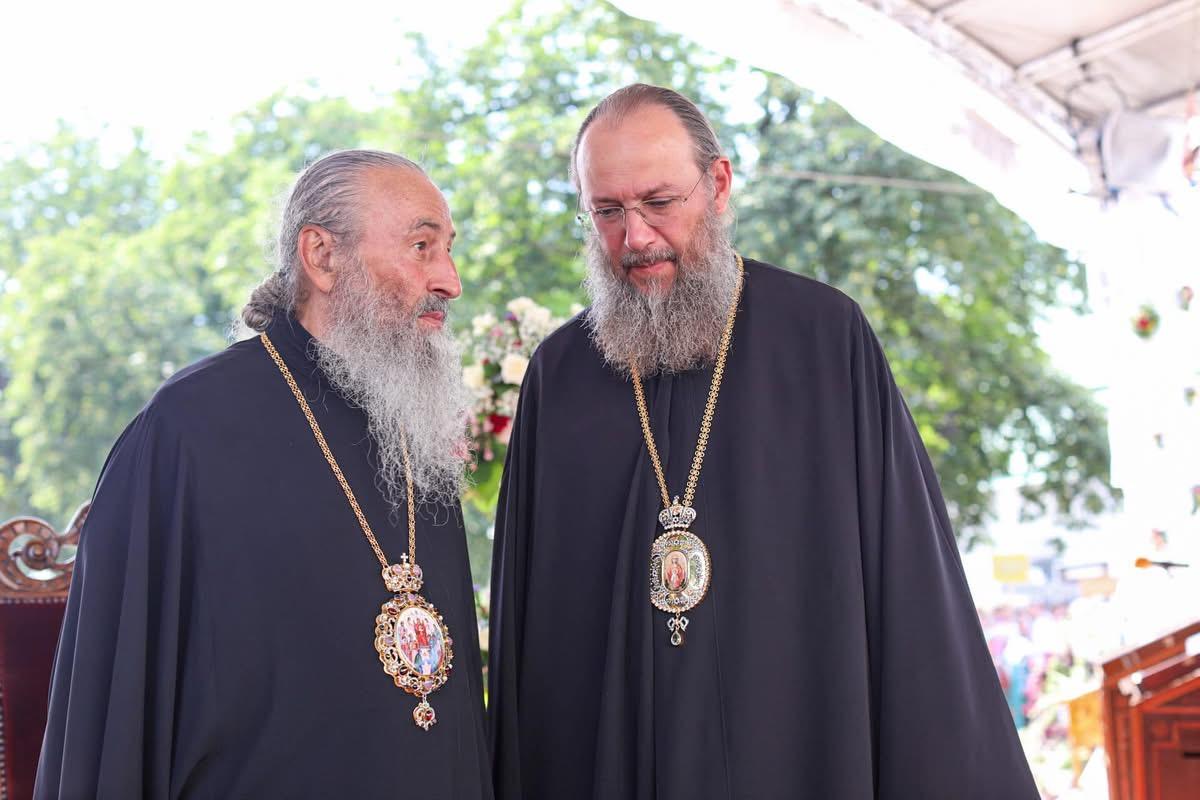
This applies not only to major matters affecting the entire Church but also to problems that may have no wider significance yet are extremely important to a particular person, their life, and their ministry. Behind every decision a bishop makes lies not merely an administrative matter but a human destiny. That is why it is particularly important to combine prayer, humility, discernment, and a willingness to learn from the experience of others.
– Over these twenty years, you have seen the Church in times of triumph and in times of trial. What do you remember with the greatest joy? Perhaps a particular service, event, or encounter?
– There are, in fact, many events that remain not only in my memory but also in my heart. These include major concelebrated services, Church-wide events, and services in small village churches throughout the Boryspil and other eparchies.
The most important thing in Church life is the spirit of prayer. It is prayer that gives people joy and strength and helps them overcome inner difficulties and trials. You remain a human being, with your own concerns and personal struggles. Yet as a priest and bishop, you also experience all the events that have unfolded and continue to unfold in the life of the Church over these decades.
Particularly memorable were the visits to Kyiv by His Holiness Patriarch Bartholomew, His Holiness Patriarch Alexy II, and His Holiness Patriarch Kirill for the celebrations of the Baptism of Rus, as well as joint services with other primates and delegations of the Local Orthodox Churches. On those days, one could truly feel the conciliar unity of the universal Church. Kyiv became the center of the entire Orthodox world. The Orthodox faithful who filled St. Volodymyr’s Hill glorified the Triune God “with one heart and one mouth” and thanked the holy Equal-to-the-Apostles Grand Prince Volodymyr for his momentous choice of the Orthodox faith.
The All-Ukrainian Cross Procession of 2016 also left an indelible impression on me.
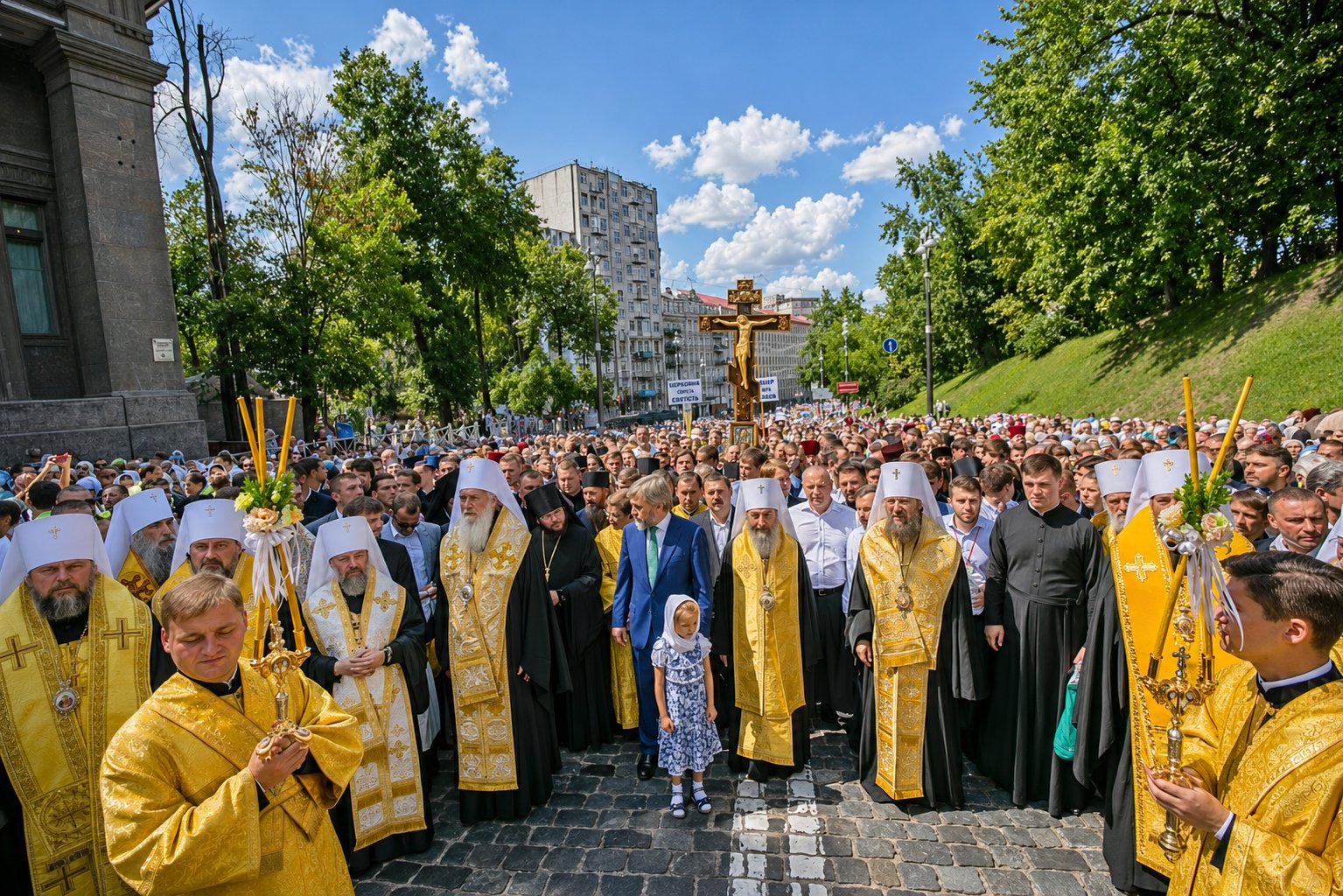
For the first time, the faithful of our Church, led by clergy, set out in religious processions from eastern and western Ukraine to meet one another. At a time when the war in Donbas was already in its third year, the Church sought to unite the divided Ukrainian people through common prayer, since it was essentially the only institution that united all regions of Ukraine at the time. Despite numerous obstacles and provocations organized by various groups and activists, the two processions from opposite ends of the country met at European Square. Among the vast crowds were people of all ages – children, young people, and the elderly. When they met and bowed to one another, everyone present was simply in tears. I believe the impressions and emotions of that moment will remain in my heart for the rest of my life.
I would also particularly like to mention church consecration services. These are always deeply moving experiences. You see people who have worked for years, raised funds, built a church, and overcome numerous difficulties. Finally, the church is completed, its consecration takes place, the faithful pray together, and the first Divine Liturgy begins at the newly consecrated Holy Altar. At that moment, you experience a spiritual uplift that is difficult to compare with anything else. You see the radiant faces of the faithful and realize how much work, prayer, and hope have gone into that moment.
For me personally, it is always especially moving to see small children approach the Chalice. We are accustomed to saying that children are our future. But when you see two- or three-year-old children approaching the Chalice, standing before it on their own little feet and clearly and consciously saying their names to receive the Holy Mysteries of Christ, your heart skips a beat. You see Church life triumphing. Despite all the problems, despite wars, church seizures, the beatings of our priests, and imprisonment, these little parishioners are participating in the Sacrament of the Eucharist. At that moment, you realize with absolute clarity – the Church is alive! Its life is not confined to the present day or to those who currently serve within it. It lives and will continue to live.
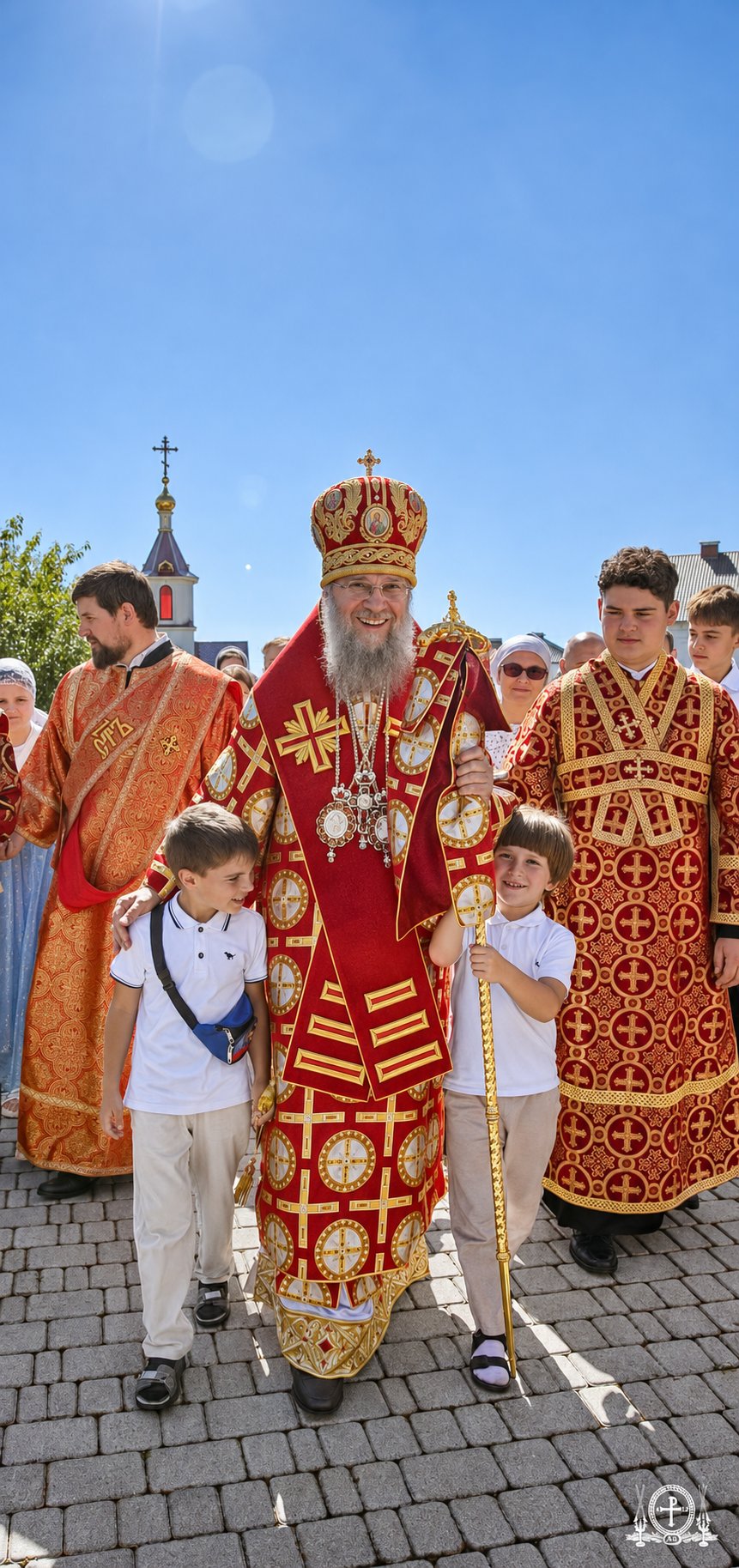
Even when the Lord calls you to Himself, one of these little children may perhaps take your place, become a priest, monk, or bishop, and continue the ministry you are fulfilling today. And then you feel particularly keenly the continuity of Church life, its passage through generations, and its journey toward eternity.
– In 2018, the Ukrainian Orthodox Church experienced one of the most serious trials in its history. Contrary to all expectations and despite pressure from the state, the episcopate preserved its unity. How did you personally experience those weeks, and what, in your opinion, enabled nearly all UOC bishops to remain faithful to the canons of the Church?
– The events of 2018 and early 2019 marked one of the most dramatic periods in the recent history of the Ukrainian Orthodox Church. Things were happening that seemed utterly inconceivable from the standpoint of the Church’s canonical order.
I vividly remember meeting in 2018 with the now departed Primate of the Georgian Orthodox Church, His Holiness and Beatitude Patriarch Ilia II. I told him about the situation that was developing and which, beginning in May 2018, we already perceived as an impending disaster. After listening to me, His Holiness Patriarch Ilia calmly said: “Your Eminence, do not worry too much. I have known Patriarch Bartholomew for a long time. He has a profound knowledge of Church canons and cannot act against them. Such a thing cannot happen – it simply cannot.” After that meeting, we felt somewhat reassured. Yet the Phanar ultimately based its decision on the position of those whom Patriarch Bartholomew himself had described as schismatics for several decades.
At that moment, the very nature of the ecclesiastical process changed. Its principal driving force, at least visibly, became the state. The then-president, Petro Poroshenko, used the Church issue as one of the central elements of his political campaign ahead of the next presidential election. Virtually the entire state apparatus was mobilized to implement the project of creating the so-called autocephalous church.
Enormous pressure was exerted on our episcopate at the time. Security services held “conversations” with nearly every bishop, seeking to persuade them to side with the president and the schismatics. Many bishops were forcibly brought to Kyiv, and some could not even be reached by phone for a certain period.
It was in this atmosphere that the Council of Bishops of the Ukrainian Orthodox Church convened at the Kyiv-Pechersk Lavra on November 13, 2018. The bishops affirmed their fidelity to the Church and resolved to preserve its internal unity. They refused to go to the Ukrainian House to meet with the president. In this context, I recall the remarks of one metropolitan who subsequently went into schism. He openly warned us: “You do not understand what you are doing. He will force every one of you. You simply do not know him. You will all accept his decision.”
Yet despite these threats, the bishops, seemingly weak and defenseless before the state security apparatus, resolved to remain faithful to the canons of the Church.
What inspired such zeal among our episcopate? I believe there is still much to reflect upon and assess. Perhaps in the future we will be able to offer a more profound historical assessment of those events. But what I can say even now is very simple: it was the fear of God. The fear of God is, above all, an awareness of each bishop’s responsibility for the historical destiny of his Church. It is not an animal instinct or fear of punishment but a profound reverence for God, love for Him, and an understanding that the Lord has entrusted something sacred to us. The fear of God is a great force. And thank God that our bishops had the resolve at that time to remain faithful to the Church despite the power of the state and political pressure. They chose weakness rather than reliance on earthly power – and precisely in that weakness, another, far greater power was revealed – the power of God.
– Our faithful find it difficult to understand the silence of other Local Orthodox Churches in the face of the suffering of the Ukrainian Orthodox Church. How do you explain this silence to your flock, and do you still hope that the Orthodox world will one day hear the Ukrainian Church?
– I do not entirely agree with the assertion that the Local Orthodox Churches are silent. The very fact that most Local Churches have not recognized the OCU is already a certain expression of support for our Church. And this is not simply support for the Ukrainian Orthodox Church as a separate ecclesiastical institution. It is support for the Church that was founded on the day of Pentecost and that preserves apostolic succession, fidelity to Orthodox doctrine, and canonical Tradition.
We are aware of official public statements supporting our Church made by His Holiness Patriarch Porfirije of Serbia, His Holiness Patriarch Daniel of Bulgaria, His Beatitude Metropolitan Sawa of Warsaw and All Poland, and representatives of other Local Churches.
Some Primates and hierarchs of other Local Churches call me personally, express words of support, and ask how they can help.
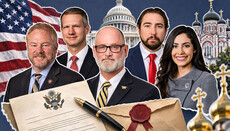
Moreover, we see expressions of support not only from Local Orthodox Churches but also from public and political figures. Recently, a letter from members of the US House of Representatives addressed to Ukrainian President Volodymyr Zelensky was published, calling for an end to the enforcement of the anti-Church Law No. 3894-IX, church seizures, arrests, and the forced conscription of clergy of the Ukrainian Orthodox Church.
We should therefore acknowledge that support does exist. But we must understand that the issue is not merely one of external support – it is, above all, a matter of prayer.
At the same time, we are currently living in a situation in Ukraine where the Constitution is, so to speak, “on hold,” while political expediency takes precedence over the rule of law. The media also frequently reproduce ideological narratives directed against the Ukrainian Orthodox Church.
What is particularly surprising and distressing is the position of the All-Ukrainian Council of Churches and Religious Organizations. Representatives of various religious communities know the situation from within. Yet they have not found the strength or courage to openly support, even once, a Church that was among the co-founders of this Council. Moreover, our membership in it has now been suspended. To be honest, we are not particularly disheartened by this. Some of the positions endorsed by the All-Ukrainian Council of Churches in recent years raise serious questions from the standpoint of religious conscience. Even those who do not belong to our Church understand this.
– How would you comment on the recent meeting between clergy of the Zaporizhzhia Eparchy and DESS chief Viktor Yelensky? Did it mark the beginning of the long-awaited dialogue between the state and the Ukrainian Orthodox Church?
– Unfortunately, we must acknowledge that what we witnessed in Zaporizhzhia cannot possibly be described as an honest dialogue. Generally speaking, one can hardly expect an objective or even respectful attitude toward ecclesiastical matters from someone who professed atheism for nearly his entire adult life. Listening to his arguments, it becomes clear how difficult it is to expect constructive dialogue when a representative of a government agency tasked with safeguarding freedom of conscience and equality among religious organizations adopts, from the outset, a position directed against one of them.
Instead of seeking common ground and legal mechanisms for resolving the conflict, we see an attempt to pressure the Church into making a particular decision that evidently corresponds to the political expectations of the state. But the state must not dictate to the Church how it should live, whom it should recognize, or how it should preserve its canonical identity.
When considering the position of DESS chief Viktor Yelensky, we should focus not so much on individual statements as on the overall approach reflected in his public activities. One would expect a government official responsible for ethnopolitics and freedom of conscience to be, above all, a guarantor of equality among religious organizations, a mediator in resolving conflicts, and someone willing to hear all sides. This is precisely what we expect from the state – not preferential treatment for our Church, but compliance with the law and respect for its internal life.
Unfortunately, some of Viktor Yelensky’s public remarks raise serious questions. For example, during his meeting with clergy of the Zaporizhzhia Eparchy, he expressed the hope that priests would not ask “stupid questions.” In my view, such language is entirely inconsistent with the level of respect that should characterize communication between a government representative and clergy. The priests came not to engage in political arguments but to ask questions directly affecting their lives, ministry, rights, and safety.
It is particularly important that these questions concerned the tragic death of a monk of the Sviatohirsk Lavra, the harassment of clergy in the media, and violent church seizures. When such questions receive no comprehensive answers and the discussion is diverted elsewhere, people understandably feel that their pain has gone unheard.
I understand that the state has the right, and indeed the obligation, to safeguard national security. No one denies that wartime circumstances present serious challenges related to the activities of certain religious organizations.
But national security must not become a blanket justification for every restriction on the rights of believers. If specific violations have occurred, they must be proven and addressed in accordance with established legal procedures. One cannot proceed from the assumption that a person’s affiliation with a particular religious community automatically makes them guilty and deprives them of the right to legal protection.
We are not refusing dialogue with the state. On the contrary, we have always been ready for open and constructive communication. But genuine dialogue entails not only an official’s opportunity to present his position but also a willingness to hear the other side, recognize its right to its own views, and seek solutions within the framework of the law.
I would therefore wish Viktor Yelensky to ensure that his work is genuinely guided by the principle enshrined in the very name of the agency he heads – respect for freedom of conscience. Freedom of conscience does not mean that the state allows people to believe in whatever way a government official considers appropriate. It means that people can profess their faith, retain their Church affiliation, and live according to their religious convictions without facing administrative pressure, let alone criminal prosecution.
We are not demanding exclusive rights for ourselves. We are demanding what the Constitution of Ukraine guarantees every citizen: equality before the law, respect for religious convictions, and protection against arbitrary interference in Church life. And if the state genuinely seeks unity within Ukrainian society, it must understand that such unity cannot be built through humiliation, coercion, or restrictions on the rights of millions of believers.
Unity grows out of respect, justice, and trust. This is what we expect from all government representatives, regardless of the positions they hold.
At the same time, it is extremely important for us not to become embroiled in internal disputes or allow Church life to turn into endless confrontation. Our Church – the Church of Christ – has always triumphed and will continue to triumph through love. Love for everyone, including those who oppose it today.
– The eviction of the brethren from the Lavra, court cases, laws aimed at banning the Church, and the tragic events at the Sviatohirsk Lavra – has there been a moment over these years when you felt you had no strength left? And what, or who, restored your strength?
– In fact, it is precisely through such crises, sometimes even catastrophic events, that the Lord teaches us to become genuine believers. True faith is revealed above all through trust in God. A person must work, giving as much of themselves as possible, while understanding that the final outcome rests not with them but with the Lord.
In overcoming any difficulties, whether in Church life or everyday life, it is extremely important to experience synergy – the cooperation between God and man. This can be illustrated as follows: if we imagine salvation as one hundred percent, then fifty percent of the work depends on the person, while the remaining fifty percent depends on God.
It is essential that you fulfill the fifty percent that depends on you to the full extent of your abilities. You must do everything in your power, then place everything in God’s hands and say: “Lord, I have done everything I could. From here on, I entrust everything to You. Help me.”
It is then that a person begins to truly understand what it means to be a believer. But in this illustrative formula, it is important to remember that you must fulfill precisely your own share of responsibility – not forty-nine percent and not fifty-one. If you attempt to do more than is genuinely yours to do, you may break under the strain or fall into pride, attributing to yourself what God has accomplished. You may begin to think that you resolved everything by your own strength and that your efforts were decisive. Yet neither should you do less than is required of you. For the Lord will ask: “Why did you not do what you could? Why did you not make that final effort?” Sometimes the very one percent that a person was unwilling or unable to fulfill becomes the reason a task remains unfinished.
According to the Holy Fathers, a person must work as though everything depended on them while trusting in the Lord as though everything depended on God. Only then do we begin to understand what it means to be a genuine believer. We must not do less than we are capable of doing, nor must we claim for ourselves what belongs to God. This entire struggle takes place primarily within the human heart. It is a spiritual struggle in which genuine self-sacrifice is born. Sometimes you really want to cry out: “Lord, where are You? Why do You allow Your Church to be insulted? Why is there such persecution and injustice?” Yet it is precisely in such a helpless, sincere appeal to God that true faith is born. A person comes to understand that they must work, struggle, defend, and bear witness, while recognizing that the destiny of the Church lies not in their hands but in the hands of God Himself. This understanding does not relieve us of responsibility. On the contrary, it gives us the strength to continue our journey even when human possibilities appear to have been exhausted.
– You have urged the faithful to pray for their persecutors while making full prostrations. Many admit that this is the most difficult of the commandments. How did you personally come to embrace it, and what do you say to those who tell you they cannot pray for people who take away their churches?
– Once, while reading the writings of St. Silouan the Athonite, I came across his teaching that a person has not yet become a true Christian if they have not learned to love their enemies, even the enemies of the Church of Christ. Those words made a deep impression on me, and I reflected on them many times afterward. But reflecting on a commandment and embracing it in your heart are two entirely different things.
For a long time, I could not fully embrace this teaching in my heart. Only when we ourselves found ourselves in circumstances in which the Church was being persecuted did I begin to understand the meaning of those words more deeply. You realize that God is love and that the Church, as a divine organism, can triumph only through love. God loves everyone. He loves those who consider themselves people of the Church, but He also loves those who persecute the Church. That person, too, is precious to God. The Lord desires to save them as well, bring them to repentance, and transform their heart.
Praying for our persecutors does not mean that we should cease defending our churches, parishes, or faithful. Love does not blind a person to evil. On the contrary, we are obliged to defend what has been entrusted to us by every means available.
We must defend our rights, appeal to the courts, speak out against injustice, and do everything possible to preserve Church life. But we must not become like those against whom we are defending ourselves. We must not allow malice, hatred, and the desire for revenge to become part of our own lives. We must have compassion for these people and pray for them.
We hope and believe that the Lord will guide their thoughts, help them recognize what they have done, and bring them to repentance. Such prayer transforms not only those for whom we pray but also ourselves. It prevents our hearts from becoming hardened and keeps us from becoming malicious and cruel. It helps us cultivate the spirit of Christ within ourselves.
St. Nikolai of Serbia says that everything in a Christian must belong to Christ: the mind, the heart, our thoughts, our outlook, and our behavior. We must constantly ask ourselves: if Christ were standing beside us now, how would He act? Yet Christ truly is among us. He is present in our lives, in our prayers, and in our Church. If we wish to be His disciples, we must strive to act as He would. Christ would, of course, have compassion for a person who was perishing and would seek to save them. This is precisely what we must emulate.
Whenever I meet people who are weeping and suffering because their church is being taken away, I share their pain. For many of them, that church is not merely a building. It is their home, the place where they prayed, baptized their children, were married, and bid farewell to their loved ones. It is part of their lives, their spiritual family. In such moments, I try to remind them that we must not become like those who act out of hatred and malice. We can defend our church without hating those who take it away. We can stand up for the truth without losing love.
Unfortunately, history shows that the fate of those who commit such acts against God and the Church and fail to recognize their wrongdoing is often tragic. But the final judgment belongs to God. Our task is to pray, remain faithful to Christ, and not allow evil to conquer our hearts. For if we preserve love within ourselves, then even in the most difficult circumstances we will remain the Church of Christ.
– Journalists from Serbia, Greece, Bulgaria, and Georgia have approached you. What would you like Orthodox Christians in other countries to understand about the Ukrainian Orthodox Church – not from news reports, but from the life of our parishes and monasteries?
– Above all, I would like Orthodox Christians in other countries to see the Ukrainian Orthodox Church not so much as a Church undergoing trials but as a Church that remains faithful to Christ despite those trials. Our Church is what it is today because it refused to sacrifice its ecclesiastical convictions for political expediency or change its position in exchange for more comfortable circumstances. The Church cannot determine its life on the basis of political considerations, public pressure, or a desire to accommodate those in power. The Church is called to remain faithful to Christ, not to circumstances.
Despite everything we have to endure, we do not complain. We do not regard difficulties as grounds for bitterness, despair, or mutual accusations. We continue to serve, celebrate the Liturgy, pray, baptize children, perform weddings and funerals, help those in need, support those who have lost loved ones, and preserve our monasteries as places of prayer. Church life has not come to a standstill. Moreover, it is precisely in difficult circumstances that we see particularly clearly that its foundation is not human strength, administrative support, or political patronage, but our Lord Jesus Christ.
– How do you envision the future of Orthodoxy in Ukraine – not in the coming years, but over generations? What must happen for the division to be genuinely healed?
– I am convinced that the future of Orthodoxy in Ukraine is possible only on the foundation of fidelity to Christ, apostolic Tradition, and the canonical order of the Church. We must understand that the Church is not a human organization that can be reshaped according to political circumstances or national interests. It is a divine-human organism, the Body of Christ, and its unity therefore cannot be created through administrative decisions, political agreements, or compromises in matters of faith and canonical order.
Today, one often hears that overcoming the division requires simply accepting the existing state of affairs, abandoning previous canonical assessments, and finding some middle-ground formula that would satisfy everyone. But I do not believe such an approach can bring genuine healing.
Church unity cannot be built by compromising the truth. In Church life, there is the concept of economia, but economia never abolishes akribeia and cannot become a justification for violating dogmatic and canonical Tradition. Economia is intended to serve human salvation, not to legitimize division.
The healing of the Church schism must therefore begin not with political conditions or pressure exerted through the state apparatus, which ultimately turns into violence, but with a return to the common Orthodox faith and canonical order. Surprisingly, our opponents, in their demands upon us – and there is no other way to describe them – do not even use the traditional ecclesiological terminology of “overcoming the Church schism.” And it is clear why. In an honest dialogue, one must sincerely address the canonical status of ecclesiastical structures that emerged outside universally recognized canonical communion, the legitimacy and ecclesiastical validity of their actions, the continuity of apostolic ministry, and the restoration of Eucharistic communion. These questions cannot be sidestepped for the sake of outward tranquility.
Church unity cannot be declared restored simply because the parties have agreed to stop arguing. Eucharistic communion presupposes unity of faith and ecclesiastical consciousness.
At the same time, akribeia must not become synonymous with cruelty. We must distinguish between our attitude toward ecclesiastical error and our attitude toward an individual who may have found themselves in schism through ignorance, circumstances, or personal tragedy. We must not close the door of the Church to such people. On the contrary, we must bear witness to the truth with love, patience, and pastoral responsibility. But mercy does not mean indifference to the truth, just as strict observance of the canons does not give us the right to hate.
I look to the future of Orthodoxy in Ukraine with hope. Perhaps genuinely overcoming the present division will take more than one generation. But I am convinced that it will be possible only when we cease substituting national identity, political expediency, or administrative subordination for Church unity. The Church cannot be divided along national lines because in Christ “there is neither Jew nor Greek” (Gal. 3:28). Our task is to remain faithful to the Orthodox faith, canonical Tradition, and the Eucharistic unity of the universal Church. If we stand firm in the truth while remaining filled with love for those who have gone astray, the Lord will show us the path to healing. For genuine unity is not unity at any cost, but unity in Christ and His Truth.
– Many young priests, seminarians, and parishioners have left Ukraine, and the Church now lives in many countries simultaneously. Do you think our compatriots and fellow believers can influence the spiritual life of Europe?
– I believe they not only can but have a special spiritual mission. Ukrainian believers who have found themselves in European countries carry with them not only memories of their homeland but also a particular spiritual experience. Many have endured suffering, the loss of loved ones, forced displacement, and the destruction of the world they once knew. It was precisely in these circumstances that they came to appreciate particularly deeply the value of prayer, the Church community, the Eucharist, and Christian mutual support.
What Europe needs today is not so much new religious organizations as a living testimony to Christ.
Modern people often have material resources, education, and access to information, yet experience profound spiritual emptiness, loneliness, and a loss of meaning in life. Here, an Orthodox Christian can bear witness to the fact that human existence is not limited to earthly life, that our purpose is not merely consumption and achievement but communion with God, the transformation of the heart, love, and holiness.
I would very much like our young priests and seminarians who have found themselves outside Ukraine not to regard their presence abroad exclusively as a consequence of circumstances beyond their control. Perhaps Divine Providence is opening up a new obedience for them. They can become a bridge between Orthodox peoples, bear witness to our Church tradition, and help those who are seeking God but do not always know where to find Him.
However, this also entails a great responsibility: we must not carry our internal conflicts, national grievances, and ecclesiastical-political confrontations into European society. On the contrary, we must bring a spirit of peace, humility, and brotherly love. If a Ukrainian Orthodox Christian, through their conduct, prayer, and sacrificial love, can bring even one person closer to Christ, then their time away from their homeland will already have borne spiritual fruit.
– If you could say a few words to the young archimandrite who was being consecrated a bishop twenty years ago, what would you tell him? What would you warn him about, and how would you encourage him?
– First and foremost, I would probably tell him: never forget that episcopal ministry is not a reward but a cross. Do not seek honors, recognition, or human prestige in it. The higher a person is placed in the Church hierarchy, the deeper their humility must be and the greater their responsibility before God.
I would also warn him that people will not always understand his decisions or appreciate his ministry, and that sometimes those whom he trusted and helped in every possible way may cause him the greatest pain. But do not allow human injustice to harden your heart. The most terrible thing for a bishop is to retain outward ecclesiastical authority while losing the ability to have compassion for another person.
And I would also tell him this: do not fear trials, but fear losing your fidelity to Christ. There will be circumstances in a bishop’s life when it will be impossible to please everyone, when difficult decisions will have to be made, and when he will have to choose between personal advantage and conscience. In such moments, remember that you once promised to serve not fleeting earthly ideals, not circumstances, not even the age in which you live, but the Lord Himself.
And I would encourage him with the words the Lord spoke to the holy Apostle Paul: “My grace is sufficient for you, for My strength is made perfect in weakness” (2 Cor. 12:9). Twenty years ago, he may have thought that he needed to be strong, wise, and capable of solving every problem. Today, I would tell him: you don’t have to be almighty. You have to be faithful. The Lord will take care of the rest.
– On the twentieth anniversary of your episcopal consecration, what will you ask of God – for yourself, for the Church, and for Ukraine? And what would you like to say to everyone who will be praying for you on that day?
– On such a day, above all, I want to thank God. Not so much because twenty years have passed, but because the Lord has patiently carried me through all these years, through trials, joys, and sorrows. Looking back, it becomes absolutely clear that much of what seemed impossible was accomplished not through human strength but through the mercy of God.
For myself, I will ask above all for one thing – that the Lord not forsake me or allow me to lose my fidelity and love for Him. That my heart may not grow colder with the passing years, that pastoral ministry may not become a mere habit, and that amid my numerous administrative responsibilities I may never cease to see the individual person, their pain, their hope, and their need for God. I will ask the Lord to grant me the wisdom to make the right decisions and the humility to acknowledge my own weakness and mistakes.
For the Church, I will ask for unity, peace, and spiritual renewal. That the Lord may preserve our bishops, priests, monastics, and laypeople, and strengthen those who are enduring persecution, sorrow, and hardship today. That our churches may not stand empty, that our monasteries may remain places of prayer, that young people may find their way to God, and that our families may raise their children in faith and love.
For Ukraine, I will pray for an end to the war, the restoration of peace, consolation for all those who have lost loved ones, and the healing of wounds. And I will especially ask God that our people, having endured such severe trials, may not lose their human dignity, compassion, or ability to forgive.
To everyone who will pray for me on that day, I would like to say: thank you not merely for your congratulations but, above all, for your prayers. Believe me, there is no greater support for a bishop than knowing that his flock is praying for him.
And, if I may, I would ask one thing of you: never cease praying for the Church, for our priests, and for everyone who needs God’s help today. Pray for me as well, that the Lord may grant me the opportunity to bring to a worthy completion the ministry to which He has called me.
Ultimately, when we one day stand before God, He will not ask us how many years we held a particular position, how many churches we built, or how many awards we received. The most important question will be about love: how much we loved God and how much we learned to love our fellow human beings. And also how faithfully we remained devoted to the Church of Christ.