
Elder Paisios of Mount Athos: How to endure war without losing one's mind

The news of our days now trembles with a force greater than the Apocalypse, and the air–raid sirens have woven themselves into the very rhythm of our existence. Yet the Athonite elder knew how the human heart can remain whole in the midst of the world’s chaos.
In Ukraine, dawn no longer feels like the gentle beginning of a new day – and the nights stretch on like long vigils. Almost instinctively, we reach not for the words of prayer, but for the cold glow of a screen: where missiles flew, what they struck, what the experts predict, whether some unseen hand might press the “red button.” The atmosphere seems charged with an almost audible crackle of dread. We have learned the science of survival: where the bearing wall stands, how much water to keep in reserve, how long the arc of a missile lasts across the sky.
Yet in this striving to preserve our bodies, we fail to notice how our souls quietly unravel. We live as though suspended between breaths, expecting history to collapse upon itself in a final, thunderous chord. It seems to us that the Horsemen already echo down our streets. Our gaze clings to geopolitical maps, trying to decipher the face of Antichrist among the rulers of the earth, and in doing so we become paralyzed by fear.
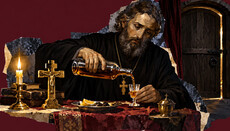
Let us leave this troubled world for a moment and walk to Athos, to the humble cell of Panagouda. It is peaceful there – fragrant with pine and incense. On a simple wooden stump sits Elder Paisios. In his eyes, no shadow of panic, though he knew the cruelty of war firsthand: he was a radio operator at the front, where death and grief were daily companions. Later he would say:
“If I had offered the same ascetic labor as the suffering I endured in war, I would have become a saint.”
The bitter draught of information
Ours is a time of immense burden. The deluge of news tosses us like waves, sharpens fear, sows hostility, and drains hope. We have become dependent, craving the next dose of alarm as though it might give meaning. We fear missing a catastrophe, as if knowing it could ward it off. The elder once spoke of this:
“The more people depart from a natural, simple life and pursue luxury, the more they multiply the anxiety within their souls.”
Bruegel’s “Triumph of Death” comes to mind – chaos, skeletons, flames, desperate figures fleeing toward nowhere. Yet in the painting there is no sign of eternity, no window of grace. The eye is fixed only on earthly horror. So it is with us – we stare into the abyss at our feet, forgetting to raise our gaze toward the heavens. But the elder taught differently:
“If we see a person overwhelmed by anxiety, sorrow, and distress, despite possessing everything he desires, then we must know he does not have God.”
Courage in the face of mortal fear
Have we not surrendered too much attention to evil? Do we not, by dwelling on darkness, let it enter our hearts?
Often one sees Christians spreading more dread than unbelievers – forwarding ominous prophecies, calculating the date of the world’s end, dwelling on terrible imaginings of the future.
From the early 1980s Elder Paisios warned that difficult days would come. He did not wish to cast fear into the world; he wished to awaken the heart, to stir a noble vigilance, to strengthen the soul’s battle.
“What troubles me,” he said, “is not that a person has many passions. What truly frightens me is when he lacks good concern – the desire to begin the struggle for his spiritual healing.”
If we are disciples of Christ, should we not become islands of peace for those around us? The elder taught that true hope begets true courage:
“The fear of God turns even the greatest coward into a brave man. The more a person unites himself to God, the less he fears anything. God will help in difficulties.”
To be courageous in the face of death is like a physician on the battlefield: shells erupt nearby, yet he bends over a wound with steady hands. He does not ponder geopolitics – he fulfills his calling. So it is in our lives: while some collapse under the weight of the news, others bake bread, deliver aid, or whisper prayers for those at the front. Fear freezes; love moves.
The twilight of comfort
War breaks the architecture of our lives. We lose comforts, homes, loved ones. Our hidden wound is this: we confuse the Christian life with a promise of earthly well–being. We believe that if we enter the church, God must preserve our home, our possessions, our routines. When war takes them away, our faith trembles. How do we accept this reality without murmuring against God?
The elder’s reminder cuts to the heart:
“We did not come into this world to arrange our lives comfortably. Hardships help people greatly. By experiencing deprivation and loss, we become capable of recognizing the value of what we no longer have.”
Spiritual nobility lies in trusting God even in the ruins. It does not mean seeking death – it means refusing to barter one’s soul for the illusion of safety. It is the quiet prayer: “Lord, let Your will be done – only do not abandon me.” Then fear loosens its grip, yielding to a steadfast calm.
On Athos the sun drifts toward the sea’s edge. It is time to part. Let us ask the elder one final question – the most urgent for us all: how do we live right now, this very evening, when the siren may wail again and the heart trembles at what may come?
Elder Paisios walks us to the gate. His final counsel is not a command but a gentle fatherly blessing:
“The more people withdraw from a simple, natural life and surrender themselves to luxury, the more they multiply their fear of tomorrow. Faith in God is not enough – trust in Him is also necessary. Trust draws His help. A Christian believes and entrusts himself to God unto death. And then he clearly sees the saving hand of God.”