Lesson in fidelity on winding roads of Judea
Nameless man of God stays firm before king but is deceived by an elder.
If we open the thirteenth chapter of the Third Book of Kings, we find before us a route spanning three centuries. In this narrative, the central image is the road, with its encounters, stops, dusty crossroads, and succession of trials.

The journey begins in Judea, from where a nameless newcomer, called in Scripture simply a man of God, heads north. Eighteen kilometers of mountain path separate Jerusalem from Bethel. At that time Bethel, the ancient Luz, was enjoying its heyday. King Jeroboam had set up a golden calf there, wishing to lead the people away from the Jerusalem Temple. For the new feast, the ruler arbitrarily appointed the fifteenth day of the eighth month, went up to the altar himself, and installed in sacred service men from among the people who did not have Levitical rank.
The Account at the King's Altar
The man of God arrives at the Bethel sanctuary in the very midst of the festal sacrifice. King Jeroboam is standing at the smoking altar with incense. The prophet, symbolically, addresses his appeal not to the people but to the sacred stones: "O altar, altar! Thus says the Lord: Behold, a son shall be born to the house of David, Josiah by name; and on you he shall sacrifice the priests of the high places."
The enraged king immediately gives the order: "Seize him." And in that very instant Jeroboam's hand withered, frozen motionless in the air. Right after this the altar is torn apart, and the ashes of the sacrifice are scattered on the ground.
Stricken, the ruler humbles himself and asks the prophet to pray for the restoration of his health. At the prayer of the man of God, the king's hand became healthy again. Jeroboam respectfully invites the prophet to his palace for a solemn reception.
Another Road from the King's Table
The Judean traveler's answer is striking in its firmness: "If you give me half your house, I will not go with you, nor will I eat bread or drink water in this place, for so it was commanded me by the word of the Lord."
The prohibition against accepting bread and water in Bethel meant a complete refusal of any spiritual communion with apostates. The prophet had been told from above not to return by the same road by which he had come from Judea. The traveler turns back, choosing another way. He stood firm before the impious king, was not seduced by promises of honor, and refused the royal hospitality.
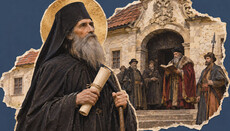
However, on the new path another trial awaited him. In Bethel lived another prophet, an old man. Having learned from his sons about the events at the altar and about which road the Judean guest had taken, the old man ordered his donkey saddled and set off in pursuit of the hero.
A Stop Under the Bethel Oak
The old man finds the man of God sitting under an oak. Asked whether he is the one who came from Judea, the traveler answers in the affirmative. Then the old man invites him to his house to share bread. The Judean prophet again repeats the prohibition that had been laid upon him.
But the Bethel old man finds an argument against which the traveler could not hold out. He says: "I too am a prophet as you are, and an angel spoke to me by the word of the Lord, saying: 'Bring him back with you into your house, that he may eat bread and drink water.'" Holy Scripture adds to this speech a dry remark: "But he lied to him."
The man of God turns back. He did not yield to the threats and gifts of the ruler, but believed another's false witness.
While they were still sitting at the table in the house at Bethel, the word of the Lord suddenly came to the old lying prophet. The deceiver was compelled to pronounce a dreadful sentence upon his guest: because you disobeyed the mouth of the Lord and returned to eat bread, "your body shall not come to the tomb of your fathers."
The Lion at the Scorched Crossroads
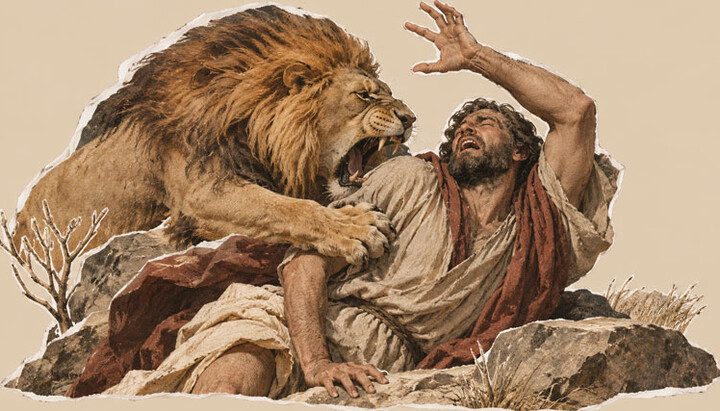
After the meal, the old man saddled a donkey for his guest, and the man of God set out on his way. As he left the city, a lion ran out of the forest and killed the prophet right on the road.
Travelers passing by saw an astonishing sight. The body of the slain man lay on the dusty road, while beside it the donkey and the lion stood calmly. The beast had not torn the donkey apart and had not touched the man's flesh.
Blessed Theodoret of Cyrus observed that the Lord had, as it were, set a guard over the body of His prophet, showing that the punishment was not divine vengeance.
Upon learning of what had happened, the old man of Bethel himself rode to the place, took up the body of the man of God, laid it upon his own donkey, and brought it to the city in order to bury it.
The Testament in the Tomb
The old man laid the deceased in his family tomb. Over the fresh grave sincere lamentation for the dead man was raised. The one who had sinned by lying mourned the fallen servant of God as a true brother in the prophetic ministry.
Having buried the man of God, the old man addressed his sons with a testament: "When I die, bury me in the tomb in which the man of God is buried; lay my bones beside his bones."
The prophet of Bethel firmly believed that the prophecy concerning the destruction of the pagan altars would surely be fulfilled, and he asked that his remains be laid to rest beside the righteous man.
The story does not end there. More than three centuries passed. The pious king Josiah ascended the throne of Judah.
While cleansing the high places of Bethel of pagan cults, King Josiah destroyed the altar of Jeroboam and ordered human bones from the surrounding tombs to be burned upon it. Looking at the mountainside, the king noticed a memorial marker and asked: "What is that monument which I see?" The townspeople answered that the man of God from Judah, who had foretold the destruction of the altar, was buried there.
Then King Josiah commanded: "Let him be; let no one move his bones." And the servants preserved the bones of the prophet from Judah and the bones of the old man of Bethel, who was called the prophet from Samaria.
This ancient route from the Book of Kings reminds us: when you have clearly heard the word of God, you should not change your course because of authoritative words, even if the speaker appeals to heavenly messengers. The Lord is strict with His prophets, but His mercy preserves the faithful forever.