От меча до тяжелых вериг: путь святого Иоанникия
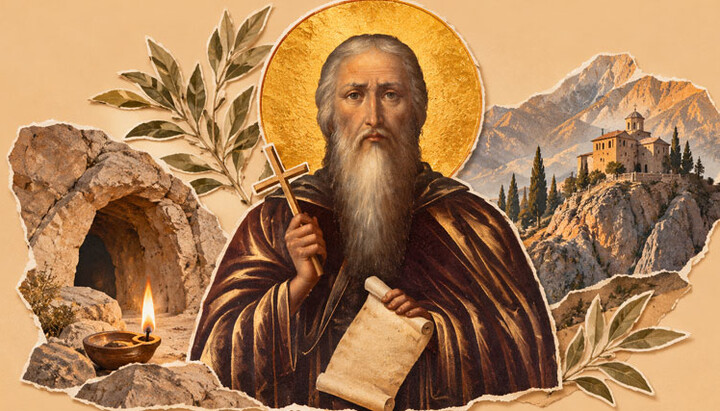
Случайная беседа с монахом превратила безграмотного царского телохранителя в духовного наставника Византии.
No personnel files of eighth-century soldiers have survived in the Byzantine archives. Therefore, it is now difficult for us to trace in detail the path of a man who bore a guardsman's sword for more than two decades before departing into the wilderness.
A Shepherd from a Bithynian Village
Joannicius was a native of the village of Marikaton in Bithynia. He was born in the middle of the eighth century. His family was a peasant one and adhered to the heresy of iconoclasm. For the parents of the future Orthodox ascetic, the rejection of the veneration of holy images was simply part of the customary way of life—this was how everyone around them lived, this was what the emperors commanded, and this was how it had been since childhood.
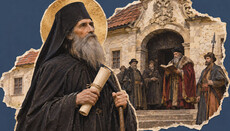
The boy received no education in letters. Instead of reading books, he tended his father's livestock—specifically, swine. A military path lay ahead of the young man: Emperor Leo IV was gathering from the provinces young men distinguished by their beauty and courage. Thus, in his nineteenth year, the shepherd from Marikaton found himself in the capital's army.
A Band of the Guard
The Excubitors were a band commanded by a scribon. This corps of the imperial guard had been established as early as around 460 by Emperor Leo I, who recruited three hundred warriors from the stern Isaurians. Three centuries later, Emperor Constantine V transformed the Excubitors into one of the mounted tagmata—guard units that became a reliable pillar of the throne. For the army, Constantine remained an invincible ruler, and the guardsmen regarded his policy as the only correct one.
In 786, it was precisely the iconoclast tagmata that dispersed the first Council, convened to restore the veneration of icons. In such an environment, hostile to Christianity, the young soldier from Bithynia served faithfully and loyally for a long time.
The Life relates that the soldier was affable with his fellow servicemen, distinguished by heroic strength, and often slept on the bare ground.
However, history has preserved for us neither the details of barracks life nor the text of his military oath.
Defeat at Marcellae
In July 792, the Byzantine army met the forces of Khan Kardam near the fortress of Marcellae. The clash ended in a heavy rout for the Romans: the Bulgarian ruler concealed his cavalry behind the hills, cut off the imperial regiments from their fortified camp, and captured the baggage train, the treasury, and the tent of the emperor himself.
In hagiographic tradition, the military glory of the guardsman Joannicius is connected precisely with this battle. It is known that the soldier saved the young Emperor Constantine VI in the fray. Joannicius also carried a noble dignitary out of encirclement, managing to name himself as an excubitor from Marikaton.
Historians treat this episode with caution, allowing that later hagiographers may have transferred to the saint the feat of another warrior.
In the account of St. Dimitry of Rostov, the mighty man from Bithynia frees a captured dignitary and defeats in single combat a Bulgarian giant, whom the Life compares to Goliath, and the grateful emperor orders that the hero's name and lineage be recorded for reward. But the soul of the warrior was already turning away from the bustling capital.
A Call on the Slope of Olympus
It is not known for certain when the turning point took place within Ioannicius. All that has been preserved is an incident that occurred at the foot of Mount Olympus. A military detachment was marching past the mountain slopes, where monks were hiding in the forests. An unnamed discerning monk came out of his seclusion, called the soldier by name, and asked him: "Child Ioannicius! If you call yourself a Christian, why do you despise the icon of Christ?"
The guardsman fell to the ground before the elder, acknowledged his sin as committed in ignorance, and promised to venerate the holy image.
Iconoclasm was not a personal conviction for him – it rested on family habit and military order.
One direct question destroyed this inertia to its very foundations. In the 25th year of his service, Ioannicius renounced his ranks and rewards, left the army of his own will without a formal discharge, and went up into the mountains to Abbot Gregory at the Augar Monastery.
A Chronicle of Monastic Life
Around the year 807, he was tonsured at the Eriste Monastery, and under Abbot George he learned the Psalter by heart. The formerly illiterate soldier grasped the Scriptures by ear. The ascetic wore a hair shirt (a levitonar), girded himself with iron chains six cubits long, went barefoot, with unkempt hair, and clothed in rags, and in old age leaned on a staff.
When Emperor Theophilus renewed the persecution of those who venerated icons, the Venerable Ioannicius lived in seclusion and was not subjected to direct persecution, remaining a spiritual support for many. To his companion Eustratius, the elder foretold a swift change: "Wait a little, brother, and you will see the working of God's power, for someone named Methodius will take the governance of the Church into his hands. By the action of the Divine Spirit, he will set it in order and root out heresies."
The prophecy was fulfilled. The Venerable Ioannicius supported St. Methodius on the patriarchal throne, and in November of 846 the Patriarch himself, together with his clergy, went up to the Antidium Monastery to ask the dying ascetic for his final blessing and prayer.
Three days later the elder peacefully departed to the Lord – in the 94th year of his life. That night the brethren on Olympus saw a pillar of fire ascending to heaven accompanied by Angels.
From the long nights of prayer in the cave by the Hellespont, where the former guardsman added a short confession of faith to each verse of the Psalter, his words have remained in our prayer book: "The Father is my hope, the Son is my refuge, the Holy Spirit is my protection." Every Orthodox Christian speaks these words before sleep, entrusting his life to the Providence of God.