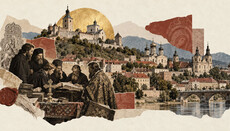

St. Peter Mohyla and his earthly homeland
Many Romanian historians regard the first half of the 17th century as a period of national revival – a “golden age” in the history of their country's culture.
It was during this period that Slavic culture began to decline in the Romanian lands, while printed books in Romanian appeared and spread widely among Orthodox Romanians, gradually replacing Church Slavonic texts. The first Romanian institutions of higher education were also established during this time.
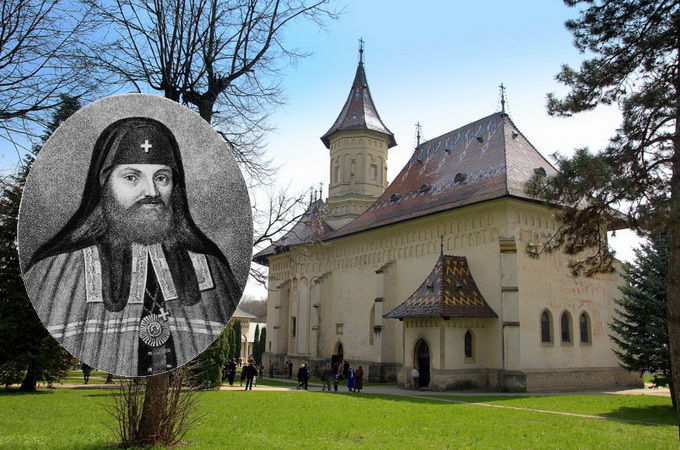
All these developments took place against the backdrop of the spread of new humanist ideas and were made possible in large part through the efforts of Metropolitan Peter Mohyla, one of the most outstanding figures of his age.
A son's remembrance of his homeland
The Metropolitan held everything Romanian, everything that reminded him of his distant earthly homeland, in particularly high regard.
He repeatedly spoke with pride of his Romanian origins. In his will, Peter Mohyla named among his executors “His Highness Moses Mohyla, ruler of Moldavia, my own brother.” He prayed that the Lord would bring his brother, who was then in Poland, back to “Suceava, the capital of our forefathers.”
In his letters, Mohyla frequently mentioned other Romanian ancestors. Writing to Orthodox Christians in Minsk in 1640, he stated that he had spent “the wealth of my ancestors, the voivodes” on the needs of the Church [1]. One of the great Metropolitan's opponents accused him of surrounding himself exclusively with “Moldavian servants” at his residence in Kyiv [2].
Another reference to Peter Mohyla appears in the preface to The Chapters of Agapetus, a work he translated from Greek. There, the saint is described as a “descendant of the rulers of the land of the Dacians.” This was intended to emphasize the common ancestry and linguistic unity of the Romanian principalities [3].
In books printed during his tenure as archimandrite of the Kyiv-Pechersk Lavra, Peter Mohyla never failed to include the title “son of the Moldavian voivode” alongside his name, as well as the combined coats of arms of the two Romanian principalities. After 1632, however, the name of Moldavia disappeared from his title. This was apparently connected with the fact that his brother Moses Mohyla had by then become ruler of Moldavia.
When students of the school he founded published a booklet of laudatory verses in honor of their teacher and benefactor in 1632, they claimed that the Mohyla family traced its ancestry to Mucius Scaevola [4]. This was undoubtedly an allusion to his Romanian origins, since Polish historians of the time maintained that Romanians were descendants of the ancient Romans.
In a liturgical text from 1629, while commemorating Greek and Russian martyrs who had suffered for the faith, Mohyla also mentioned St. John the New of Suceava. Notably, the saint's name appeared after the Greek saints and before the Russian ones. When Peter Mohyla built a church on one of his estates, he dedicated it to St. John the New of Suceava [5].
His deep reverence for his homeland is also evident in an inscription he wrote in a Gospel book associated with Stephen the Great [6]:
“In the year of our Lord 1637, on the 21st day of December, I, Peter Mohyla, Archbishop and Metropolitan of Kyiv, Galicia, and All Rus', and Archimandrite of the Great Holy Lavra of the Caves in Kyiv, purchased this Holy Gospel and bestowed it forever and irrevocably upon the Cathedral of the Most Holy Theotokos of the Monastery of the Caves, where my body shall be buried.”
He wished this sacred book, which had come from his homeland, to remain with him even after his death [7].
Among Peter Mohyla's spiritual writings are works dealing with Romanian subjects. One example is his Recollections, also known among some scholars as his Memoirs. The work was discovered only in the middle of the last century.
The Memoirs are a collection of accounts of miracles that unfortunately remained in manuscript form. Some of the events described were personally experienced by the author, while others were recorded from the testimony of various individuals. All the miracles reportedly occurred during his lifetime and were confirmed either by Mohyla himself or by eyewitnesses. The saint carefully established the dates and locations of the miraculous events.
Through these miracles, the Lord demonstrates that the Orthodox Church alone is the true Church. According to the accounts, numerous miraculous signs refute the heresies of Protestants, Catholics, and especially the Uniates of Poland. The Orthodox Church alone enjoys the special favor of divine love. Its truth and holiness are further demonstrated by the many ascetic feats of Orthodox monks.
The language in which Peter Mohyla wrote his Recollections is particularly noteworthy. It was a form of Church Slavonic influenced by Middle Bulgarian, used in Wallachia and Moldavia and distinct from the Ruthenian variety of Church Slavonic. Polish historian Aleksander Jabłonowski did not hesitate to call it the “Slavo-Romanian language” [8].
The Memoirs also contain three accounts of miracles associated with the relics of St. John the New of Suceava. Peter Mohyla states that two of these accounts were related to him by Varlaam, the future Metropolitan of Moldavia, during his visit to Kyiv in 1629.
Beyond their accounts of miracles, the Memoirs preserve recollections of the saint's youth, the customs of Little Russia and Lithuania, and the lives of noble families on their estates and at court. A substantial portion concerns families related by marriage to the Mohyla dynasty, particularly the Korecki family. Many accounts shed light on monastic life, popular superstitions, and struggles against the enemies of the Church.
The work also recounts important historical events, including the establishment of the metropolia in Alba Iulia, Transylvania, by Michael the Brave, Voivode of Wallachia and a rival of Mohyla's father, as well as the founding of Dragomirna Monastery in Moldavia [9].
Another episode demonstrates how deeply the great Metropolitan of the Ruthenians remained attached to his Moldavian homeland. In 1631, he restored a small monastery in Kyiv's Holosiiv district and dedicated it to St. John of Suceava [10].
This great saint is also the patron saint of Moldavia, and his relics rest in the metropolitan church of the Moldavian land in Suceava.
A prince of the Moldavian land
Peter Mohyla never forgot his Romanian ancestry or his ties to the ancient ruling dynasty of Moldavia and Wallachia. He called himself a “Prince of the Moldavian Land” and consistently included the coat of arms of the “illustrious Mohylas, rulers of Wallachia and Moldavia” in his own publications and in works issued under his patronage.
The family emblems appearing in most of his printed books included the coats of arms of Moldavia and Wallachia alongside the Mohyla family's heraldic symbol – two crossed sabers.
As the son of Simeon, Voivode of Moldavia and Wallachia (1600–1602 and 1606–1607), Peter Mohyla himself attempted to reclaim his father's inheritance and ascend the Moldavian throne.
To this end, in 1621 he personally joined Hetman Chodkiewicz in the Polish military campaign against the Turks at Khotyn, hoping that a Christian victory would secure him the position of voivode [11].
After returning to Poland, he settled on his estate near the Moldavian border. From there, he petitioned regional assemblies to ask the king to place him on the Moldavian throne, as reflected in resolutions adopted by the assemblies in 1625 [12].
It was only in 1627, when his relative Miron Barnovschi-Mohyla became Voivode of Moldavia (1626–1629), that Peter abandoned his political ambitions. He definitively chose the path of service to the Church and received monastic tonsure in Kyiv.
But Mohyla's connection to Moldavia went far beyond memories and claims to the throne.
In his efforts to defend Orthodox Christians, he relied on his princely title and extensive family ties to the highest ranks of the Polish aristocracy, including the Radziwiłł, Wiśniowiecki, and Zamoyski families.
These connections were rooted in Moldavia, since many young women from Moldavian noble families had married Polish aristocrats. Mohyla himself helped arrange several such marriages.
Through his mediation, Janusz Radziwiłł, Grand Hetman of Lithuania, married the daughter of Vasile Lupu, ruler of Moldavia, in 1645. Mohyla personally officiated at their wedding in Iași [13].
This was an important political marriage. Through such alliances, the Metropolitan of Kyiv strengthened cooperation between Protestant nobles and Orthodox Christians in Poland, bringing Moldavia and Little Russia closer to Poland as part of his pro-Polish policy aimed at defending the Orthodox Church.
Peter Mohyla's interests, however, extended far beyond the borders of the Polish-Lithuanian Commonwealth.
He envisioned ambitious political plans to liberate his compatriots and other Christians suffering under Ottoman rule [14].
Thus, the Short Catechism, published in Kyiv in 1645, stated that every Orthodox Christian was obliged to pray to God “to deliver all Christians from bondage to the pagans.”
The Polish edition of the same catechism, published earlier by Peter Mohyla himself, was even more explicit, referring to “the pagan bondage of the Turks” [15].
The friendship of Sts. Varlaam and Peter
In 1629, Archimandrite Varlaam, the future Metropolitan of Moldavia, visited Kyiv.
He had been sent there by Voivode Miron Barnovschi as his trusted representative on a special mission. His task was to acquire icons for churches founded during the tenure of Moldavian Metropolitan Anastasie Crimca.
During this journey, Varlaam met the future Metropolitan of Kyiv, Peter Mohyla, who was then Archimandrite of the Kyiv-Pechersk Lavra.
Varlaam presented him with a rare manuscript of the Octoechos in Old Church Slavonic from Neamț Monastery. Peter Mohyla needed the manuscript to prepare a corrected edition of the Octoechos, which was published in Lviv in 1630.
Both archimandrites were Moldavians with ties to the ruling dynasty and shared similar views, interests, aspirations, and plans. It is therefore hardly surprising that a genuine and lasting friendship developed between these like-minded men.
After becoming metropolitans in Kyiv and Iași, respectively, they intensified their cooperation.
Peter Mohyla sent teachers, printers, printing supplies, and type matrices to Iași to support Varlaam's printing operations.
The reform of Orthodox education initiated by Peter Mohyla also spread to schools in Moldavia and Wallachia. With his assistance, an academy was established in Iași on the model of the Kyiv Collegium, with Latin likewise serving as its principal language of instruction.
The two hierarchs also actively promoted dynastic ties among the aristocratic families of Poland, Lithuania, and Moldavia in pursuit of a political alliance between the Polish-Lithuanian Commonwealth and Moldavia.
This cooperation was of great importance in strengthening the anti-Ottoman league led by Władysław IV [16].
Paradoxically, Romanian historiography has often portrayed Peter Mohyla as a wayward son of the Romanian people, whose achievements largely fell outside the sphere of Romanian culture [17].
Yet everything discussed above makes it clear that St. Peter remained a son of his native Moldavian land until the end of his life. He never forgot his homeland and served it in every way he could.
Through his work in Church administration, religious instruction, and education, the great saint defended the Orthodox Church, its teachings, canonical order, and liturgical traditions. He raised the cultural and educational standards of clergy and laity not only in the Slavic lands but also in the Romanian principalities.
His love for his earthly homeland and his service to it, among his many other labors, ultimately helped lead him to his heavenly homeland.
In this, St. Peter Mohyla remains an example for all of us – his spiritual heirs in the Orthodox faith.
Footnotes:
1. P.P. Panaitescu Petru Movilă „STUDII”, București, 1996, p.15.
2. Jerliez, Cronica în: Hajdeu, Arhiva istorică, II, p. 12-13.
3. N.Iorga, Istoria învățământului romînesc, București, 1928, p. 25.
4. Dan horia Mazilu, Vocatia europeană a literaturii române vechi, București, 1991, p. 198.
5. Pr.Prof. Petru Rezuș, Rolul academiei Movilene în Romania,Craiova,1967, p.706.
6. P. P. Panaitescu. Influența lui Petru Movilă, arhiepiscop de Kiev, asupra Principatelor Române, București,1926, p.79.
7. Pr.Prof. Petru Rezuș, Rolul academiei Movilene în Romania,Craiova,1967, p.711.
8. P.P. Panaitescu Petru Movilă „STUDII”, București, 1996, p. 16.
9. Arim.Genadie Enăceanu, Petru Movilă din „Biserica Ortodoxă Română”, 1883, p.27.
10. T.G.Bulat, Petru Movilă,prinț de Moldova, Iași 1943, p.31.
11. P.P. Panaitescu Petru Movilă „STUDII”, București, 1996, p. 14.
12. Sinodul de la Iași și Sfântu Petru Movilă, Iași, 2002, p.94.
13. Ilie Corfus, Noi informații despre români în vecgi ediții polone de documente, „în Revista de Istorie”, t. 31, 1978, p. 490.
14. Ștefan Gorovei, La domnia Edituă a Movileștilor, tom.XV, Iași, 1978, p. 530.
15. P.P. Panaitescu Petru Movilă „STUDII”, București, 1996, p. 18.
16. Constantin Nonea, Leghăturile Mitropolitului Varlaam cu bisericile Ortodoxe din Kiev și Moscova, Suceava,1957, p. 809.
17. Cf. Iorga, Istoria literaturii române din sec. XVII, p. 243.