
Seven bishops against wild Crimea: How the Church took the Chersonesus foothold
Why Christianity in Crimea began with a "one-way ticket", how prayer hit the ancient market, and why a bishop entered a blazing furnace.
4th century. Crimea. For the Roman Empire, this is the edge of geography, a wild frontier. Chersonesus Taurica is a stone fortress with a population of five to six thousand, squeezed between the sea and the steppe. Its inhabitants are Greeks, descendants of Roman legionaries, Scythians, and Taurians. The chief law here is trade. The chief religion is whatever brings profit.
The city lives off the temples. The cult of the Virgin (local Artemis) is not just a faith, it's an economy. Sacrifices, the sale of amulets, temple festivals – all this feeds hundreds of families: priests, butchers, and jewelers.
Christianity threatens this market. It declares local gods to be demons, which means it hits the wallet.
At the beginning of the 4th century, the Patriarch of Jerusalem, Hermon, sends missionaries here. This is not an honorary exile. It's a one-way ticket.
Year 300: Bishop Basil and the wrath of the trade elite
The first to arrive is Bishop Basil. He sees a hostile city where Christians are few.
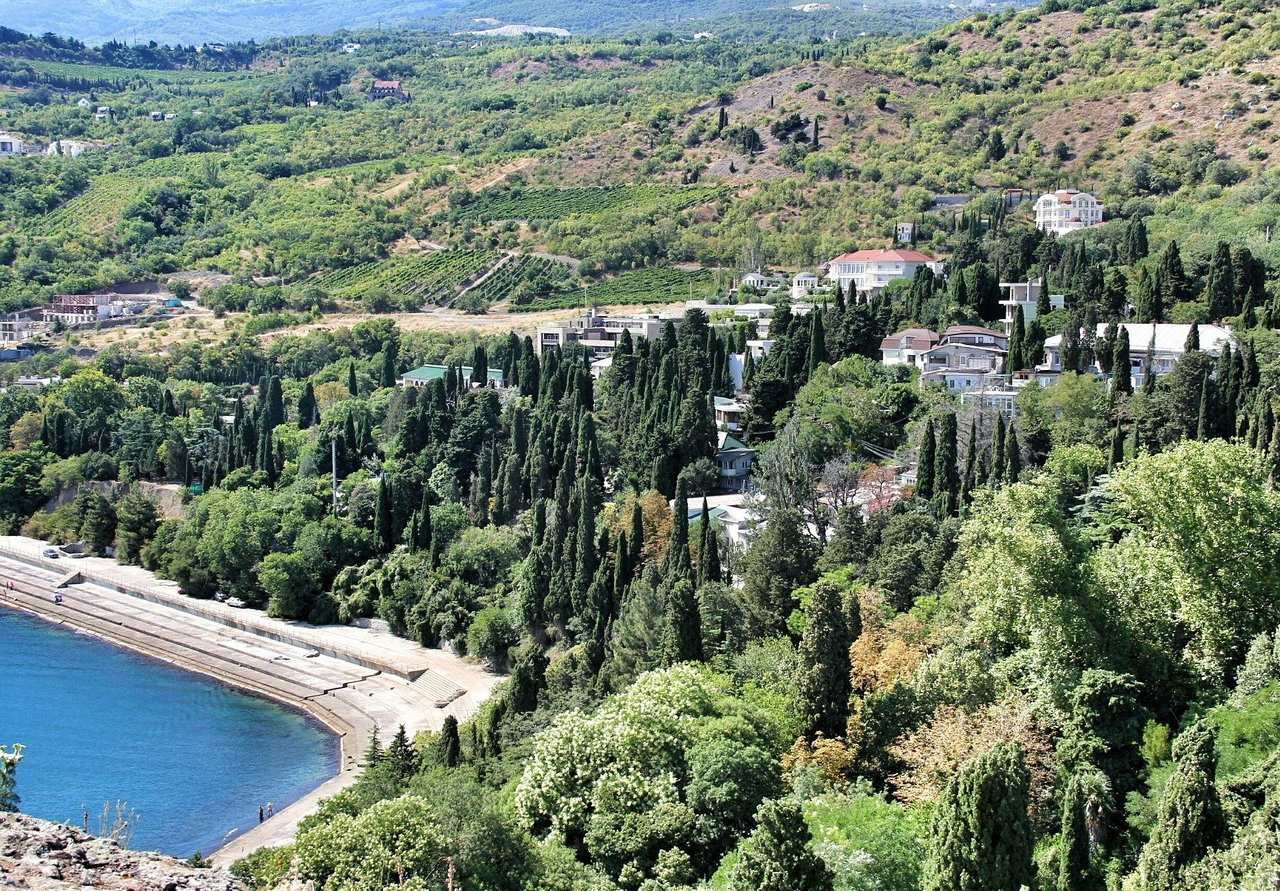
Basil has no illusions. He begins preaching in the marketplace. The reaction is immediate: conflict with the priests and the trade elite. He is beaten and driven beyond the city walls. Basil retreats to the mountains, in the area of modern Partenit. He lives in a cave. Poor diet, dampness, and complete isolation.
But a system failure occurs. The only son of a noble magistrate of Chersonesus dies. Doctors are powerless. Sacrifices to Artemis do not work. The desperate parents call the exile. Basil comes. Through prayer and baptism, the child recovers.
This is a blow to the authority of the priests. Basil is brought back to the city. But the economic interests of the pagan party are stronger than the gratitude of one family. In 309, a crowd bursts into the bishop's house. He is tied by the legs with a rope and dragged along the main street – about 300 meters over cobblestones to the city gates. His body is shattered against the stones. Basil dies beyond the wall.
At the place of his death (in the area of the modern Quarantine Ravine), Christians erect a cross. This is the first point on the map of future victory.
Years 310–311: Suicide squad at the city gates
In Jerusalem, they learn of Basil's death. The Patriarch ordains new bishops. Bishop Ephrem goes to the Scythians, in the steppe Crimea. He is killed in the same year, 309.
A squad of three arrives in Chersonesus: Eugene, Elpidius, and Agathodorus. They know Basil's fate. They understand they are going to their deaths. Their service lasts only a year. In 311, a new riot occurs. Pagans act according to the Old Testament scenario: stoning.
The three bishops are surrounded at the gates. Stones fly at them. The blows break bones. Death comes from cranial injuries and internal bleeding. The bodies are thrown beyond the wall to be torn apart by wild dogs. Christians secretly bury them.
The result of the first phase (300–311): four killed, one exiled. The Christian community is underground, small, and intimidated.
Year 325: Diplomacy and the imperial rescript
The situation changes globally. Emperor Constantine the Great signs the Edict of Milan (313). Christianity becomes a legal religion of the Empire. But Chersonesus is a province, news arrives slowly, and local elites cling to the old ways.
Bishop Eutherius arrives. He sees that the wall cannot be broken by the power of preaching. He goes to Constantinople, to the emperor himself. Eutherius returns with an imperial rescript: Christians are guaranteed freedom of worship and protection. The first small church is built in the city.
Eutherius dies a natural death around 330. He is not killed, but "burned out" in service, laying the foundation of the legal Church.
Year 340: Capiton and the trial by fire
The final confrontation is associated with the name of Bishop Capiton. Christianity is already legal, but pagans demand revenge. They propose a "trial by God".
The terms of the bet: Capiton must enter a lime kiln. The temperature inside is about 900–1000°C. If he survives, the city will be baptized. This is not a metaphor. Archaeologists find remnants of such kilns in Chersonesus. These are stone wells where fire is maintained for days.
Capiton puts on his omophorion. He prays and enters the fire. He remains there for about an hour. When he emerges, there are no traces of burning on his garments. He holds glowing coals in his phelonion (vestment). The effect is colossal. The miracle breaks the resistance of the crowd. The pagans understand only power, and they are shown a Power that stands above the laws of physics.
Mass baptisms begin. Whole families enter the font.
The archaeology of victory
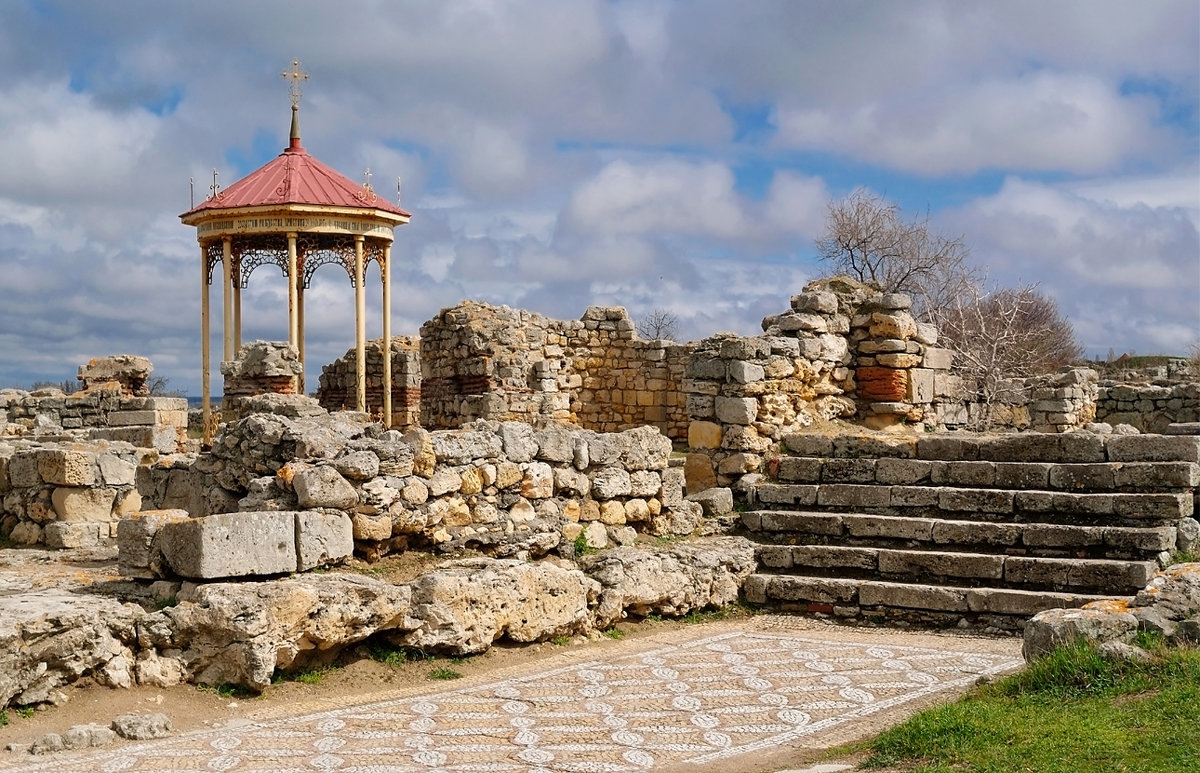
By the end of the 4th century, Chersonesus becomes a Christian city. Archaeological excavations confirm: pagan temples are destroyed or rebuilt. Martyria (chapels) are built at the site of the martyrs' deaths. In the 5th–6th centuries, monumental basilicas are constructed. The famous "Basilica in Basilica" and the Uvarov Basilica stand on the foundation of the faith brought by the seven bishops.
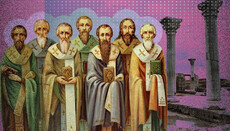
Seven people. Basil, Ephrem, Eugene, Elpidius, Agathodorus, Eutherius, Capiton. Five killed. One died of exhaustion. One passed through fire. They were not action heroes. They were real people who came to a foreign, cold, hostile city and gave their lives for its Christianization.