
Saints who did not shoot: The mystery of Boris and Gleb's feat
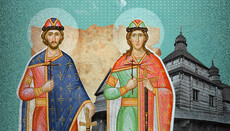
They could have taken Kyiv by force. They had swords, money, and the best retinues. But they chose death. We analyze the strangest political refusal in the history of Rus'.
The year 1015. Kievan Rus resembles a powder keg, with a torch brought to it. Prince Vladimir – a baptizer, a unifier, and a tough ruler – dies. As often happens in empires built on the charisma of one leader, after his death, a "game of thrones" begins.
Power in Kyiv is seized by Sviatopolk. History will remember him as the Accursed, but at that moment he acted like a typical pragmatic politician of his time: eliminating competitors. His main rivals are Boris and Gleb. And here begins the most interesting part. We are accustomed to the hagiographic image of "meek lambs" who patiently await slaughter. This is a falsehood that devalues their feat.
Boris and Gleb were not pacifist dreamers. They were the sons of Vladimir – professional warriors, rulers, princes, raised in the culture of the sword. They had power behind them. And it is precisely their refusal to use this power that makes their sanctity frighteningly real.
Temptation on the Alta River
Prince Boris learns of his father's death while returning from a campaign against the Pechenegs. He is camped on the Alta River. With him is his father's elite retinue. This is the special forces of that time: heavy cavalry, veterans who have fought dozens of battles.
When the news comes that Sviatopolk has seized Kyiv, the retinue tells Boris simple and logical things: "Go, prince, to Kyiv and sit on your father's throne. We are with you. We will overthrow Sviatopolk, the people of Kyiv love you."
From a political logic standpoint, this was checkmate in two moves. Boris had an army, legitimacy, and popular love. Sviatopolk had only mercenaries and fear. Boris could have entered Kyiv as a victor. The price of the matter was the head of one brother.
But Boris does something that makes even his battle-hardened warriors shake their heads in disbelief: he disbands the army.
"I will not raise my hand against my elder brother," he says.
The retinue leaves. Warriors of that time are cynics; they serve power. A prince who refuses victory is useless to them. Boris remains in the tent almost alone. He knows that assassins will come for him. This is not fatalism. This is the cold calculation of a Christian.
Boris understands: if he starts a war for the throne, thousands will die. There will be burned villages, widows, orphans, etc. The Russian land will be washed in blood because two brothers are dividing power.
He chooses to die alone so as not to kill others. He puts a cross on his political career and his life so as not to put a cross on his conscience.
On the night of the murder, he prays. Mercenary Putivlites burst into the tent. They stab him with spears, like a beast in a cage. But morally, he had defeated them before the first blow.
A kitchen knife for a prince
The story of Gleb is even more terrifying and prosaic. It is a true noir. Gleb is young, he rules in Murom. Sviatopolk lures him by trickery, sending a messenger with false news: "The father is ill, come at once."
Gleb sails on a boat along the Dnieper (near Smolensk, at the mouth of the Smyadyn River). He still believes in family and brotherhood. When Sviatopolk’s envoys catch up with him, he thinks it is a greeting from his brother.
But mercenaries, led by a commander, leap into his boat with swords drawn. Gleb begs for mercy – this is the natural reaction of a living man who does not want to die young. But an order is an order.
And here occurs a detail that chills the blood. The leader of the assassins does not want to dirty his hands himself. He orders the prince to be killed by his own cook.
Imagine this scene. Not a heroic duel with swords. Not death in battle.
A cook. A person who yesterday prepared lunch for the prince. A person Gleb knew by face, to whom he entrusted his food. The cook takes out a knife. Not a combat dagger, but a kitchen knife for cutting meat. And slits his master's throat like a lamb.
There is no romance in this death. Only the horror of betrayal and everyday filth. Gleb dies not at the hand of an enemy, but at the hand of "his associate" under the supervision of fratricides. Gleb's body was simply thrown ashore, covered with brushwood. The "political issue" was resolved.
Passion-bearing is not weakness
Why did the Church call them the first saints of Rus'? Why not martyrs for the faith (they were not forced to renounce Christ), but specifically "passion-bearers"?
Because they showed Rus' something completely new. Before them, the law was one: "You die today, and I – tomorrow." Power is the highest value. For its sake, one can and must kill a father, a brother, or a son.
Boris and Gleb said: "No." Power is not worth becoming Cain.
Their sanctity is not passivity. To have a sword in hand, to have a regiment behind you, and not to strike requires much more courage than pulling the trigger. It was a victory over the most terrible demon of politics – the demon of expediency.
Who really won?
Sviatopolk the Accursed thought he had won. Competitors were dead, the throne was his. But the blood of the brothers became acid for him. Soon, a third brother – Yaroslav (the Wise) – went against him. In the decisive battle on the very Alta River where Boris was killed, Sviatopolk was defeated.
The chronicle says that madness struck him. He fled, thinking he was being pursued, though there was no one. He died in exile, in a "desolate place", and, as the chronicler writes, "a foul stench emanated from his grave."
And Boris and Gleb became the foundation of sanctity in Rus. On their blood, Yaroslav built a state in which (at least ideally) a brother should not kill a brother.
They proved that one can lose politically, yet win in Eternity. Even a thousand years later, we remember their names not as those who failed and lost the throne, but as victors who preserved their souls. And the name of their killer has become a synonym for a curse.
This is a lesson for us. Sometimes, the only way to remain human is not to shoot, even when your weapon is loaded.