
Bloody silver: how a theft in Bethlehem triggered the Crimean War
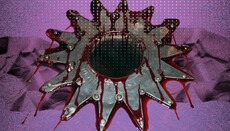
We are used to wars starting over oil or territory. But in the 19th century, the world nearly went up in flames over a single silver star and a bunch of keys to church doors.
On January 8, the Church celebrates the Synaxis of the Most Holy Theotokos. It is a day of unity when believers gather around the Mother of God and the Christ Child. But history is an ironic and cruel lady. The very place of the Birth of the One who brought peace became the detonator of one of the bloodiest wars of the 19th century.
If you descend into the Grotto of the Nativity in Bethlehem, you will see a silver star on the marble floor. It has 14 rays. Around it is a Latin inscription: Hic de Virgine Maria Jesus Christus natus est ("Here Jesus Christ was born of the Virgin Mary").
It looks like a symbol of absolute peace. Lamps burn around, and there is a scent of wax and incense. But if we had a historical Geiger counter, it would crackle with the radiation of death next to this piece of silver.
On this star is the invisible blood of half a million soldiers. Russians, French, English, and Turks.
Clue #1: Disappearance
Let's move to the year 1847. Bethlehem is a backwater town in the weakening Ottoman Empire. The Grotto of the Nativity is a point of tension where the Orthodox (Greeks) and Catholics (Latins) have been elbowing each other for centuries, figuring out who is the main master here.
And then an event occurs worthy of a police report. Mysteriously, the silver star with the Latin inscription disappears from the place of the Birth.
Who did it? The Latins instantly accused the Greeks. The logic was ironclad: the inscription on the star is Catholic, and the throne above it is Orthodox. The Greeks allegedly "had their eyes sore" from the reminder of the Latin presence in their altar. The Orthodox rejected the accusations, hinting at a provocation by the Catholics themselves.
The investigation reached a dead end because it was not about the value of the precious metal. It was about sovereignty.
In the holy places of Palestine, the concept of Status Quo operates – a complex, unwritten set of rules: who, where, and when has the right to light a lamp, lay a carpet, or open a door. Violating the "Status Quo" even by a millimeter is a reason for a monk fight (which still happens today, with censers and mops in play).
The theft of the star was a signal: the system of checks and balances had collapsed.
Clue #2: Keys to the Temple
The star was just a pretext. The real cause of the conflict was a bunch of keys. Literally, the keys to the main doors of the Bethlehem Basilica. At that time, the keys were with the Orthodox. The Catholics demanded the keys be handed over to them, citing old agreements from the Crusades era.
It seemed like a dispute between economic entities. Let the local pasha sort it out. But in the 19th century, religion was what democracy and human rights are today – an ideal tool for geopolitical pressure.
Heavyweights enter the game. In France, Louis Napoleon Bonaparte (the future Emperor Napoleon III) comes to power. He is shaky on the throne. He needs the support of the conservative Catholic electorate. To show himself as the "most Christian king", he issues an ultimatum to Turkey: return the keys to the Catholics and restore the star.
In the Russian Empire, Nicholas I rules. He considers himself the only legitimate protector of all Orthodox Christians of the East. For him, handing over the keys to the Catholics is a public slap in the face and a loss of honor.
Between these millstones is the Turkish Sultan Abdulmejid I. The "sick man of Europe", as Turkey was called then, tries to sit on two chairs.
The Sultan makes a fatal mistake. Under pressure from the French fleet, he solemnly hands over the keys to the Catholics. And to calm Nicholas I, he secretly signs a firman (decree) confirming the rights of the Orthodox.
But diplomacy is not a market. Double bookkeeping here leads to war.
Chain reaction
When Nicholas I learned that the keys were handed over to the "Latins", he was furious. The Emperor sends troops into the Danubian Principalities (the territory of modern Romania and Moldova) "to protect fellow believers".
The chain of events unfolds with frightening speed:
- Dispute over the star and keys.
- Occupation of the Danubian Principalities (1853).
- Turkey declares war on Russia (October 1853).
- The Battle of Sinop (November 1853, victory of Admiral Nakhimov).
- England and France, fearing the strengthening of Russia, enter the war on the side of Turkey (1854).
Thus began the Crimean War. Consider this surrealism. A peasant from near Voronezh and a winemaker from Burgundy killed each other near Sevastopol, dying from typhus, gangrene, and grapeshot.
For what? Officially – for the "Holy Places". For a piece of silver with a Latin inscription to lie in its place, and the keys to the door to hang on the belt of the "right" monk.
Never in the history of mankind has such a small religious detail caused such a large-scale massacre.
A fake in the altar
The most cynical part of this story is the fate of the artifact itself. While armies were deploying and diplomats were writing notes, Sultan Abdulmejid I tried to extinguish the conflict with money. In 1853, he ordered an exact copy of the stolen star at his own expense and gifted it to the temple.
The star that millions of pilgrims kiss today is the Sultan's "remake". The original from 1717 was never found (most likely, it was simply melted down by thieves).
Did it help? No. The star returned to its place in 1853. And the main battles of the Crimean War began in 1854–1855.
The war machine was already in motion. The pretext was exhausted, but the reasons (Europe's desire to weaken Russia and Russia's desire to control the sea straits) remained. The star was just a match. When the forest caught fire, everyone forgot about the match.
The verdict of history
The Crimean War ended in a heavy defeat for the Russian Empire. It lost its fleet, influence, and thousands of lives. Europe also washed itself with blood.
But the lesson taught to us by the Bethlehem star is much deeper than politics.
On the day of the Synaxis of the Most Holy Theotokos, we see a terrible irony. The place where Angels sang "Glory to God in the highest, and on earth peace" (Luke 2:14) became the cause of war.
People were ready to kill for a symbol of God's presence, completely forgetting the essence of His teaching.
This is the eternal trap of religious consciousness: to replace the Living God with a "sanctity". We think that if we "control" the Holy Sepulchre or the Bethlehem cave, we possess the Truth.
But the story of 1853 shows: one can hold the keys to the Church, one can have the most beautiful silver star, and yet be infinitely far from Christ.
An artifact is just a thing. A star is just silver. If to possess them, one must shed a brother's blood, then the price of these sanctities is nothing but shards.
The true worship that the Born Child expects from us is not a battle for a place in the altar, but peace in the heart. Everything else is just a pretext for another Sinop and Sevastopol.