
Mount Quarantal: the trial of stillness
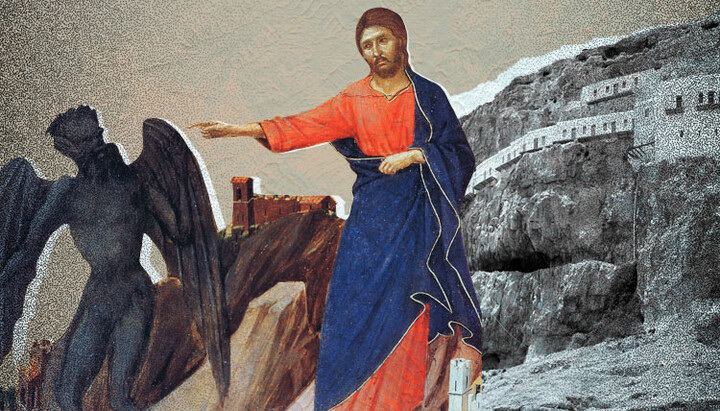
The rocky summit stands like a wall between the noise of Jericho and the silence of the desert. Here silence is like a mirror, revealing what we are truly made of.
Jericho remains behind. Just ten minutes of unhurried walk from the central streets with their bustling clamor – and the road reaches the foot of the mountain. Quarantal looms over the valley as a reddish barrier. This is scorched, cracked limestone that stands like a rampart between the inhabited world and dead space.
We often seek solitude, hoping to find rest in it. It seems to us that we need only leave our phone at home and go to a deserted place, and the long-awaited peace will immediately come within. But on the slopes of this mountain you understand: the absence of sounds brings no relief. On the contrary, it draws out everything we so successfully hid behind work, news feeds, and idle talks.
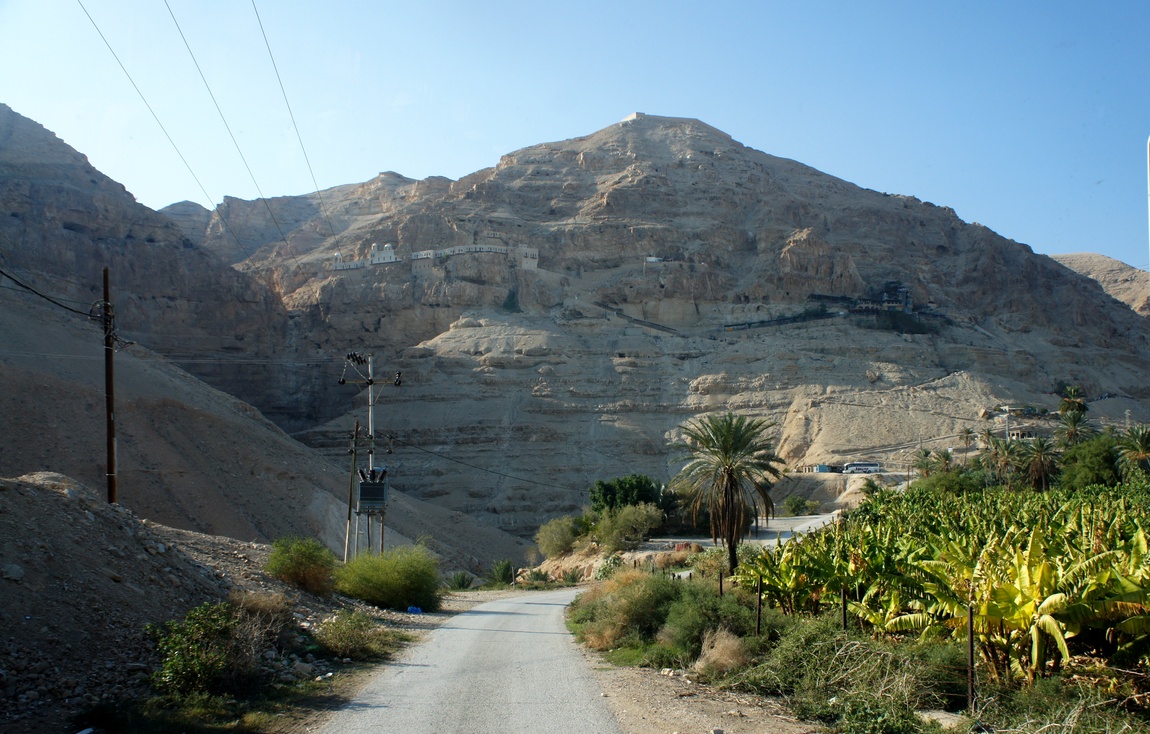
In the soundless space, thoughts acquire a frightening volume. Anxieties, old grievances, and petty bustle – all this begins to sound unusually loud. Emptiness deprives us of our usual ways to distract ourselves.
It is into this state of ultimate honesty before oneself that the Spirit leads Christ after the Baptism. The Evangelist Matthew writes that Jesus was led into the wilderness "to be tempted" (Mt. 4:1). Quarantal became the place where the human nature of the Savior met with Itself without intermediaries.
The Mountain of Forty Days
The Crusaders called this peak Mons Quarantania – the Mountain of Forty Days. From this Latin root later came the word "quarantine." In the Middle Ages, this was what they called the time during which a hidden disease should manifest on an arriving ship. Here, above Jericho, a kind of spiritual retreat took place. This was the time when the inner nature of man had to be fully revealed in isolation.
The contrast here is tangible. On one side, thre are emerald patches of Jericho's gardens, palm groves and springs. This is an ancient world where there is water and shade. On the other side, the kingdom of gray stone, resembling frozen ash, begins.
Life and immobility stand here close together, separated by one invisible line.
The Monastery of Temptation seems pressed into the sheer wall halfway to the summit. Its terraces hover over the abyss, and it seems that the buildings hold to the rock against all logic. In the fourth century, the first hermits came here led by Chariton the Confessor. They climbed along narrow ledges, dragged water and meager food upward to settle in a cave where there is nothing but God and silence.
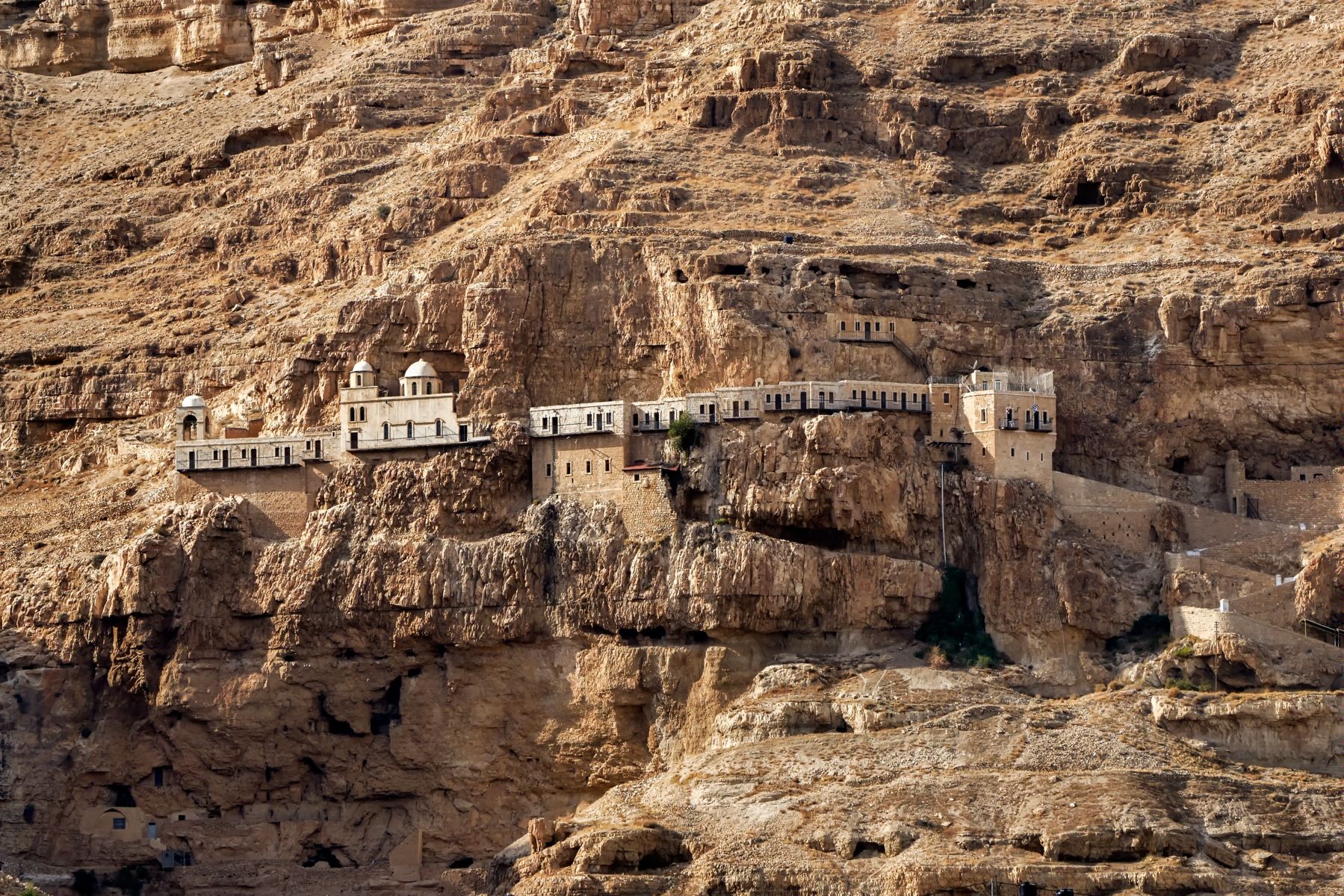
Deep within one of the cave churches lies a rough outcrop of rock. Tradition says that it was on this very ledge that Christ sat during his fast. It is a stark point of support—a piece of ground that witnessed a great inner struggle.
A view from the monastery balcony
From the monastery terrace, a panorama that seems to divide the world into parts opens up. Cars, tiny figures of people, and the greenery of the oasis are moving right beneath your feet. In the distance, on the horizon, the heavy silver of the Dead Sea lies still.
It was from here that the devil showed Christ "all the kingdoms of the world in a moment of time" (Lk. 4:5).
Height gives man the illusion of control. When you look at the world from above, it's easy to believe that you are its rightful master.
The desire for power requires scale and perspective. In darkness or in a cramped basement, power doesn't seem as attractive as from this dazzling height, where everything lies at your feet.
1.jpeg)
Today a cable car takes you to the top. Two minutes in the cabin – and you're at your destination. This is convenient, but in such speed the meaning of the journey is lost. We often bring our noise with us to the summit, take pictures against the backdrop of the abyss and immediately descend for lunch. Inner bustle doesn't even have time to slow down. We touch the stone but miss the opportunity to hear the place itself.
Three questions in the void
The three challenges set before Christ on this mountain are a clear list of our weaknesses. We encounter them constantly, just on different scales.
First comes the proposal to turn stones into bread. This is the voice of the flesh, demanding immediate comfort and solutions to all problems here and now. We often expect exactly this from faith: that reality will bend to our needs and that difficulties will disappear with a wave of the hand.
Then is the proposal to throw oneself down from the height of the temple so that angels would catch him. This is the thirst for confirmation of one's exclusivity, the desire for a miracle as proof of one's own importance. We want God to act in our interests and publicly confirm our high status before everyone's eyes.
And finally is power over the world in exchange for bowing to evil. The most subtle temptation. The illusion that one can establish a perfect order by making a small compromise with one’s conscience. We often justify falsehood with great goals, not noticing how power turns into our chains.
In this desert silence you understand: the main struggle is not with someone external; it goes on inside, with your own voice.
Christ does not enter into long discussions with the devil and does not seek logical justifications. He answers three times: "It is written..." In moments when the ground gives way beneath our feet, only something unchanging can become true support.
Knowledge of Scripture here is solid ground under our feet, a sign of faithfulness to Him who is above all circumstances.
The sun sets over Jericho. Mount Quarantal slowly recedes into shadow, becoming even more austere. If you stay here long enough, you can feel how everything superfluous quiets down inside. And then begins the real path to spiritual heights. There, where excuses end, true life begins.