
Why does OCU still celebrate Easter “with Moskals”?
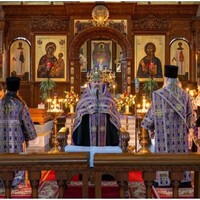
On social media, “patriots” are again asking in exasperation: why are we still celebrating Easter with Moscow? How much longer?
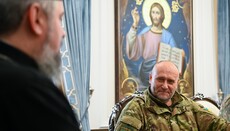
One of the most recognizable voices in Ukraine’s patriotic camp – Dmytro Yarosh – has urged the Orthodox Church of Ukraine and the Ukrainian Greek Catholic Church to stop celebrating Easter on the same date as Russia and instead mark it “together with the entire Christian world.”
The rhetoric is hardly new. Just a couple of years ago, exactly the same slogans were being hurled at Christmas. Ukrainians were told that celebrating it on January 7 was disgraceful simply because Moscow did the same. In late 2022, the issue was even put to a vote in the Diia app, and soon afterward the OCU and the UGCC made a highly publicized shift to the new calendar.
It did not stop there: the authorities quickly followed suit, moving several state holidays to new dates as well, including the Feast of the Protection and the Day of the Baptism of Rus. All attempts by Orthodox believers to explain that the Church calendar is not a political manifesto but part of an age-old ecclesiastical tradition, that the Julian calendar is followed not only by the Russian Orthodox Church but by half of the Orthodox world drowned in triumphant cries whose main refrain was simple: “anything but celebrating with the Moskals.”
And now, quite predictably, the same campaign has turned to Easter.
In fact, Yarosh is far from alone here. On social media, “patriots” are voicing in outrage: why are we still celebrating Easter with Moscow? How much longer is this supposed to go on? And this time, the question will be far harder to answer, except for the Uniates: they would likely be only too happy to join their superiors in the Vatican.
The OCU, however, will have to explain to the public that unlike Christmas, Easter is not tied to a fixed date and is celebrated “together with the Moskals” by absolutely all the Local Churches – including the supposedly “pro-Ukrainian” and “anti-Moscow” ones. And that is where the whole argument begins to unravel. This holiday is calculated according to a complex paschal system, and its coincidence with “Moscow” has nothing to do with political sympathy or cultural loyalty. It flows from the internal logic of the Orthodox tradition itself.
And yet for some reason, it feels as though this time no one will listen to the OCU given the black-and-white view of the world among Ukrainian patriots: either you stop celebrating with Moscow – or you are a Moskal yourself, and an “FSB agent” to boot.
What do you think the OCU will choose?