
UOC hierarch: The Jerusalem Church is a center capable of uniting Orthodoxy
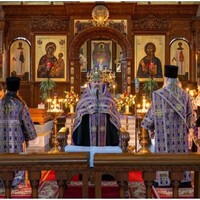
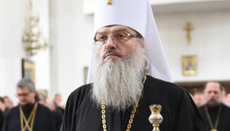
At the international forum in Belgrade, Metropolitan Luke pointed to the Jerusalem Church as a possible center for overcoming inter-Orthodox divisions.
On December 11, 2025, an international conference titled "The Crucifixion of Orthodoxy in the 21st Century: Spiritual Wars, Ecumenical Offensive, and Global Politics" held in Belgrade is dedicated to the contemporary challenges facing the Orthodox Church. The event was reported by the press service of the Zaporizhzhia Eparchy of the Ukrainian Orthodox Church.
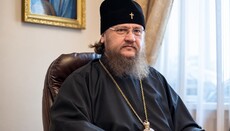
The keynote event of the forum was the speech by Metropolitan Luke of Zaporizhzhia and Melitopol, who presented a report on the impact of ecumenical initiatives and geopolitical processes on the canonical structure of Orthodoxy. According to the hierarch, the religious sphere is increasingly being used as a tool for external political and ideological pressure.
In his speech, Metropolitan Luke paid special attention to the issue of inter-Orthodox unity. "In conditions of deep divisions and the undermining of the conciliar principle, a spiritual center that is not involved in geopolitical games and remains faithful to the canonical Tradition is needed," the archbishop noted.
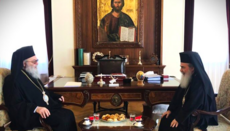
According to Metropolitan Luke, the Jerusalem Church can become such a unifying center today. "It is precisely the Jerusalem Patriarchate, as the Mother Church, connected with the places of the Savior's earthly life, that is historically called to serve the cause of unity and peace among the Local Churches," he emphasized.
The hierarch also noted that the Jerusalem Church has demonstrated a commitment to preserving inter-Orthodox dialogue and Eucharistic communion over the past years, including serving as a platform for fraternal meetings and discussions of pressing issues without external pressure.
The conference participants supported the need to develop a joint strategy for protecting the spiritual and canonical integrity of Orthodoxy, emphasizing the importance of strengthening inter-church interaction and countering attempts to politicize church life.
Earlier, the UOJ wrote that the Patriarchs of Jerusalem, Antioch, and Serbia met in Amman.