
The Tychikos case: Can a bishop defend his rights in a secular court?
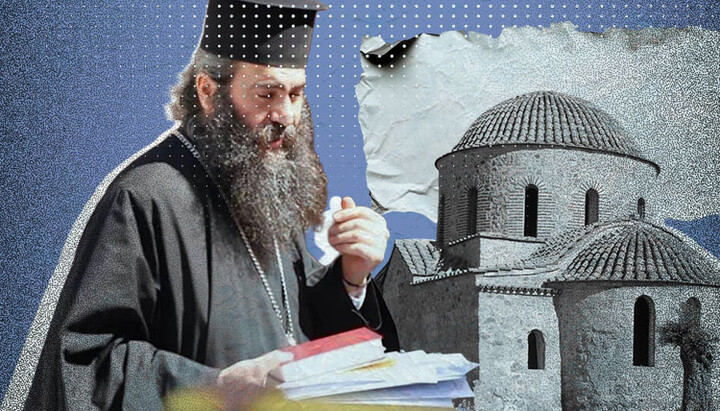
An analysis of the developments in Cyprus suggests that a bishop can suffer not for violating the canons, but for observing them.
On January 8, 2026, the Holy Synod of the Church of Cyprus decided to bar Metropolitan Tychikos of Paphos from serving. Yet this decision raises many questions among specialists in church law – and, more broadly, among all who follow church life.
The main feature of this decision is the lack of a clear rationale.
In the official statement of the Archdiocese, it is not specified which canons Metropolitan Tychikos allegedly violated. Nor is any term of the ban given – it speaks only of a “ban for an indefinite period”. Both points run contrary to the centuries-old practice of the Church, according to which any ecclesiastical punishment must be clearly justified and must have defined time limits.
In this way, the Cypriot synod members showed that decisions can be made not in accordance with the Church’s Tradition, but in defiance of it.
It should be noted that the Holy Synod of the Church of Cyprus is placing a number of conditions before the metropolitan: to sign a “specific confession of faith”, which must include points recognizing the Council of Crete of 2016 (whose decisions some hierarchs disagree with not only in Cyprus but also in Greece, to say nothing of other Local Churches); to withdraw his appeal to the civil courts; to condemn “separation from the Church” (that is, those who do not commemorate certain hierarchs); to accept new duties in the Archdiocese; and to stop “stirring up” the churchgoing people.
“Stirring up the people”?
The last point deserves special attention. Metropolitan Tychikos is accused of “stirring up” and “scandalizing” the people. Yet the hierarch himself keeps silence – he gives no interviews and does not speak publicly in his own defense. He uses only those methods of defending his rights that cannot be described as unchurchly.
This situation involuntarily recalls the Gospel account of Christ’s trial. The chief priests and scribes accused the Savior of “stirring up the people”, of corrupting them with His teaching. “He stirs up the people, teaching throughout all Judea, from Galilee even to this place” (Lk. 23:5), they said to Pilate. History shows that the charge of “stirring up the people” has often been used as a weapon against those who stood for the truth.
The Church’s chronicles know many cases when bishops and priests suffered not for violating the canons, but for fidelity to them. It is enough to recall Saint John Chrysostom, who was driven from the See of Constantinople and died in exile for denouncing the vices of the imperial court and upholding church law. Saint Athanasius the Great was exiled five times for defending the Orthodox faith against the Arian heresy. Venerable Maximus the Confessor endured torture and the cutting out of his tongue for refusing to accept Monothelitism – a teaching supported by imperial authority and part of the episcopate.
All these holy fathers were persecuted under the guise of church punishments. They were accused of “disobedience”, of “stirring up the people”, of “violating church peace”. But history put everything in its place: the persecutors were consigned to oblivion or condemnation, while the confessors were glorified by the Church as saints.
What is the ban on Metropolitan Tychikos based on?
If a decision to bar someone from serving contains neither a reference to specific canonical violations nor a term of punishment, the question arises: what, then, is it based on?
The materials at our disposal allow several possible reasons to be suggested.
First, Metropolitan Tychikos refused to accept the decisions of the Council of Crete of 2016. This position aligns him with a number of Local Churches – Bulgarian, Georgian, Serbian, Russian – as well as with many bishops within the Churches of Greece and Cyprus who disagree with certain documents of that council. For example, they disagree with the idea that heretics can be called a “Church”.
Second, the hierarch is not prepared to recognize the legitimacy of the OCU, created in 2018 with the active involvement of the Patriarchate of Constantinople. This position, as is well known, is also shared by the majority of Local Orthodox Churches.
Third, he does not agree with a course of rapprochement with the Catholic Church without the latter repenting of heresies and of its falling away from Orthodoxy.
All these positions are based on fidelity to the canonical and dogmatic Tradition of the Church.
It turns out that Metropolitan Tychikos has been punished not for departing from church norms, but for observing them.
It is also possible that the ban on Metropolitan Tychikos is an attempt by Archbishop Georgios to prove that he “can do it”, to consolidate his authority in the Synod, where there are bishops who disagree with his church policy, and also to punish Metropolitan Tychikos, whom he regards as “his” appointee. In other words, purely personal motives – having nothing to do with the Church’s teaching – may well be mixed into this decision.
A canonist’s view: the decision is unlawful
The well-known Greek canonist Anastasios Vavouskos (who was initially invited to provide legal assistance to Metropolitan Tychikos but later ceased cooperating with him) openly stated that the actions of the Cypriot Synod are unlawful.
In Vavouskos’s assessment, the entire procedure of “removing” Metropolitan Tychikos is legally untenable and contains numerous procedural violations. The logic of events required that, after a letter from the Ecumenical Patriarchate pointed out these violations, the Holy Synod of the Church of Cyprus should have begun an investigation into the alleged canonical offenses. But the Synod, the expert notes with sarcasm, continues to “do anything at all – except that”.
Vavouskos emphasizes an important point: Metropolitan Tychikos, despite the Synod’s decisions, remains the canonical hierarch of the Metropolis of Paphos. “In my opinion, he has not been deposed; he is the canonical hierarch of his metropolis,” the canonist said.
Moreover, according to the canons, Metropolitan Tychikos was supposed to take part in the Synod session at which the decision to bar him from serving was made. “He had to participate in the session – according to the canons,” Vavouskos notes. But the Archbishop, acting from his own position, did not invite him.
What happened at the Synod?
On Cypriot television, a representative of the Archdiocese of Cyprus, Christakis Efstathiou, spoke to journalist Natasa Ioannou about the Synod’s decision regarding Metropolitan Tychikos. According to him, the meeting began with a proposal by the Archbishop, who said he could propose defrocking the metropolitan, but in order to show leniency he proposes an indefinite removal. During the discussion, objections were voiced both to the removal itself and to the introduction of a lifelong removal.
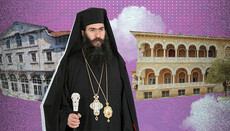
Efstathiou stressed that the decision was made in a spirit of leniency. “There were also much stricter punishments that could have been applied,” he said. It is worth adding that the discussion of Metropolitan Tychikos’s case at the Synod was so long and extensive that there was no time left for other issues.
The representative of the Archdiocese emphasized that, according to the Synod’s decision, Metropolitan Tychikos can be reinstated and receive a new eparchy – but not Paphos – if he fulfills the conditions described above.
However, as has become known, Metropolitan Tychikos, first, does not wish to appear at the Archdiocese, since he does not consider his “removal” lawful. He also asserts that he has already submitted the requested “confession of faith” and that he cannot condemn the canon concerning Christians’ right not to commemorate hierarchs who have fallen into heresy (the 15th Canon of the First–Second Council). In addition, according to the journalist, the metropolitan sent an SMS message to the Archbishop, stating that he was in Cyprus and ready to be present at the Synod meeting, but received no reply.
Natasa Ioannou raised the question of whether Metropolitan Tychikos had been invited to the Synod session. Efstathiou replied that Bishop Tychikos, as a member of the Synod (until the decision of January 8), is not invited separately – his presence is presumed. He added that Archbishop Georgios had publicly stated that he expected Metropolitan Tychikos to be present at the Synod, without a separate invitation, as far as one can understand from Efstathiou’s words.
However, Natasa Ioannou said she had seen the invitation sent to all members of the Holy Synod, and Metropolitan Tychikos’s name was not there. Efstathiou did not comment on these words.
Instead, he called the decisive factor Metropolitan Tychikos’s intention to apply to the Supreme Court to overturn the Synod’s decision. “Appealing to civil courts contradicts the canons, as well as the church spirit,” Efstathiou emphasized. In other words, a non-canonical “removal” of Metropolitan Tychikos and violations of the Charter of the Church of Cyprus do not contradict either the canons or the church spirit?
Efstathiou continued that the metropolitan’s intention to go to civil court became the event that “cannot be ignored” and that has “key significance” for the issue under discussion. He added that such a step shows the metropolitan’s lack of trust in the Holy Synod and in church courts.
The journalist asked what the removal means in practice. Efstathiou explained that it is a ban on priestly and episcopal duties. Metropolitan Tychikos is forbidden to serve the Divine Liturgy and perform the Mysteries. However, the rank of bishop remains with him – he remains a hierarch, but in a state of removal. “An indefinite removal means that, in order to return, he needs to take actions on his part, to fulfill what the Synod requires,” the Archdiocese representative explained.
He also stated that, for the Church of Cyprus, the matter of Metropolitan Tychikos is closed as of that day. “From here on, everything depends on what steps the metropolitan himself takes,” he said. At the same time, he stressed that a “large space for action” remains for the metropolitan and that “if he takes these steps, he will be received with open arms in the Church of Cyprus”.
Efstathiou added that if Metropolitan Tychikos decides to fulfill the Synod’s conditions, a new synodal decision must be adopted that reinstates him as a bishop (with an appointment to a new see. – Ed.) and lifts the ban.
The program also mentioned a “group of zealots” that gathered near the Archdiocese on the day of the Synod meeting. At the same time, Efstathiou noted that this group was not sent by Metropolitan Tychikos, yet the Synod believes that the metropolitan causes unrest among believers by his statements and by this small group of zealots. In addition, the Synod accuses the metropolitan of trying to create a split among Synod members by addressing those who supported him and those who supported his deposition in different ways.
As for the election of a new Metropolitan of Paphos, the Synod will return to that matter later. It is expected that a list of three candidates will be drawn up, though the people may not vote – most likely, an agreement on a single candidate will be reached and the matter will be closed.
The right to a fair trial
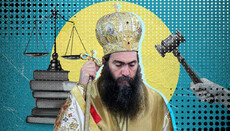
The fact that Metropolitan Tychikos turned to the civil courts became “decisive”, in the view of representatives of the Archdiocese. As a result, the Holy Synod accused him of violating canons that allegedly forbid clergy from going to secular courts.
However, the canonist mentioned above, Anastasios Vavouskos, categorically disagrees with this view. He explains that the canons of the Council of Antioch, which the Archdiocese cites, prohibit appealing to the “king” in matters that fall within ecclesiastical jurisdiction – that is, questions of faith and internal church governance.
“The question now is whether a Cypriot citizen has the right to a fair trial when he is subjected to a punishment that rests on a non-existent decision,” Vavouskos says. In his view, Metropolitan Tychikos is entirely right to go to court: “He is 100 percent, 1,000 percent right, because this whole procedure is legally untenable.”
The canonist emphasizes: “Metropolitan Tychikos has the full right to turn to civil courts and demand protection of his constitutional right, because besides being a hierarch of the Church of Cyprus, he is also a citizen of the Republic of Cyprus. Hierarchs and clergy are not second-class citizens compared to the rest of Cyprus’s citizens.”
This is not about state interference in church affairs, but about assessing the legality of the decision-making procedure. “Autocephaly means independence in making decisions. The making of decisions is not subject to interference by the state. But an assessment of how decisions are made – since the Church of Cyprus operates within the Republic of Cyprus – is subject to the Constitution of the Republic of Cyprus,” the expert explained.
A question for other Churches
The situation with Metropolitan Tychikos raises an important question before all Local Orthodox Churches that did not accept the decisions of the Council of Crete and did not recognize the OCU.
If the Church of Cyprus bars a bishop from serving because he does not want to sign the decisions of the Council of Crete, then, by that logic, the hierarchs of Cyprus should not serve with anyone who also does not accept that council. But there are many such bishops – in the Bulgarian, Georgian, Serbian, and Russian Churches, partly in the Greek Church, and even within the Church of Cyprus itself – to say nothing of other Churches.
Thus, these Churches cannot help but ask: does the decision of the Cypriot Synod affect them? For if Metropolitan Tychikos is “guilty” of not accepting the Council of Crete, then everyone who shares his position falls under the same charge.
It is important to note that silence in the face of injustice can create a dangerous precedent: if today it is possible to bar a bishop without a clear justification and without specifying a term of punishment, if it is possible to punish someone for fidelity to the canonical Tradition, then tomorrow the same fate could befall any hierarch in any Local Church.
What comes next?
According to available information, Archbishop Georgios may try to secure a “lifelong ban” for Metropolitan Tychikos. But given the current alignment of forces in the Synod (five hierarchs voted against barring Tychikos, eleven in favor), the Archbishop may not have enough votes for this. Still, it is clear that he will attempt to install “his” candidate on the throne of Paphos.
This detail is very important. The point is that the new Metropolitan of Paphos automatically becomes the locum tenens of the Archbishop’s throne when it becomes vacant. This is not merely about filling one see – it is about the future of the entire Church of Cyprus.
Meanwhile, Metropolitan Tychikos has still not handed over the keys to the metropolis and his office. According to sources close to the Archdiocese, if he does not do so voluntarily in the coming days, Archbishop Georgios, as the current locum tenens of the Paphos throne, may call the police to inventory the property and take possession of the keys.
In any case, time will show who is right in this conflict. Church history teaches us that the truth is often not revealed immediately. Saints John Chrysostom, Athanasius the Great, and Maximus the Confessor, during their lifetimes, endured persecution under the guise of church punishments. They were accused of disobedience, of stirring up the people, of violating church peace. But the Church glorified them as saints, while their persecutors brought upon themselves indelible disgrace.
The question is whether the same story is now repeating itself in Cyprus. Is Metropolitan Tychikos being punished because he remains faithful to the Church’s Tradition at a time when part of the church hierarchy is ready to depart from it for the sake of political expediency?
These questions demand an honest answer – not only from the Church of Cyprus, but from the entire Orthodox world.