
Synod or сourt: What awaits Metropolitan Tychikos?
At the upcoming Holy Synod of the Church of Cyprus, the most important questions will be considered – those tied to the fate of Metropolitan Tychikos and to the procedure for electing bishops to sees.
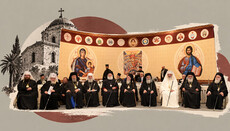
On January 8, 2026, a meeting of the Holy Synod of the Church of Cyprus will take place – one that could become a turning point in the Church’s recent history. On the agenda are two issues capable of significantly affecting the island’s religious climate: the case of Metropolitan Tychikos of Paphos and amendments to the Charter of the Church of Cyprus regarding lay participation in the election of metropolitans.
A “red card” from the Phanar
One of the central elements in everything now unfolding in the Church of Cyprus has been a letter from the Constantinople Patriarchate addressed to the Synod of Cyprus. According to available information, the document is dated December 6, 2025, and is in the possession of Archbishop George. We have written that to this day the text has not been published and, possibly, members of the Cypriot Synod have still not seen it.
The contents of the letter are unknown. However, Cypriot journalist Natasa Ioannou claims the document is a “red card” from the Phanar.
At the same time, church-law expert Areti Demosfthénou reported a curious detail: one of the bishops of Cyprus, having seen the text, warned another bishop (apparently meaning members of the Synod – Ed.): “If you read it, you will be shocked.” Moreover, according to Demosfthénou, that same hierarch also said: “If you publish this letter, you will lose.”
So what is in this document? According to the information available, the Constantinople Patriarchate, while not demanding Tychikos’s return to Paphos (for quite understandable intra-church reasons), nonetheless made its position unmistakably clear regarding the legality of what occurred – pointing to “omissions” in the trial of Tychikos.
Let us recall once again that to this day the Synod of the Phanar has not published the full text of its decision in this case, limiting itself to a press release in which it recommended that Tychikos “submit to the decisions of the Holy Synod of his Church, and this for his own spiritual good and for the peace and unity of the Church.” That is – not because he is guilty, but for the sake of “peace and unity.” Yet, judging by everything, the situation has now taken a most unexpected turn.
A court “before the pagans” and the Apostle Paul
A crucial moment was Metropolitan Tychikos’s statement that he intends to appeal to the civil courts of the Republic of Cyprus, demanding that he be restored to his post as the ruling hierarch of the Metropolis of Paphos. Metropolitan Tychikos sent a corresponding letter to the synodal hierarchs of the Church of Cyprus in January 2026.
Many perceived this step as unprecedented and even scandalous – a bishop going to secular courts against a church decision. However, Fr. Evangelos, who has been accompanying Metropolitan Tychikos lately – both as a physician and as an assistant – finds serious theological grounding for this step. He points to the example of the Apostle Paul himself.
In the already-mentioned interview with Natasa Ioannou, Fr. Evangelos said: “When the Apostle Paul was seized by the Jews and they wanted to kill him, according to Jewish laws he was supposed to be tried by the Jews themselves – that is, not to step outside their jurisdiction. But since Paul was a Roman citizen (do you understand what that means? as Europe is today, so Rome was then), he stood up and said прямо in court: ‘I appeal to Caesar.’ That is, Paul, not believing that he would be judged fairly – and he really was judged unfairly by people of his own nation and faith – said: ‘I would rather be judged by pagans.’ And in doing so, Paul showed the way.”
This argument is of fundamental importance. It is not about a secular court deciding matters of faith – it is about decisions connected, as Fr. Evangelos says, with observing “church procedural norms.”
In other words, the civil court should evaluate not Metropolitan Tychikos’s theological rightness or wrongness, but whether the procedures established by the Church itself were followed.
And here several principled points arise:
– Metropolitan Tychikos was elected not only by the Synod, but also by the people of the Metropolis of Paphos (as the hierarch reminded the synodals in his letter).
– Under the established order, a metropolitan in Cyprus is not only a spiritual figure but also an administrative one.
– Provisions of labor law apply not only to secular organizations but also to church organizations.
– There is the Charter of the Church of Cyprus, many points of which were violated by the Holy Synod.
– The very proceedings against Metropolitan Tychikos were conducted without due respect for the norms by which civilized countries make judicial decisions.
And that means all these matters may be examined in a secular court.
When absurdity becomes reality
It should be noted that the situation around the See of Paphos at times takes on completely absurd forms. Fr. Evangelos describes one episode that, he says, shocked him:
“One day the phone rang, and I was standing next to His Eminence. <...> His Eminence answers – it is the abbot of the Trooditissa Monastery. After the usual greetings, he says: ‘You know, Your Eminence, I want to ask you something. I have a monk whom we are going to put forward as a candidate for the See of Paphos, and I am asking you very much, using your connections and your people, especially in Paphos, to support my candidate.’”
Fr. Evangelos’s reaction to that call, he says, was extremely harsh: “How do you evaluate this? For me – as a doctor and as a human being – it is unacceptable! It is the same as if a man came to another and said: ‘Give me your wife.’ That is what it was. That is the Church’s ecclesiology. A hierarch is ‘wedded’ to his see. And then they take it away from you and say: help us so that someone else can take it.”
Agree that the situation looks not only sad but, in a broader sense, deeply cynical. And how can one not recall the saying that when God punishes a person, He takes away his mind?
Metropolitan Tychikos was removed from his see – removed unlawfully. He does not agree with it and is doing everything to challenge the decision. Moreover, because of that decision he fell ill, spent several months in the hospital – and then a man from his eparchy calls him and says: “Help another man be wedded to your metropolis.” Is that not insanity?
But the most interesting point is that the abbot’s call was initiated by someone from the outside – someone Fr. Evangelos does not name directly, though it is not hard to guess whom he means. The question is different – why is all this happening?
The invisible reason
This is a question not only we ask. Thus, the canon-law specialist Areti Demosfthénou voices an idea that likely occupies many observers of this situation: “One thing is the pretext, and another is the cause. The pretexts are what we are discussing now. But the cause is different. Personally, I did not understand that cause. To this day I have not seen any coherent cause” (for depriving Metropolitan Tychikos of his see – Ed.).
Indeed, the officially voiced reasons – “the heresy of the non-commemorators,” “painful fanaticism,” and the refusal to bring the честная head of the Apostle Paul to Paphos – all of this looks more like pretexts than the true cause of such a harsh conflict.
Moreover, as Demosfthénou notes, “according to the information available, when Metropolitan Tychikos spoke with the Archbishop, he said to him: ‘If you want it so much, Your Beatitude, let the honorable head of the Apostle Paul be brought.’ That is, he gave his consent. This never entered the public sphere.”
So what is the real cause? Judging by everything, it is so serious that representatives of the Archbishopric are promising the harshest decisions in Metropolitan Tychikos’s case. For example, Kostas Nanos, in an interview with Alpha TV, said that the Tychikos issue “has already been decided.” He named two possible reasons why Tychikos might even be defrocked on January 8.
The first reason: Metropolitan Tychikos did not fulfill the conditions set by the Synod for remaining in the rank of bishop – that is, he did not write the “confession of faith” demanded of him by Archbishop George, condemning the “non-commemorators” and recognizing the Council of Crete. Instead, according to Natasa Ioannou, Metropolitan Tychikos sent the Synod the very confession he had presented on the day of his episcopal consecration.
The second reason, which may lead to defrocking, according to Kostas Nanos, is the very intention to go to the civil courts. Nanos claims this step is “strange”: “Civil courts, in essence, cannot interfere in church affairs and decide whether the Holy Synod’s decision to depose him or remove him from the post of metropolitan was lawful, nor can they order his return to the metropolitan see.”
Therefore, he states: “It is not excluded that tomorrow the Holy Synod will decide either on his final deposition, or on closing the matter.” However, the church-law specialist Demosfthénou notes a very important nuance: “For a metropolitan to be defrocked, an extremely serious reason must exist. <...> Disobedience may be alleged, but for that an exceptionally weighty reason is required, and that reason again must be affirmed by the Synod by a three-quarters majority.”
In other words, defrocking for disagreement with the decisions of the Council of Crete is not a “weighty reason,” but rather a pretext that will inevitably raise many questions about the canonical nature of the decision itself and provoke outrage among the faithful – both in Cyprus and in other countries.
A letter from the faithful
The first signs of such outrage already exist. On the eve of the Synod, a group of Orthodox Christians from various countries sent an appeal to ten hierarchs of the Church of Cyprus. The letter is signed by representatives of a pan-Orthodox movement in support of Metropolitan Tychikos from Greece, Cyprus, England, America, Canada, Mexico, Ireland, Scotland, Serbia, Romania, Bulgaria, and Poland.
The authors write that “the authority of the Church of Cyprus has been almost irreparably undermined by the most unjust removal of Metropolitan Tychikos of Paphos – not only on the pan-Orthodox level, but above all in the eyes of your spiritual children, the faithful people of Cyprus.”
“Are you ready for the wrath of God’s people and for demands for the resignation and deposition of all bishops who assisted in removing Metropolitan Tychikos of Paphos, and above all the Archbishop? Are you ready for the intervention of other church jurisdictions in matters of the autocephaly of the Church of Cyprus and, as a consequence, for the undermining of the authority of our local Church?” the faithful ask.
They continue: “We consider it our duty to warn you of the chain reaction that will inevitably follow if you nevertheless announce elections in the Metropolis of Paphos and do not restore the canonical Metropolitan Tychikos of Paphos, and also if you change the Charter of the Church of Cyprus for the convenience of appointing ‘your own’ people to desired posts.”
As we see, the situation is extremely tense. At the same time, Areti Demosfthénou reported that Archbishop George is not answering Metropolitan Tychikos’s calls. According to Fr. Evangelos, in private conversations (with one Greek metropolitan) the Archbishop said that Tychikos would be barred from serving for many years. That is, defrocking is not being discussed? Probably not.
Moreover, Demosfthénou expresses a supposition that may seem unexpected: “I have a suspicion that the Archbishop himself, if he had known what turn events would take, would have acted differently.” However, at this moment everything indicates that the Primate of the Church of Cyprus intends to go further.
Let us recall that alongside Metropolitan Tychikos’s case, Archbishop George intends to bring before the Synod the question of abolishing lay participation in the election of metropolitans.
Why now? Fr. Evangelos offers a simple explanation: “The people may come to the elections, and if they are given the opportunity to vote, they will write: ‘Tychikos.’ They will definitely do it. Probably that is exactly what they fear.” Indeed, if elections in Paphos were held under the old rules, with lay participation, the result would be predictable. Metropolitan Tychikos enjoys enormous support in his eparchy and, without doubt, the majority of voters who come to the polls would drop ballots bearing his name into the boxes. And that would only underline once more the absurdity of the situation.
Can Tychikos be restored?
But perhaps it will not come to that, and on January 8 the Holy Synod of the Church of Cyprus will be able to reconsider its decision and return him to the See of Paphos?
In theory, such a possibility exists. In practice, however, it looks extremely unlikely. Too much has been said, the conflict has gone too far. So after tomorrow’s Synod, the hierarch may go to court. But can a secular court influence the Synod?
This is perhaps the main practical question in the entire situation. A representative of the Archbishopric, Kostas Nanos, reminded that there has not yet been a precedent “where civil courts interfered in Church affairs and in the decisions of the Holy Synod.”
However, examples of secular courts intervening in Church affairs in Cyprus do exist. For example, right now, due to an investigation, the main contender in the pre-election race for the throne of Paphos has dropped out – Bishop Christoforos of Karpasia. The reason is that an investigation was opened against him after a police complaint alleging misappropriation of funds from one charitable foundation. And this is far from the first case in which Cyprus’s secular authorities have initiated investigations against clergy when representatives of the Church violated state laws.
And if we speak specifically about Metropolitan Tychikos’s case, a secular court will unambiguously establish that, in removing him from administration of the Metropolis of Paphos, procedures provided for by the Church’s Charter were violated. In such a situation, can a state court compel the Church to restore him to office? There is no direct precedent. But there is another aspect: Tychikos has been deprived of his salary, administrative powers, and, in effect, his position. All this can be seen as labor and administrative relations regulated by state legislation.
It is clear that formally the Synod is not obliged to comply with a secular court’s decision in matters of church order. But in practice it would create a situation in which the Church would look like an institution that violated its own rules. Does the Church need that? We are confident it does not.
Conclusions
We hope that on January 8 the Holy Synod of the Church of Cyprus will choose the path of reconciliation rather than final rupture – a path that takes account of the people’s voice rather than ignoring it; a path that leaves room to correct mistakes rather than leading into a dead end.
We would like to end this article with the words of that same Fr. Evangelos: “We, people in the Church, may go through trials, but Christ and the Church will abide forever. And human designs God often knows how to overthrow… God grant that on the 8th the Archbishop will prove us all wrong and take an unexpected step.”