Should Christians yearn for a lost empire?
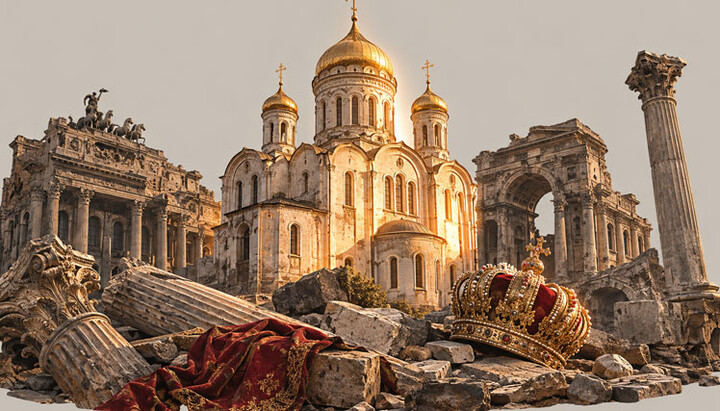
How should Christians view fallen empires? Where does gratitude for the past end and the temptation to replace hope in Christ with political nostalgia begin?
"He changes times and seasons; He removes kings and raises up kings" (Dan. 2:21).
The Prophet Daniel witnessed the rise and fall of kingdoms from within a history that spared neither nations nor their sacred places. Yet beyond the grandeur of earthly empires, he discerned the sovereignty of God. Centuries later, the Apostle Paul would tell the Athenians that God had appointed the times and boundaries of nations so “that they should seek the Lord, in the hope that they might grope for Him and find Him” (Acts 17:26–27). These words establish the standard by which Christians are called to judge history: Does what we build and defend help people find God?
We can indeed discern the workings of Providence in the history of nations. The conversion of rulers, the end of persecution, the construction of churches, and the spread of the Gospel – all deserve to be remembered with gratitude. The Church preserves accounts of God's help to people whose decisions shaped the destinies of entire countries. But recognizing Providence does not mean sanctifying every action of a ruler. God works through the lives of free and sinful human beings without turning their mistakes into expressions of His will.
That is why the question of mourning lost empires cannot be settled by simply dismissing the past with contempt. We may grieve over destroyed holy sites, lost homes, the disappearance of a culture, and human suffering. We may cherish the memory of a state that supported the life of the Church. The danger begins when we come to regard the survival of a particular state as a prerequisite for preserving the faith itself, and its restoration as almost the very substance of Christian hope.
Royal anointing and the limits of power
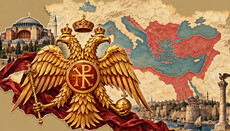
The biblical image of God's anointed king reveals the dignity of royal service. David is called to shepherd his people and answer for them before God. Christian tradition embraced this image, surrounding royal authority with prayer and blessing. Yet the promise of David's everlasting throne is fulfilled in Christ (Luke 1:32–33). No Christian dynasty can claim the unconditional authority of His Kingdom.
An Orthodox monarch receives anointing from a minister of the Church. This places his authority under the judgment of God's righteousness: he needs grace, guidance, and repentance.
A blessing does not make a ruler infallible or give him the right to dictate matters of faith. When the Old Testament King Uzziah attempted to burn incense in the Temple himself, the priests firmly opposed him (2 Chron. 26:16–21). Even royal majesty did not erase the boundaries of sacred ministry.
At the same time, it would be wrong to claim that all civil authority exists solely by delegation from the clergy.
The Apostle Paul acknowledged its legitimate role even under pagan Rome (Rom. 13:1–4). The Church blesses rulers for their responsible service, but it is not the source of all their civil powers. Nor does the Church derive its priesthood, sacraments, or authority to preach the Gospel from any monarch.
The ruler's sword and the pastor's word
The state is called to restrain outward manifestations of evil, protect the vulnerable, and prevent violence. It is no coincidence that the Apostle speaks of the governing authority bearing the sword (Rom. 13:4). Protecting one's neighbor sometimes requires coercion. This is a difficult responsibility in a fallen world, and it should not be dismissed as morally insignificant simply because it is not a sacred ministry. Yet coercion alone cannot heal the human heart or bring forth faith.
A priest serves in a different way. His weapon is the word of God, the “sword of the Spirit” described by the Apostle (Eph. 6:17). Even his liturgical vestments remind him that he stands before God for the sanctification of His people. The priest who offers the bloodless Sacrifice is called to lead people toward repentance, reconciliation, and life in Christ. The use of force to suppress others cannot become a method of pastoral ministry.
For this reason, Church canons restrict the combination of priestly ministry with civil administration and military duties. Apostolic Canons 81 and 83 address this distinction. At the same time, providing spiritual care to military personnel, police officers, or prisoners must be distinguished from a cleric's assumption of governmental or coercive powers. A priest may visit a military unit or prison precisely as a pastor; doing so does not make him part of the state's punitive apparatus.
Nor should the Church's blessing of civil authority be understood as permission to suppress everything the government declares false or wrong. Protecting people from crime is not the same as coercing their consciences. A ruler is accountable to God for how he exercises power, while a pastor remains obligated to bear witness to the truth – including before the ruler himself.
When the two ministries become entangled
History offers examples of bishops assuming civil responsibilities. Under Ottoman rule, the Patriarch of Constantinople also acquired public and administrative responsibilities as a representative of Orthodox subjects. Yet he did not become a Byzantine emperor: he exercised those powers within the sultan's state. In the twentieth century, Archbishop Makarios III became the first president of the Republic of Cyprus, while Romanian Patriarch Miron Cristea served as prime minister from 1938 to 1939.
Such examples show the heavy historical burdens that Church hierarchs have sometimes had to bear. But civil authority is not intrinsic to the patriarchal office.
A patriarch is a bishop who also exercises a particular canonical ministry of primacy and conciliar unity. His title does not arise from the assumption of governmental or repressive powers. In the sacrament of Holy Orders, he receives no higher sacramental rank than that of bishop. At the same time, his ecclesiastical responsibilities cannot be reduced to secular administration.
The reverse entanglement occurred when monarchs brought Church administration under their control. Following the establishment of the Holy Synod in 1721, Church life in Russia came under increasingly tight state supervision. A well-known account of Peter I exclaiming, “Here is your patriarch!” appears in historical literature as an illustration of his attitude toward the Church's independence.
In effect, Peter assumed the role of patriarch with respect to certain administrative and governing powers that had historically belonged to the patriarch and now came under the tsar's control. This was specifically a transfer of administrative functions: the emperor, either directly or through his representative, the ober-procurator, influenced Church governance, appointments, and financial affairs. Priestly ministry, however, did not pass to the monarch. He did not become a bishop, acquire the authority to perform ordinations, or receive the sacramental grace of the episcopate.
The holiness of saints does not make an era sinless
An Orthodox empire could build monasteries while simultaneously restricting monastic life. Under Peter the Great, church bells were confiscated for artillery production. Catherine II's reform of 1764 brought the widespread closure of monasteries. The state's reasons for these decisions may be studied, but they cannot be erased from history to preserve an idealized picture of a pious past.

The contradiction between a state's official Orthodox identity and freedom of conscience within the Church is particularly evident in the life of Hieromartyr Arseny Matsievich, Metropolitan of Rostov and Yaroslavl. During the reign of Empress Elizabeth, he refused to accept the wording of the Synodal oath that described the monarch as the supreme judicial authority of the ecclesiastical governing body. To him, this compromised the confession of Christ as Head of the Church. At that time, the conflict did not lead to his imprisonment.
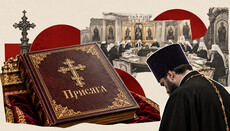
His subsequent persecution occurred under Catherine II. In 1763, Arseny was stripped of his episcopal rank for opposing the confiscation of Church property. Political accusations later made his situation even worse. In 1767, he was deprived of his monastic status and condemned to imprisonment under the humiliating name “Andrei Vral” (“Andrew the Liar”). He died in the Revel fortress in 1772. In 2000, the Russian Orthodox Church canonized him.
Here was a holy bishop who suffered under a state whose empress had been crowned in a Church ceremony and for whom prayers were offered. His veneration reminds us that a state's condemnation cannot be the final judgment on a person's conscience.
The Church recognized holiness in a man whom imperial authorities had humiliated. Blessing a monarch does not sanctify every decision that monarch makes, and fidelity to the Church may require resisting the demands of a ruler who professes the Orthodox faith.
The saints bear witness to the work of grace in their times. Their holiness does not make every institution or practice of those times blameless. Sometimes their sanctity becomes most apparent precisely through painful conflict with those institutions.
The Church outlives its earthly supports
In a sermon for the Exaltation of the Holy Cross, St. John of Shanghai recalls both the divine help given to Emperor Constantine and the protection Christian rulers extended to the Church. Yet in the same sermon, he observes that nations disappeared, cities and states perished, but the Church – persecuted and even torn by internal divisions – remained unshaken. His words allow us to be grateful for earthly protection while remembering that the Church's life is not dependent upon it.
In his chapter “Orthodoxy and the State,” Archpriest Sergius Bulgakov puts it plainly: “The Church now exists without a Tsar, and its charismatic condition, as well as the fullness of its gifts, has not changed because of this.” He distinguishes the monarch's historically established position from the apostolic succession of the sacred hierarchy, which is essential to the Church's life. State support can benefit the Church, but it can also restrict her freedom.
These testimonies do not call for indifference toward one's homeland. Rather, they help us understand how to respond to its history. The collapse of a state may be an immense human tragedy, but it does not mean that Christ has become more distant from believers or that the Eucharist has lost any of its fullness. In a ruined church, in exile, or in an impoverished parish, the Church lives by the same Lord.
The bishop and conciliar unity
This distinction also applies to Church institutions. In his statement “On the Convening of the ‘Great Council of the Orthodox Church,’” St. Justin Popović emphasizes that the bishop and the assembly of the faithful gathered around him are an expression and manifestation of the Church as the Body of Christ, especially in the Divine Liturgy. He warns against understanding patriarchates, metropolias, autocephalies, and the pentarchy in ways that allow historical organizational structures to obscure the Church's episcopal and conciliar nature.
The Eucharistic assembly gathered around its bishop is not an administrative branch receiving a portion of grace from some ecclesiastical capital. Yet the fullness of the local Church does not mean that it exists in isolation. A bishop preserves the apostolic faith and remains in conciliar communion with other bishops. Apostolic Canon 34 establishes mutual accountability between the bishops and the first among them: neither their ministry nor his primacy may become an exercise in arbitrary personal power.
Thus, remaining faithful to one's canonical diocesan bishop means preserving, through him, living unity with the Orthodox Church in its faith, sacraments, and canonical communion. It does not mean unconditional obedience to every personal decision of a hierarch, nor does it negate the responsibilities of conciliar governance. Patriarchates have genuine ecclesiastical significance, but no historical arrangement of patriarchal authority can be equated with the inexhaustible life of the Body of Christ itself.
The same perspective should guide our interpretation of the teachings of spiritual elders. The published spiritual testament of Schema-Archimandrite Zosima Sokur contains an appeal to remain faithful to the Russian Orthodox Church and the Patriarch of Moscow.
The text was addressed to a particular monastic community and reflected its specific circumstances. Respect for a spiritual father does not require turning such guidance into a dogma that jurisdictional boundaries must remain unchanged forever. If, however, someone interprets the testament to mean that membership in a particular patriarchate is, in itself, an absolute and universal criterion for belonging to the Universal Church, that is a far broader claim – one that cannot be established solely on the authority of an elder.
Questions of faith and canonical communion are resolved by the Church as a whole, through conciliar deliberation. This principle applies to every ecclesiastical see, however great its historical achievements.
Seeking the city to come
We have every right to love our homeland, value its history, pray for those in authority, and work toward a just social order. We may prefer a particular form of government and actively support what we believe to be good. But Christians must preserve their inner freedom: political aspirations must not become a condition of their fidelity to Christ, nor should the failure of an earthly cause lead them to despair of God.
“For here we have no continuing city, but we seek the one to come” (Heb. 13:14). These words do not diminish the value of earthly life. They reveal its ultimate purpose.
Our attitude toward the past and the future must be eschatological: we are called to view everything that happens in light of the Kingdom of God, Christ's victory over sin and death, and the promised renewal of creation.
That Kingdom does not emerge through the accumulation of political victories. In Christ, we have already been granted access to the very life of God. Through the sacraments, and especially the Eucharist, we truly partake of the life of the age to come. This is neither merely a remembrance of the past nor simply an expectation of a gift not yet received: the risen Lord already shares His life with us. At His glorious Second Coming, the fullness of what we now experience sacramentally will be revealed.
We may therefore mourn those who have died, the holy places that have been destroyed, and the good that was never accomplished. We should give thanks for everything that helped people seek and find God. But to make the restoration of a lost empire a necessary condition of salvation would be to place upon something transient a hope that only Christ can fulfill.
The Church preserves the memory of earthly kingdoms. But she lives by the Kingdom that shall have no end.