Monks restored it, state wants it back: The Pochaiv Lavra absurdity
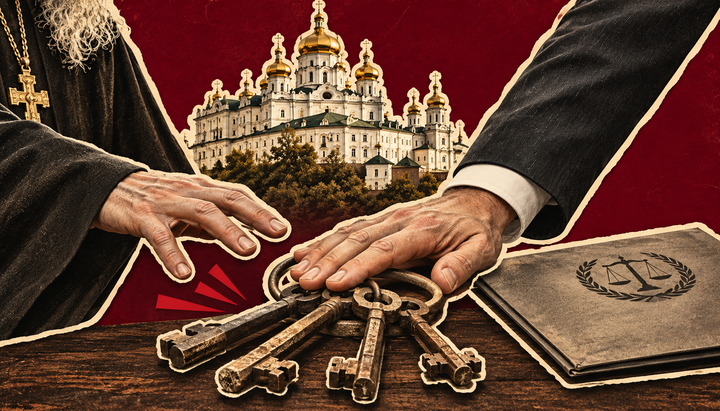
The state wants to take the monastery's buildings back, supposedly to protect historic monuments. What might happen to the holy site under state management? We have seen this before.
On November 2, 2026, the Ternopil Regional Prosecutor's Office filed a lawsuit seeking early termination of the agreement allowing the Holy Dormition Pochaiv Lavra to use state-owned buildings. The agreement was signed in 2003 for a 50-year term.
Prosecutors now claim that the monastery violated its terms by demolishing interior walls in monastic cells and the bishop's residence, creating new passageways, carrying out facade work, and painting murals without the required approvals. According to the prosecution, these alterations threaten the preservation and historical authenticity of the monuments.
Can the state preserve the Lavra better than the monks? To answer that question, let's examine the documents, statements, and photographs.
Museum of atheism, hospital, and pigsties
Unlike the Kyiv-Pechersk Lavra, monastic life at Pochaiv never ceased entirely during the Soviet era. The brotherhood managed to preserve the monastery, even as the state gradually confiscated its facilities, buildings, and land, while evicting and persecuting the monks.
His Beatitude Metropolitan Onuphry, who served as abbot of the Pochaiv Lavra from 1988 to 1990, described what had been taken from the monastery in an interview with UOJ.
According to him, approximately 30 state institutions and enterprises operated on the Lavra grounds. The former pilgrims' guesthouse housed a museum of atheism, while an old monastic residential building was converted into a psychiatric hospital. Many buildings were in dangerous disrepair. The monastery's revival began in 1988, when the authorities permitted the Church to undertake repairs and restoration.
On May 2, 2023, the Lavra's current abbot, Metropolitan Volodymyr (Moroz), addressed Mykhailo Holovko, chairman of the Ternopil Regional Council.
In his video address, he listed the institutions that had occupied the monastery's buildings: a neurological hospital, Outpatient Clinic No. 2, a laundry, a police station, public health and maintenance facilities, a morgue, pigsties, and grain warehouses.
The building that now houses the seminary once contained a museum of atheism. The hospital church dedicated to the Great Martyr Panteleimon was turned into a medical testing facility, with collected specimens stored in the altar.
The building now occupied by the printing house and icon-painting workshop was returned to the brotherhood in a dilapidated condition after the neurological hospital closed in 1998.
The bishop's residence, which had housed a laundry and outpatient clinic, also had to be restored.
Sixty-three families lived on the Lavra grounds. Through the monastery's efforts, all were provided with new housing.
Earlier, in a 2012 interview, Metropolitan Volodymyr, then a bishop, explained that the monastery had to purchase alternative buildings at its own expense to recover its former premises. The neurological hospital, laundry, and pharmaceutical warehouse were relocated to those buildings.
The condition of the premises returned to the monastery in the 1990s was shocking.
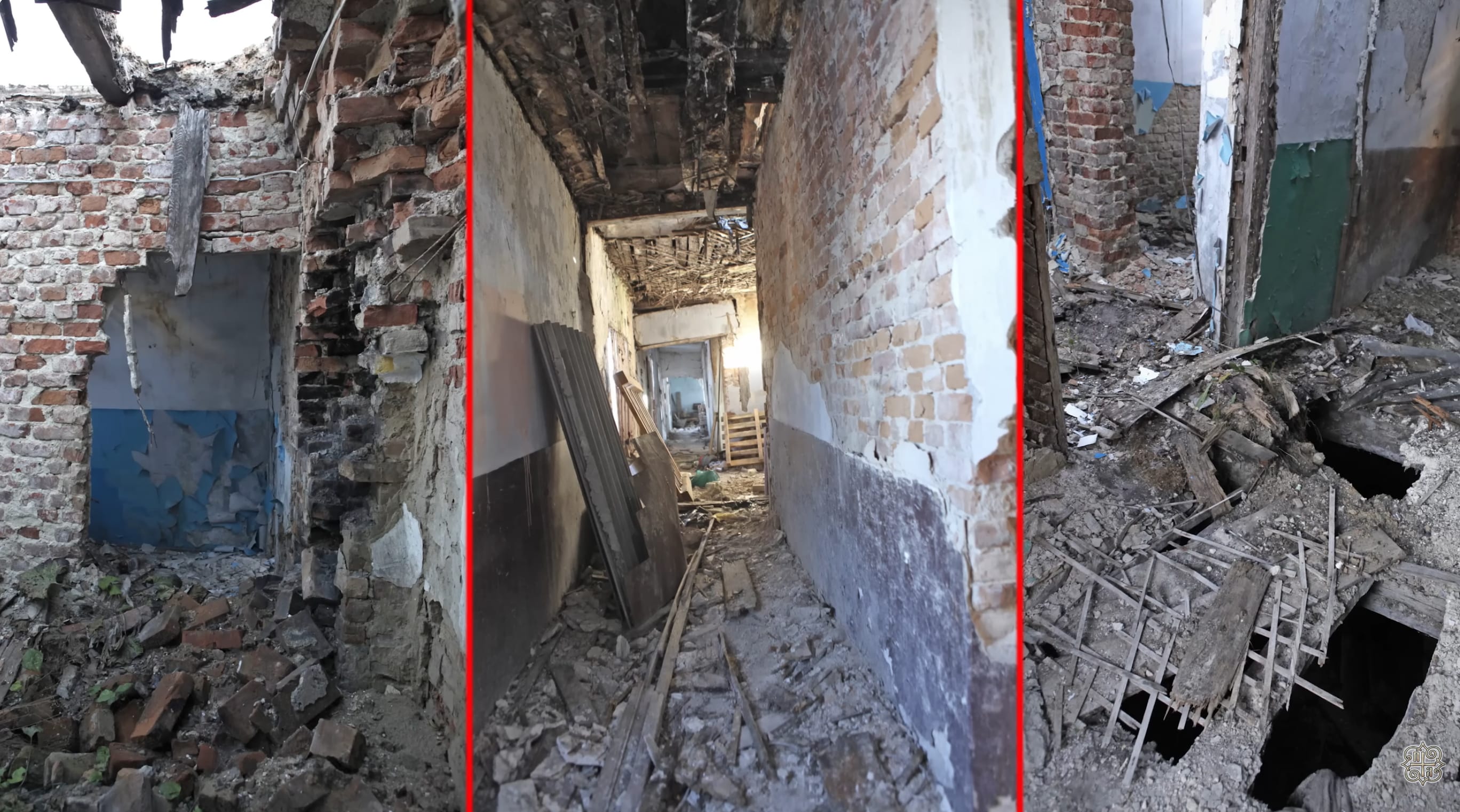
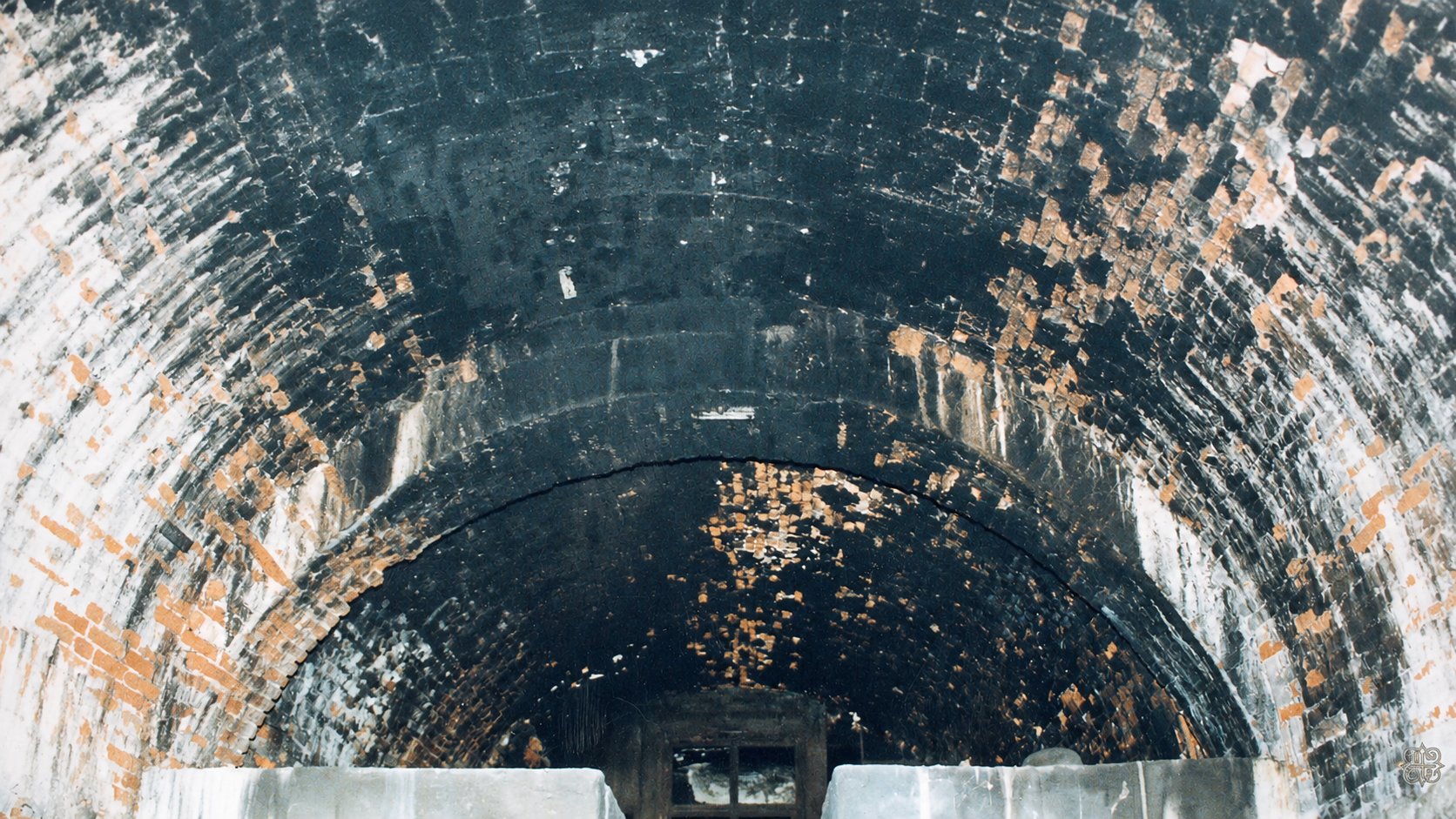
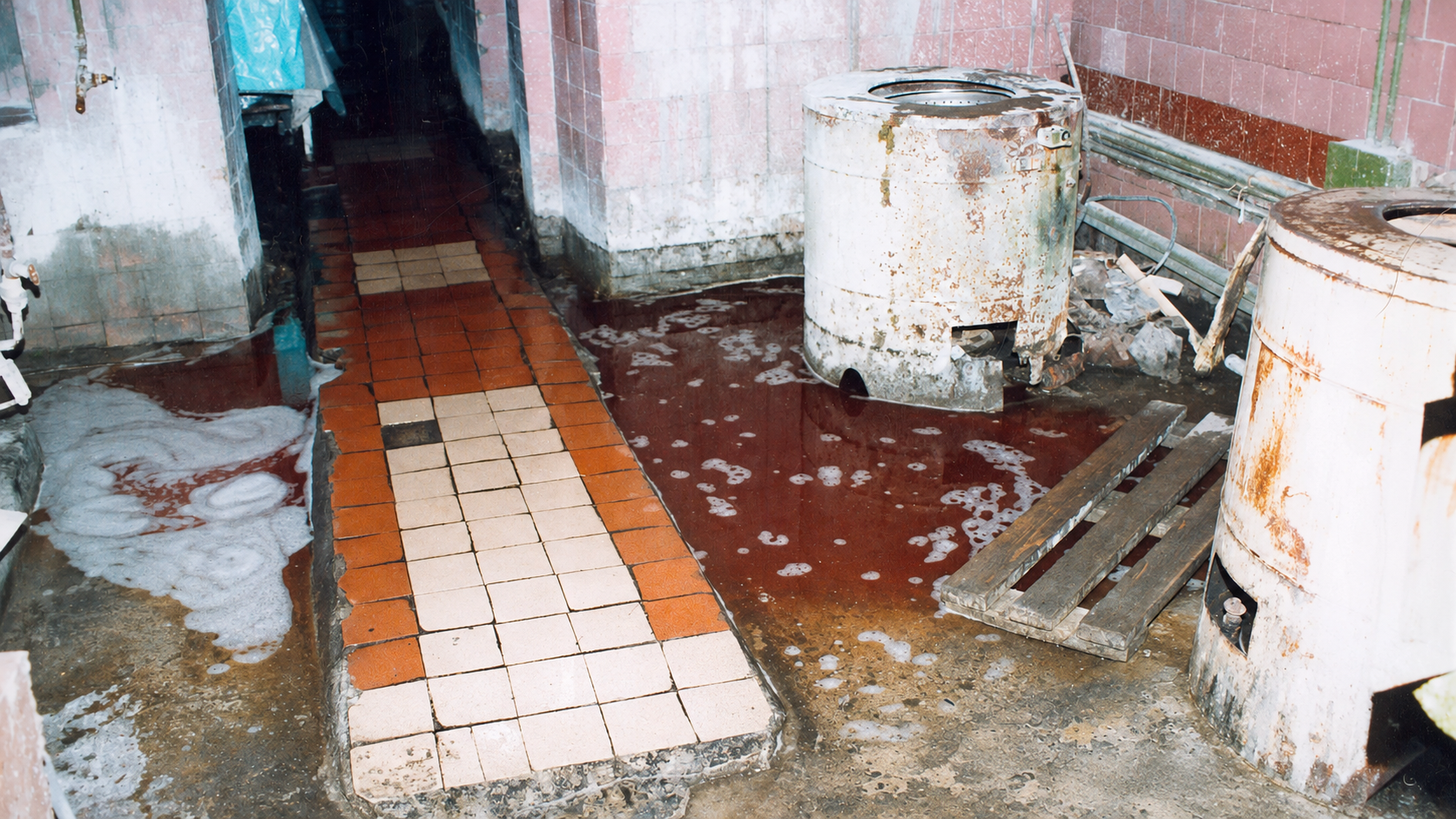
Photographs speak louder than statements
The abbot's appeal included a photo album showing the monastery before and after restoration.
Here are several pairs of photographs documenting the buildings before and after the monks restored them. These are the very works that prosecutors now consider a threat to the preservation and historical authenticity of the monuments.
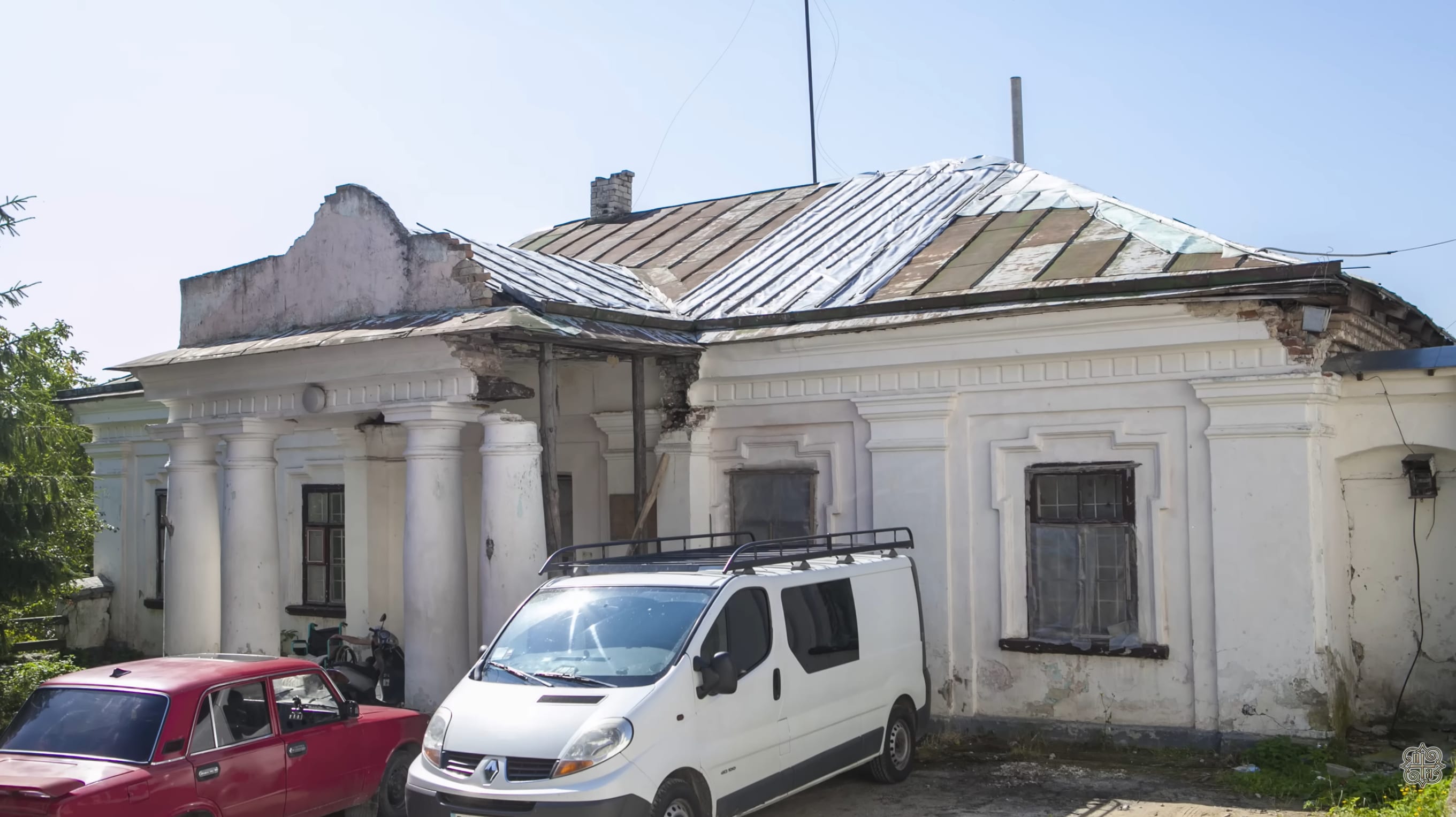
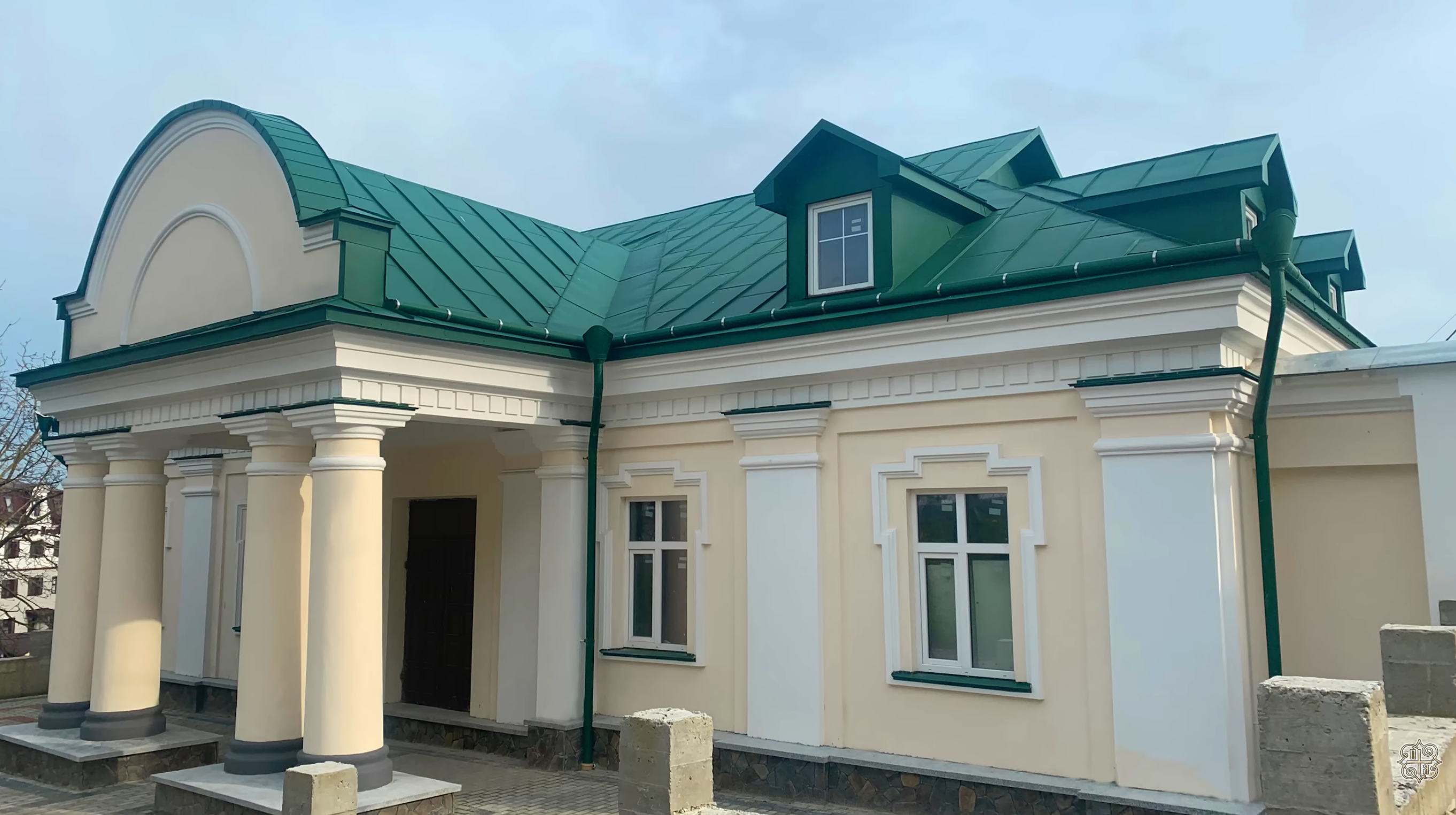
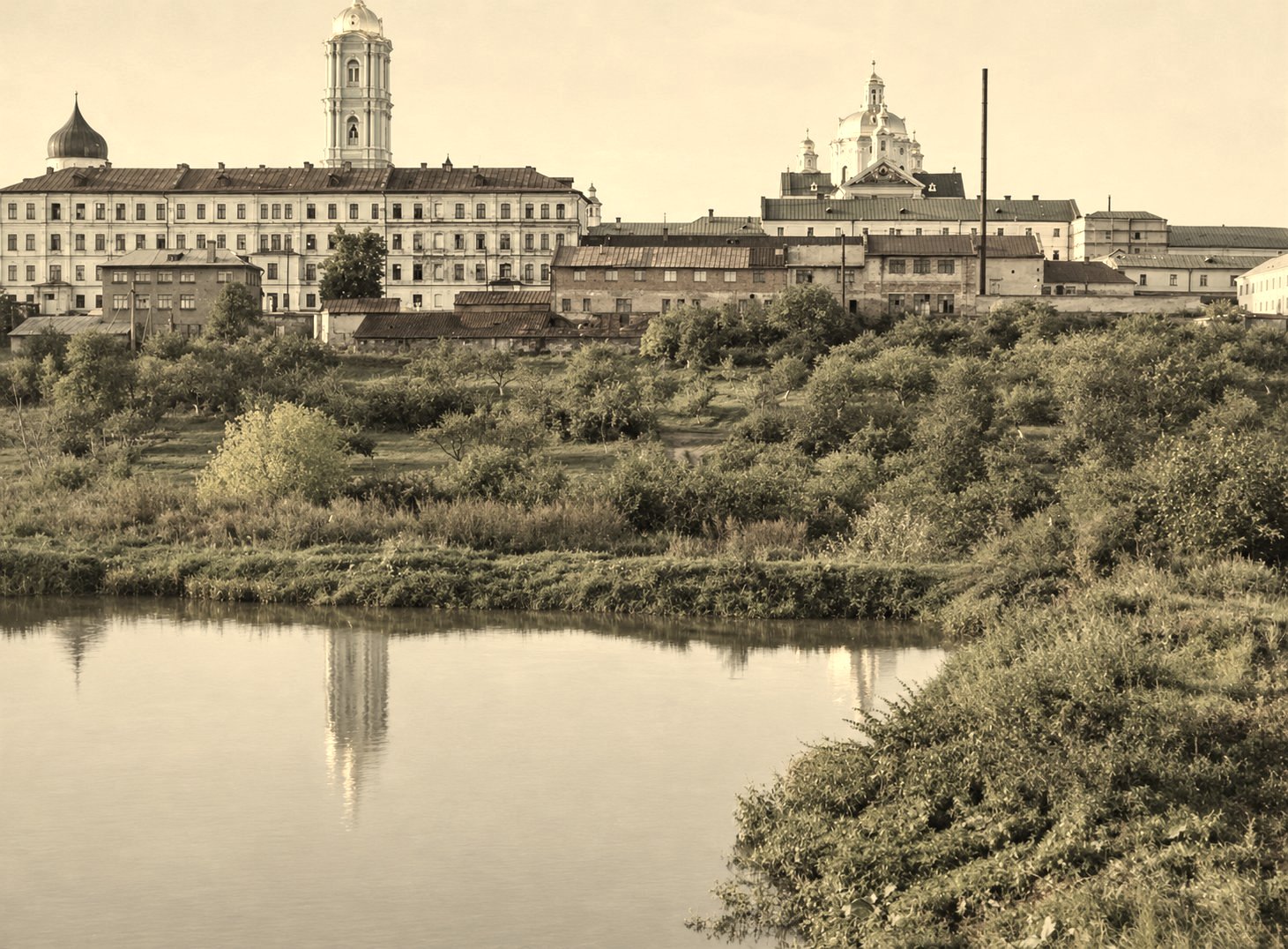
The monastery's transformation is even more striking in panoramic photographs of the Lavra taken in 1999 and 2019.
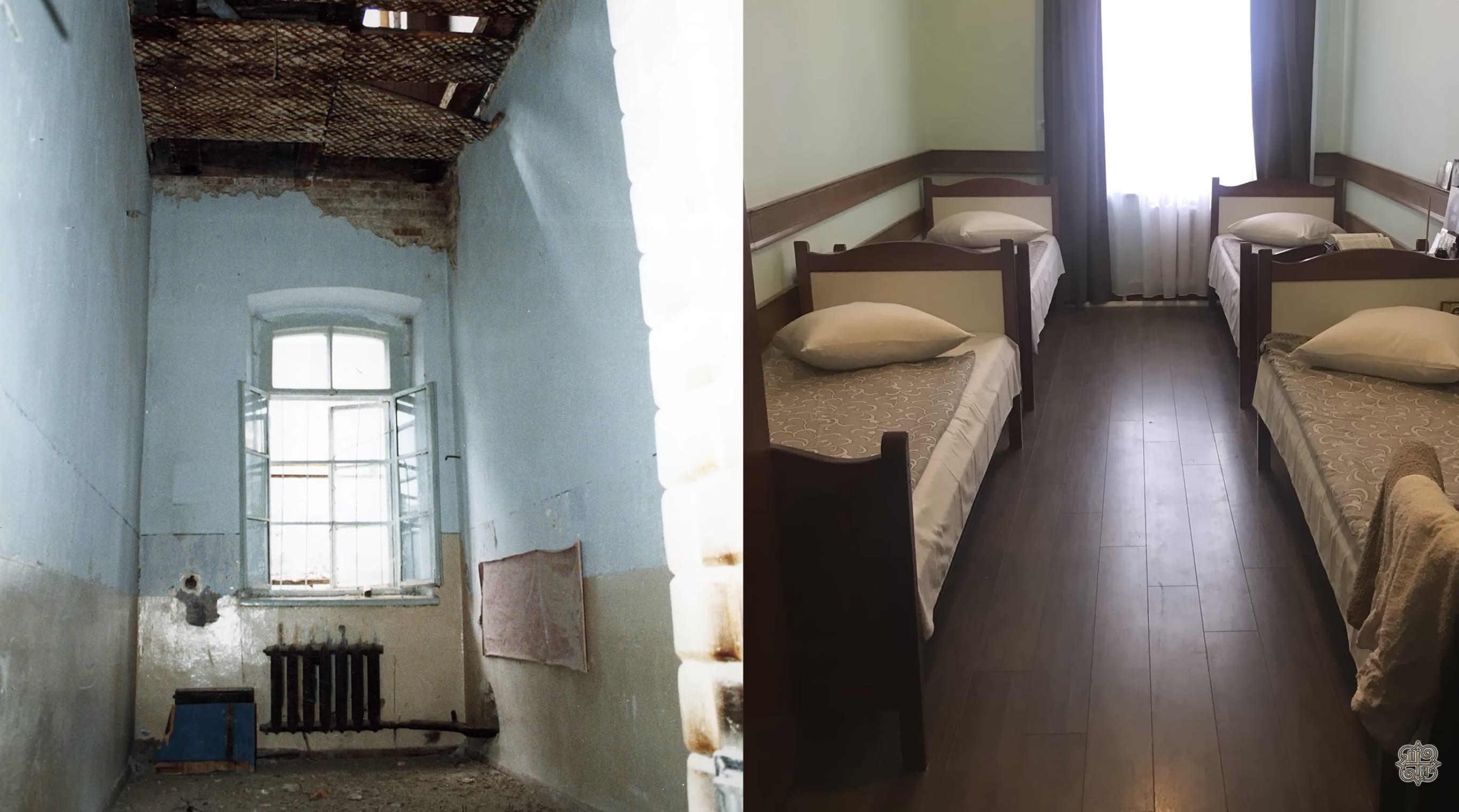
A comparison of two panoramic photographs from 1999 and 2019 offers an even clearer picture of how the brotherhood transformed the monastery.
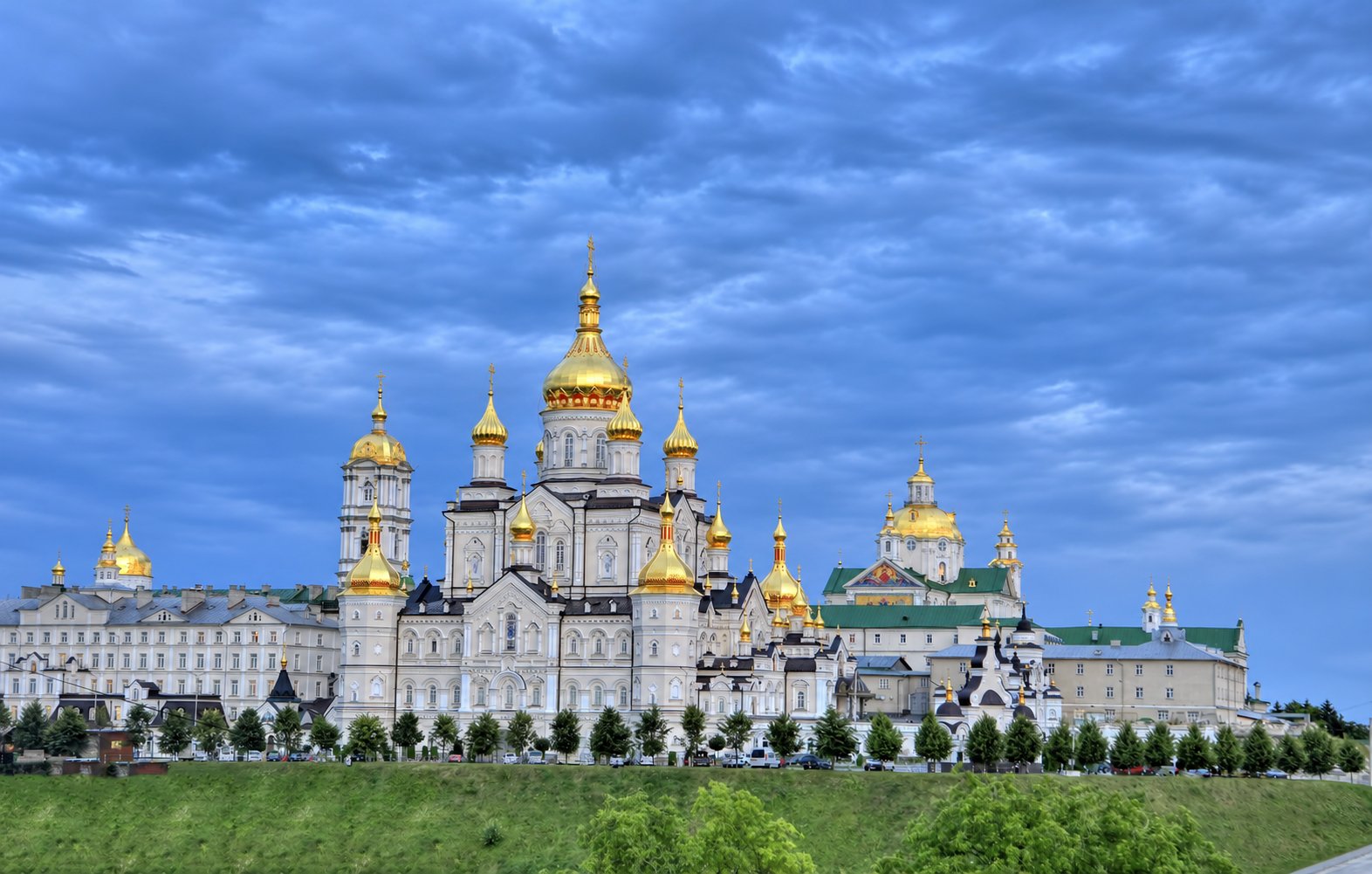
What were they planning to "save" in 2023?
Three years ago, some Ukrainian politicians were already openly demanding the removal of the UOC from Pochaiv.
In June 2023, Mykhailo Holovko, then chairman of the Ternopil Regional Council, declared that if the Lavra were transferred to the local community, he would find a way to "drive out" the UOC and terminate the agreement.
The objective was stated plainly, without diplomatic niceties. There was no mention of monument preservation, "improper" murals, or new passageways. The UOC simply had to be expelled.
It was Holovko whom Metropolitan Volodymyr had addressed in May 2023, urging him not to repeat the mistakes of those who had persecuted the monastery in the past and whose fates, to put it mildly, had been unfortunate.
Holovko did not heed the warning. In June 2025, the High Anti-Corruption Court sentenced him to nine years in prison, with confiscation of property, in a bribery case.
We would not claim a direct causal connection between these events, but they certainly give one something to think about.
What exactly constitutes a violation?
In 2024, the Ministry of Culture conducted inspections at the Lavra, after which complaints emerged about construction and restoration work. The monastery responded that routine repairs were permitted under the agreement and that some alterations had been necessary to address existing damage.
One revealing example is the dispute over the vestibule of the Dormition Cathedral, which the monastery was accused of installing in a way that supposedly distorted the monument's historic appearance.
In 2024, the Lavra refuted the authorities' accusation by presenting photographs from 1939 showing that the cathedral already had vestibules at that time.
The monastery also cited the monument's official documentation, which included photographs taken in the summer of 2003. These showed that the current vestibule existed before the agreement was signed on December 12 of that year.
In other words, the monastery's position is supported by documentary evidence, yet it is still accused of violating the 2003 agreement.
How the State Preserves Historic Monuments
The Kyiv-Pechersk Lavra offers a revealing example of what happens to ancient monasteries under state management.
The process of returning the Lavra to the Church began in 1988. As at Pochaiv, a substantial portion of its buildings were then in dangerous disrepair.
Years of repairs and restoration followed, as archival photographs published by the monastery itself demonstrate.
Anyone can see the deplorable condition of the Lavra under Soviet rule and how it flourished during the years of Church administration.
But most of the restored buildings were those under Church management. The situation was different for premises administered by the national reserve.

On May 26, 2025, the Ministry of Culture published the findings of an inspection of the Kyiv-Pechersk Lavra National Reserve.
The inspection revealed that 21 monuments were in unsatisfactory or partially unsatisfactory condition, one was in an emergency state, restoration work had been suspended at four sites, and 23 lacked the required heritage protection agreements.
Of the more than 17 million hryvnias allocated for restoration in 2024, 11 million remained unused.
The ministry also reported improper restoration work at the Trinity Gate Church, where murals were damaged during the process.
The state reserve's inability to maintain its buildings in proper condition is plain to see.
The problem is not limited to Kyiv.
Here are several more examples of how "effectively" the state cares for historic monuments.
In August 2026, a wall of the Khotyn Fortress collapsed for the second time that year. According to the reserve administration, further deterioration had been foreseeable after the first collapse, yet no emergency stabilization work was carried out.
In Poltava Oblast, the Church of the Nativity in Verhuny, a nationally protected monument dating to 1801, continues to deteriorate.
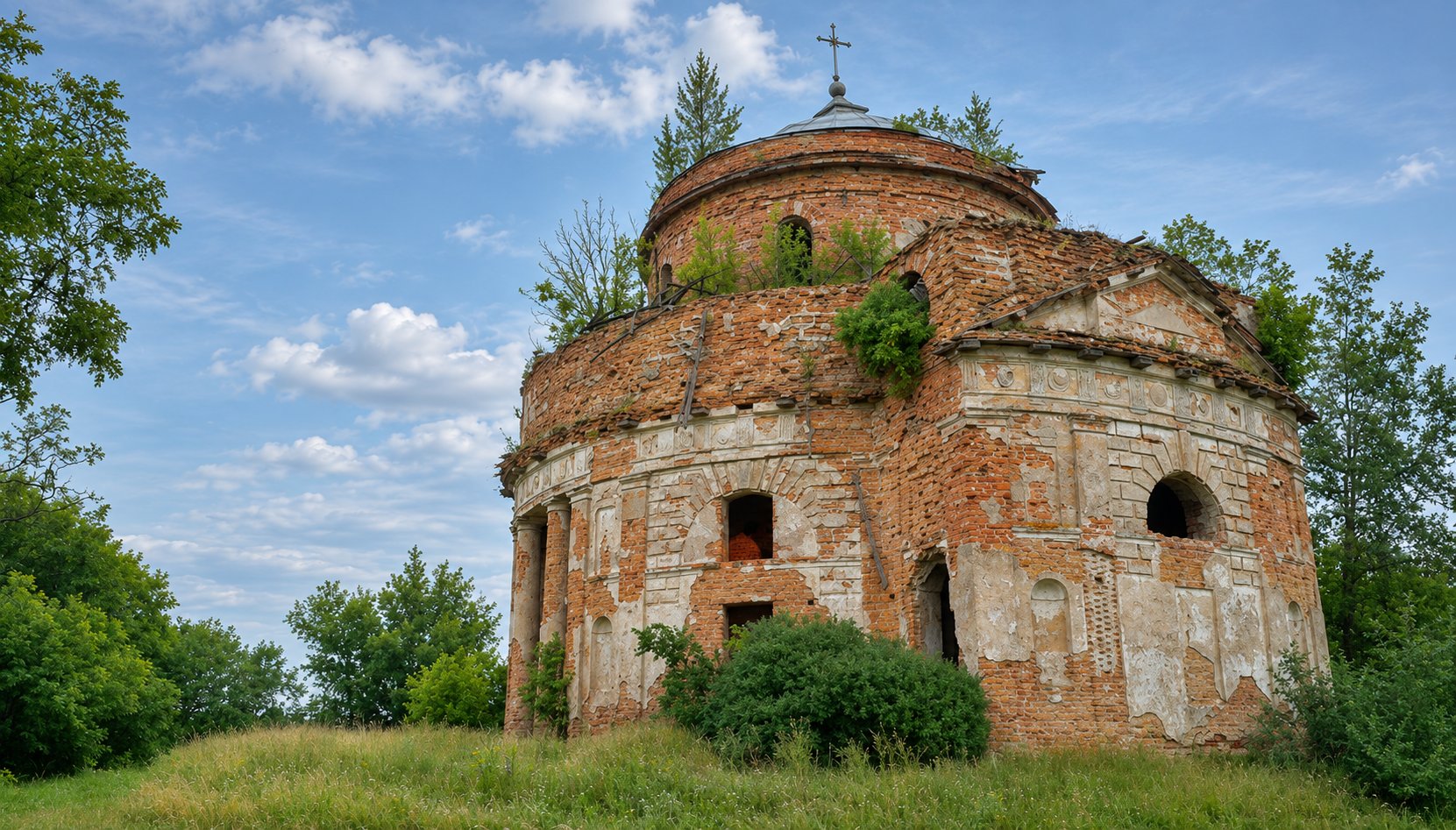
In Ternopil Oblast, photographs of a ruined Catholic church in Velykyi Khodachkiv have circulated online.
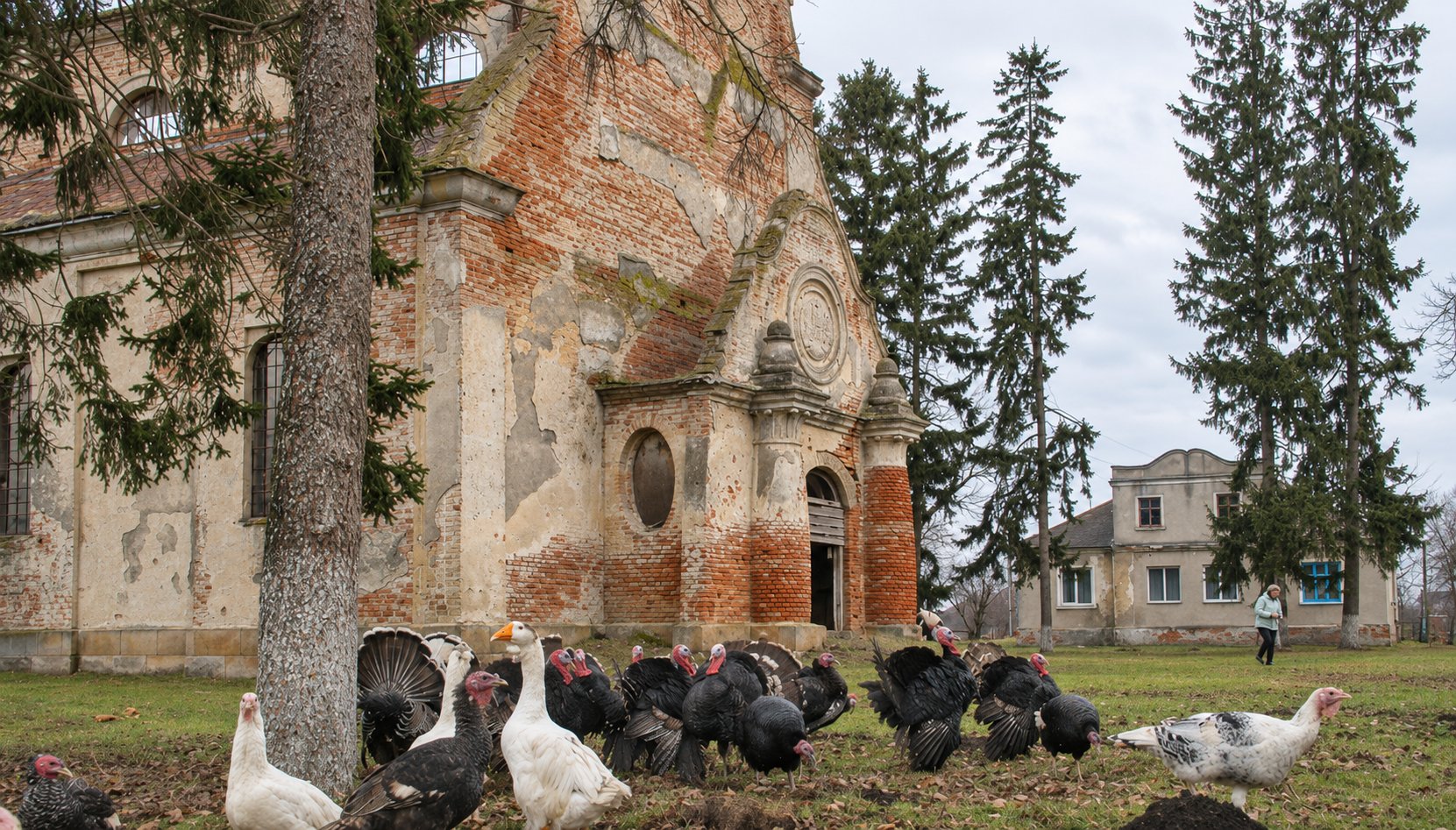
Similar neglect of historic religious architecture can be seen in Kysylyn, Novyi Zahoriv, Turylche, Neverkiv, Hodovytsia, and elsewhere.
Of course, not all these sites are directly administered by the Ministry of Culture. But that does not eliminate questions about the effectiveness of the state's cultural heritage protection system.
It bears emphasizing that we are talking about neglect and deterioration, not destruction caused by military operations.
Conclusion
Prosecutors are now asking the court to terminate the Pochaiv Lavra agreement that has been in effect since 2003.
Will the court consider the documents and photographs showing the condition of the buildings when they were handed over to the monastic community and how they look today?
Unfortunately, we cannot confidently answer yes.
Essentially, this is yet another absurdity unfolding in our country: the authorities handed over dilapidated buildings to the monastery, the brotherhood restored them to a flourishing condition, and now the authorities want to take them back – supposedly because the monastery threatens their preservation.
Meanwhile, the state itself is unable to preserve the architectural monuments already under its management.
What awaits the Pochaiv Lavra if the court grants the prosecution's request?
Once again, the Kyiv-Pechersk Lavra provides a possible answer.
The Refectory Church, taken away from the monastery, has hosted a cooking show and a performance by a song-and-dance ensemble. Secular events involving government officials are regularly held there, and there are even plans to establish some kind of pantheon on the Lavra grounds.
The second possible scenario is neglect and decay, as has happened to other historic monuments for which the state is already responsible.
Which of these two futures are the authorities preparing for the Pochaiv Lavra?