
What did Elder Zosima bequeath, and to whom?
If the Russian Church itself were to bless Ukrainian autocephaly, would faithfulness to one’s spiritual father require rejecting its decision?
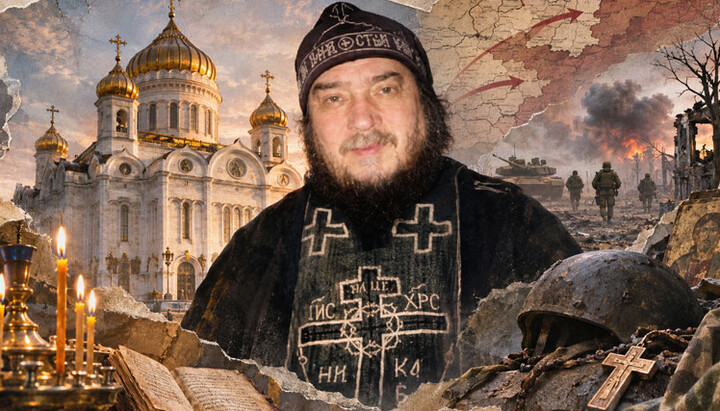
The testament of Schema-Archimandrite Zosima (Sokur) contains instructions concerning two side chapels in the same church. He asks that the right chapel be dedicated to Sts. Anthony and Theodosius of the Kyiv Caves, and the left – to Sts. Zosima and Sabbatius and the other saints of Solovki. Under one roof, the elder wished to pray with both the fathers of Kyiv and those of Solovki. This detail is worth bearing in mind when reading the most controversial passage of his last will and testament.
Father Zosima addressed the brothers and sisters of the two monasteries he had founded in the village of Nikolske in Donbas. He had witnessed the ecclesiastical divisions of the 1990s and wanted to protect those entrusted to his care from them. Under those circumstances, his instruction to remain faithful to the Patriarch of Moscow may have strengthened those who were being urged to break with their bishop. But the elder also looked to the future. Regarding separation from Moscow, he wrote that “whatever form autocephaly may take – unlawful or ‘lawful’ – communion with the Metropolitan of Kyiv is automatically severed.” The Monastic Herald reproduces this passage in the same wording.
The word “lawful” appears in quotation marks in the testament. Perhaps the elder meant a schism that would merely be given the appearance of legitimacy. Such a reading is understandable. However, when the Russian People’s Line website republished the testament in May 2022, its editors associated any possible autocephaly with an impending schism in their very introduction, thereby erasing this distinction. For an ordinary parishioner, that distinction comes down to a very simple question: Will I be able to receive Communion tomorrow from the same priest from whom I received it yesterday?
What if Moscow said yes?
Imagine that the Ukrainian bishops collectively request autocephaly, and the Patriarch of Moscow, together with his Council, grants his blessing. The following Sunday, the Metropolitan of Kyiv and the Patriarch of Moscow concelebrate the Liturgy. What, then, should a spiritual child of the elder do? Accepting the Russian Church’s decision would mean remaining in communion with the Metropolitan of Kyiv. Following the words about automatically severing communion to the letter would mean withdrawing from the very Chalice at which the Patriarch of Moscow himself stands. Which of the elder’s two instructions should one follow?
Such a scenario is more than a thought experiment. There is a precedent in the history of the Orthodox Church of the Czech Lands and Slovakia. In the act of 1951, Patriarch Alexy I and the Russian episcopate granted autocephaly to their exarchate in Czechoslovakia and asked the Lord to bestow His blessing upon “the youngest sister in the family of autocephalous Orthodox Churches.” In 1998, the Church of Constantinople issued its own Tomos.
Moscow and Constantinople differed in their understanding of the relationship between these two acts. What matters for our discussion, however, is the word Moscow itself chose. Those who only the day before had been its flock were now blessed as a sister Church.
Around whom does the Church gather?
During the Divine Liturgy, a priest commemorates his diocesan bishop. Why is this so important to the Church?
As early as the beginning of the second century, the Hieromartyr Ignatius the God-Bearer, in his Epistle to the Smyrnaeans (Chapter 8), associated the Eucharist with the bishop or with the person entrusted by the bishop to celebrate it. He immediately added: “Wherever the bishop shall appear, there let the multitude also be; even as, wherever Jesus Christ is, there is the Catholic Church.” Even in the smallest parish, the believer receives Christ in His fullness. What could belonging to a more ancient or influential episcopal see possibly add to this gift?
Where does the bishop himself receive his ministry? The Apostle Paul tells the pastors of Ephesus that it was the Holy Spirit who made them overseers of the flock (Acts 20:28). In their 1723 Epistle on the Orthodox Faith (Article 10), the Eastern Patriarchs speak of the divine institution of the episcopate and of how this gift is transmitted within the Church. A bishop receives ordination from other bishops. At the very altar, at the moment of episcopal consecration, we see how inseparable a bishop’s ministry to his flock is from his communion with his fellow bishops.
The Hieromartyr Cyprian of Carthage expresses this well. In his letter to Florentius Pupianus, he writes that “the bishop is in the Church, and the Church in the bishop,” immediately going on to speak of the unity of bishops with one another. For Cyprian, these are two aspects of the same truth. The very bond that unites a Christian with his bishop opens the way to communion with the entire Church.
Does the bishop of a great city possess a greater fullness of priesthood than the bishop of a small one?
In his letter to Evangelus (146, 1), Blessed Jerome places Rome alongside the small Italian town of Eugubium, and Constantinople alongside Rhegium. The dignity of the episcopate is the same in each, he writes. All these bishops are successors of the apostles. And when the bishop of a small eparchy concelebrates with a patriarch, they stand before the same altar, sharing the same episcopal dignity.
In his book Being as Communion, Metropolitan John (Zizioulas) of Pergamon explicitly asks where the ecclesial significance of a metropolia, archdiocese, or patriarchate comes from. In his view, these structures derive their significance from their constituent eparchies, in each of which the faithful gather around their bishop to celebrate the Eucharist. The eparchies themselves live in communion with one another. Such structures, in his words, “create a network of communion among the Churches.” Patriarchates serve this communion, while the historical Pentarchy expressed it through the concord of five sees.
None of these forms of ecclesiastical organization confers upon a bishop a second, higher degree of priesthood.
The conclusion, then, is that a Christian belongs to the universal Church by remaining in Eucharistic communion with his canonical bishop, who professes the apostolic faith and maintains communion with other bishops.
What can the first bishop do without the others?
Apostolic Canon 34 contains two provisions that must be read together. The bishops of every nation recognize the first among them as their head. Each bishop administers the affairs of the eparchy entrusted to him, while in matters extending beyond its boundaries, he must seek the consent of the first. The canon then applies the same requirement to the first bishop himself: “But neither let him (who is the first) do anything without the consent of all; for so there will be unanimity, and God will be glorified through the Lord in the Holy Spirit.”
In the common life of the Church, mutual consent is obligatory. A primate has the right to expect from his fellow bishops the same conciliarity that he owes them.
Notably, the Holy Synod of the Russian Church makes precisely this distinction between the two ministries in its 2013 document on primacy. Within his own eparchy, a bishop receives primacy through apostolic succession at his consecration. The primacy of the head of an autocephalous Church among his fellow bishops derives from his election by the council of bishops.
This also clarifies the extent of an abbot’s authority. Canon 4 of the Council of Chalcedon entrusts monastics to the care of the bishop. Father Zosima himself asks the patriarch to receive his monasteries under his omophorion. However, should the patriarch decline, the testament provides for independent governance by the abbots. This raises the question of the limits of abbatial authority.
An abbot may regulate the internal life of the brotherhood. Yet even the entire brotherhood, together with its abbot, cannot declare an episcopal see vacant if its bishop has preserved the Orthodox faith and ecclesiastical communion, and only the boundaries of the patriarchate have changed.
Where even a saint can be mistaken
Church history has preserved a letter that is painful to read today. When St. Atticus of Constantinople added the name of the departed John Chrysostom to the diptychs – the lists of names commemorated liturgically – St. Cyril of Alexandria strongly objected. In his letter to Atticus, he compared the act to restoring Judas to the ranks of the apostles. This is no exaggeration – that is precisely the comparison he made. Such is the extent to which even one saint can be mistaken about another.
The Church answered this judgment through its very life of prayer. On most days of the ecclesiastical year, we celebrate the Liturgy of St. John Chrysostom. We read his homilies on the Gospel. Alongside him, we venerate Cyril of Alexandria. Moreover, Cyril himself later cited Chrysostom as a teacher of the Church. Would we truly honor Cyril if, out of faithfulness to his earlier letter, we refused to commemorate John?
It is with the same reverence that I approach the memory of Father Zosima. His ascetic labors and spiritual authority are not being called into question here. But what happens when his words are interpreted as meaning that one Orthodox jurisdiction is inherently superior to another, and that submission to that particular jurisdiction is necessary to remain within the Church of Christ?
Such a teaching is an ecclesiological heresy. It paralyzes the life of the Church: a personal testament is invoked to justify breaking communion with one’s own Orthodox bishop, even when communion between the Churches remains intact. The believer is then asked to abandon the Chalice in the name of faithfulness to the Church.
In that same testament, Father Zosima asked that a House of Mercy be established and that the infirm be cared for until their death and burial. Here is an expression of their spiritual father’s will that his spiritual children can fulfill regardless of the canonical structure of their Church. If the boundaries of the patriarchate change tomorrow, a brother from the monastery will still be able to remain at the bedside of a dying person, and a priest sent by his bishop will still be able to come and administer Holy Communion.
In that encounter, I recognize both faithfulness to the elder’s benevolent legacy – the legacy of a man who wished to pray under one roof with the fathers of Kyiv and Solovki – and faithfulness to the Church.