
What Patriarch Ilia said on the main issues of Church life
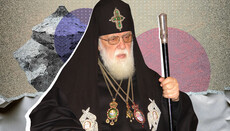
The spiritual legacy of the late Catholicos-Patriarch Ilia II of All Georgia is also his view on fundamental church issues. We offer a selection of his statements during his patriarchate.
Catholicos-Patriarch Ilia II was a deeply believing, thoughtful and very responsible person. As the Primate of the Church, he felt personal responsibility before God and people for all his words and actions. Analyzing his activities, one can see that he was constantly concerned with the same themes: the unity of the Church, faithfulness to Orthodoxy, peace as the fulfillment of Christian duty, and most importantly – understanding the Church not as a political instrument, but as a force leading man to truth and salvation.
On Church unity and inter-Orthodox relations
As early as in his Paschal Message of 1982, Patriarch Ilia II formulated his basic understanding of church unity as follows: "In the Church, everything must be one: one Head – the Lord Jesus Christ, one Spirit of God, one teaching of faith and life, one saving sacraments." At first glance, these are banal words that we hear constantly. But, in essence, Ilia said the following: whoever says that besides Christ one can come to God (for example, that all religions are paths to God), violates the unity of the Church. Whoever allows deviation from dogmas, violates the unity of the Church. Whoever allows erosion of moral norms (recognition of LGBT and so forth), also violates unity.
In the same message, Patriarch Ilia II emphasized that local and national Churches are members of one Universal Apostolic Church. Unity is not a diplomatic formula but the nature of the Church.
When eucharistic communion between the Russian Orthodox Church and the Patriarchate of Constantinople was broken, Patriarch Ilia perceived this as personal pain. Before the session of the Synod of the Georgian Orthodox Church (GOC) on December 28, 2018, he said: "The situation in Ukraine is extremely unpleasant, there is no unity of opinions, no agreement… This saddens us very much. I hope that fraternal ties between the Churches will be restored by God's mercy."
On Ukraine and the Ukrainian Orthodox Church
The stance of the Georgian Church on the church conflict in Ukraine is dominated by a wait-and-see and conciliatory tone. There are no statements about recognition of the Orthodox Church of Ukraine, but neither is there mention of the impossibility of such recognition. However, Patriarch Ilia II and the Georgian Church as a whole have repeatedly declared support for the UOC and His Beatitude Metropolitan Onuphry.
On October 2, 2018, at the stage of preparation for the creation of the OCU, the press service of the GOC published a statement: «We think that at this stage we should not make hasty assessments until both sides formulate their official and non-appealable positions based on the norms of canonical law».
On October 8, 2018, after Patriarch Ilia's meeting with the Chairman of the Verkhovna Rada of Ukraine Andriy Parubiy, Ukrainian media began spreading information that the Georgian Church supported Ukrainian autocephaly. The GOC had to declare that this "does not correspond to reality."
On February 20, 2019, Patriarch Ilia II met with a delegation of the UOC, expressed sorrow about the Ukrainian church conflict and conveyed warm words addressed to Metropolitan Onuphry.
Particularly noteworthy are Patriarch Ilia's words about the situation of the UOC in 2023. On March 25, 2023, against the backdrop of the seizure of the Kyiv-Pechersk Lavra, he sent a letter to Patriarch Bartholomew, in which he expressed "concern about the current situation in the UOC." In essence, this letter is an advocacy for the UOC and a request to help stop the persecutions.
On the war in Ukraine
On the first day of the full-scale war, February 24, 2022, Patriarch Ilia II spoke in support for Ukraine, "Based on Georgia's bitter experience, we know how important the territorial integrity of a country is." He warned that what was happening already posed a "serious threat of bloodshed" and called for reconciliation.
In his Paschal Message of 2023, Patriarch Ilia II wrote: "We live in a difficult, explosive period <…> therefore we especially think about peace, which is a precious divine gift. <…> We, as followers of Jesus Christ, are obliged by word, deed, action to work for peace». His attitude toward war he expressed without diplomatic reverences: "War is extreme evil, a violation of the Lord's commandments and an encroachment on the lives of many."
On the mission of the Church
For Patriarch Ilia II, the Church was never reduced to either ritualism or politics. The main dimension is eschatological. In his Paschal Message of 2018, he wrote: "The mission of the Church, of course, consists also in participation in public life, but the main thing is to show people the path of truth and prepare those who wish, through Golgotha, for membership in the Kingdom of Heaven."
But at the same time, the Primate of the Georgian Church did not conceive of the Church as separate from the world and its sufferings. In his Paschal Message of 1984, when the Cold War was still in full swing and the threat of a large-scale nuclear conflict was real, he wrote: "True worship is inseparable from peacemaking activity. <…> The Church cannot indifferently watch the sufferings of peoples, the blood of innocent people and the danger of world catastrophe. <…> The place of believers is where there is the most grief and tears, where they struggle for peace, freedom and just relations between peoples and states."
In his Message of 2007, i.e., shortly before the Russian-Georgian war, Patriarch Ilia II declared that the Church should fulfill the mission of "people's diplomat" and be a "messenger of peace", soften enmity and not allow political disputes to grow into religious hatred.
And in his Christmas Message of 2024, he formulated the goal of mission for every Christian: "Our calling is to be servants of our neighbor on the path to the Lord. Jesus Christ also came into the world to serve and entrusted us with this mission."
On ecumenism and relations with the non-Orthodox
Unlike the fashionable verbosity of today, Patriarch Ilia’s position on the issue of ecumenism was clear and unambiguous. In 1997, the Georgian Church withdrew from the World Council of Churches.
In February 2016, when the Patriarchate of Constantinople was preparing the Council in Crete, a session of the GOC Synod took place, after which Patriarch Ilia II declared: "Our Church has been and will be a guardian of Orthodoxy." He also declared that the GOC "rejects the document on ecumenism" prepared for the Council of Crete. Let us recall that this document opened a wide road for ecumenical rapprochement with non-Orthodox denominations.
The same position was expressed in the autumn of 2016 during Pope Francis's visit to Georgia. Then the GOC issued an official statement: "Prayer-sacramental communion between us and the Roman Catholic Church has been interrupted since the Middle Ages, and while dogmatic differences exist, according to church law, Orthodox believers do not participate in their worship services." That is, diplomatic contacts are possible, but no blurring of dogmatic boundaries and prayer communion.
But at the same time, Patriarch Ilia II showed respect for the Catholic tradition, spoke the language of love, not hatred. But he emphasized that true unity is possible only on the basis of one true faith. "True faith, humility and our traditions are ancient treasures that we keep and will continue to keep in the future. We again welcome you and confess that our unity is in true faith. Only true faith and love will open the path to our communion," he said, addressing Pope Francis.
On family, love and morality
The Primate of the Georgian Church addressed these questions constantly. For example, in his 2016 Christmas Message, he wrote that the modern world is losing the sense of real love, and in its place come "virtual feelings" and "fake love". "False love is the main cause of the breakdown of modern families," said the Patriarch.
This thought sounds even more clearly in Patriarch Ilia's last Christmas Message of 2026: "Today everyone speaks of love and freedom; however, those who equate love with sin and sinful lifestyle with true love, and those who consider unlimited rights as freedom, make a serious and irreparable mistake."
Patriarch Ilia II saw the most complete realization of love in Christian marriage. "Marriage is one of the sacraments of the Church <…> cohabitation of man and woman for spiritual and bodily unity." He wrote that family life manifests itself in "mutually sacrificial love", in joint endurance of sorrows and in service to one's neighbor.
Patriarch Ilia II also spoke about the responsibility of parents for raising their children. In his Paschal message of 2014, he sharply criticized consumerist upbringing and warned that parents often harm their children themselves through excessive care and a cult of comfort: "This is an unconscious hostility toward children! <…> Therefore, drug addiction, drunkenness, theft, murder, and debauchery have increased <…> all of this is the result of неправильного upbringing."
It is surprising that such denunciations of moral shortcomings are voiced in Christmas and Paschal messages. But apparently, Patriarch Ilia II was so concerned about the moral problems of society that he did not hesitate to denounce vices even in his congratulatory addresses to the people.
Conclusion
Patriarch Ilia II left behind not only a long memory of many years of primatial service, but also a rare example of inner integrity. He spoke about the most diverse things: about the unity of the Church, peace, war,morality, family, inter-church relations, etc. But behind all this always stood one and the same person: sincerely believing, responsible and deeply churched. He did not try to adjust Christianity to the spirit of the times, did not substitute truth with convenient formulas and did not reduce the mission of the Church to politics or diplomacy.
Therefore his words are perceived today not as an archive of a bygone era, but as a spiritual guideline: to preserve faith, not to substitute love with falsehood, not to lose peace and to remember that the main goal of the Church is to lead man to Christ.