
X-ray in the dark: a dialogue with Saint Luke of Crimea
The paradox is simple and terrifying: the elder with blind eyes saw right through us, while we, with perfect modern optics, cannot see our own misfortune.
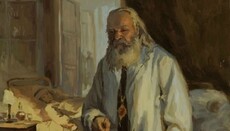
Simferopol. Late 1950s. The office of the saint surgeon is immersed in calm semi-darkness, the kind found only in the rooms of people living without light.
A heavy elder in a cassock sits in a chair at the table. A man enters. He has come for a blessing, because before him is the local bishop. The visitor wears a good suit and has a confident smile. He has long been accustomed to being judged by such outward signs — by status, position, and the ability to maintain composure.
But the bishop is blind, he sees nothing of what the visitor has so carefully prepared.
Heavy hands, mutilated by prison transports, prolonged cold and decades of purulent surgery, slowly rise and rest in the sign of the cross on the head of the one who entered. The surgeon's fingers, accustomed to precisely feeling hidden tumors and pulse beats, freeze for a second.
We do not know what exactly those hands read in that moment. But people who knew Bishop Luke closely in his final years told one thing: if someone tried to hide an unpleasant truth from him or smooth over rough edges, he would sternly interrupt his interlocutor. The absence of sight did not prevent him from clearly distinguishing deception. Any attempt to somehow "spare the blind man" was perceived as a lie.
Total visibility and complete blindness
– Your Grace, you lost your sight, yet you continued to serve the Liturgy, hear confessions, and make accurate diagnoses. We, your descendants, live in an age of total visibility. In our hands are devices with powerful cameras; we consume thousands of images a day. How is it that, with all this, we remain blind?
In his sermons, the saint often answered this question. He spoke simply and sternly:
"Do not lose heart, for you possess an incomparably greater good, for the Unfading Light is open to you… The blind, who see nothing, often perceive with spiritual sight far better than those who can see."
With these words he speaks of what human perception is generally is. Blindness is not simply darkness. It is being blinded by one's own pride, fears and fantasies. A person may have perfect eyesight, yet live in a dense fog of illusions about themselves, utterly failing to notice what is happening to their soul.
The blind archbishop was absolutely free from this fog. His inner sky remained clear. He had no flow of external information, but he possessed an absolute inner sense.
Diagnosis through fear
– You were transported in stages in cold prison wagons at the very time when an entire vast country was looking at posters depicting a bright future. What did you see then that others did not want to notice?
The confessor briefly repeats: "I accepted blindness as God's will."
To accept one's fate as God's will means to stop bargaining with reality. One who does not seek comfortable detours begins to see life as it is, without embellishment and ideological lies.
The generation that looked at repressions and continued to believe cheerful slogans was blinded by fear. And the future Archbishop Luke in those same years operated in exile with primitive instruments, baptized children in icy barracks in the Far North and knew precisely that for open confession of faith he could be arrested again.
As a doctor, he knew what the human body was. Before each operation he would take iodine and draw a cross on the patient's body. Local authorities threatened him, demanded he stop this practice, but he refused. Why? Because he saw in man not simply a collection of biological tissues, but a temple of God, even if tormented by illness. And at the same time he clearly saw before him eternity, for the sake of which it is worth enduring any hardships.
Surgery without light
– You continued to serve in the temple when you could no longer see anything at all. You knew by heart the long text of the Liturgy and the space of the altar, moved confidently without a guide. Did this skill really come easily to you?
The bishop answered this without any indulgence toward himself or us:
"Physical sight is given immediately at birth, but spiritual sight – extremely slowly and at the cost of great labors."
He often recalled the Gospel blind man whom Christ healed gradually, in two touches. The bishop saw in this a precise pattern: true inner insight is never sudden. It is the result of decades of arduous spiritual labor.
As a doctor, he had long known about the approaching glaucoma. He understood that blindness was inevitable, but did not panic. He calmly prepared his soul for darkness. He went toward this through torturous interrogations, through the torturous "conveyor belt," when investigators would not let him sleep for days. Through three cruel exiles and work in icy operating rooms. The altar, in which light finally went out completely, became for him only the final examination of trust in God. He passed this examination because he was guided not by ocular optics, but by something much more reliable.
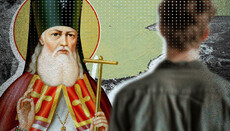
We look at photographs from the last years of Saint Luke’s life. One detail is striking. His blind eyes do not wander aimlessly into emptiness. They are sharply focused. He looks directly at us, creating the impression that he sees straight through a person.
The Archbishop of Simferopol and Crimea, the exiled confessor and brilliant surgeon, died in the spring of 1961. He passed away blind, never ceasing until his last day to preach, bless, and treat people by touch. Deprived of external images, he saw the very essence of things.
At the end of this mental conversation, only one question remains. Surrounded by thousands of screens, accustomed to judging the world by a beautiful façade, and utterly confident in our own sharp sight, what exactly do we see if we never dare to look into our own soul?